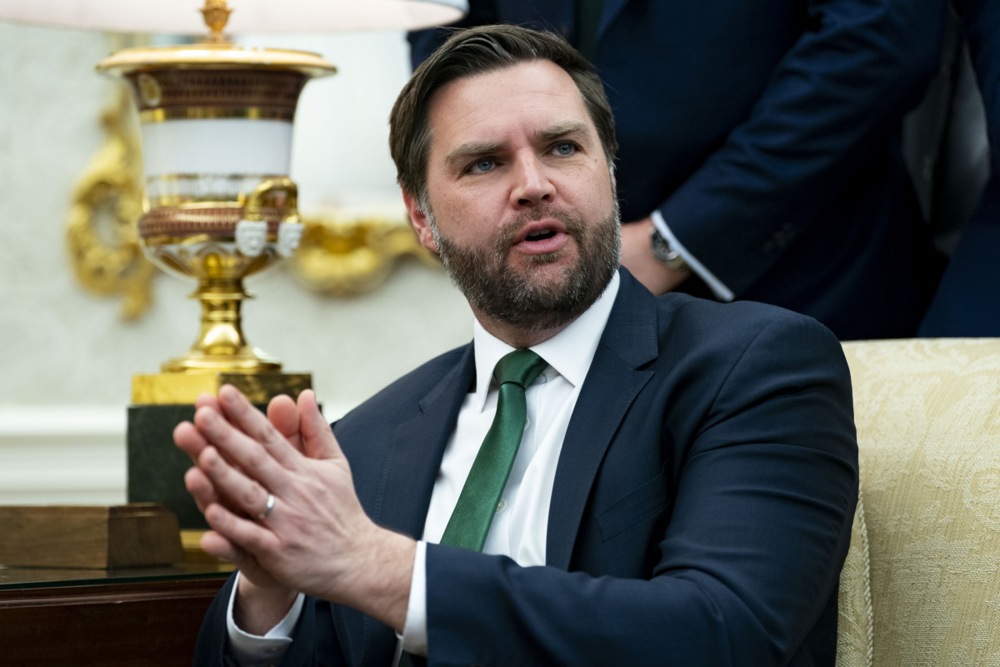
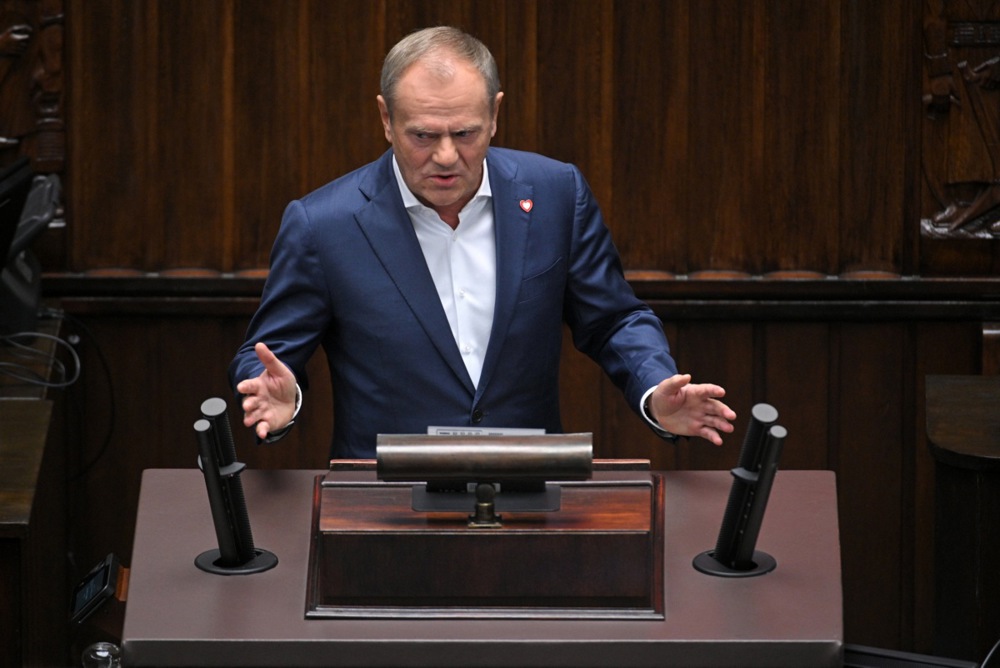
The US Undersecretary of War has said his country would “strenuously oppose” European nations such as Poland, Germany or the Scandinavian states from developing their own nuclear weapons.
Elbridge Colby also cast doubt on the ability of countries such as France to be capable of providing a nuclear umbrella for others such as Poland.
Colby was responding to claims by Polish President Karol Nawrocki that Poland would like to possess nuclear weapons and the offer made by French President Emmanuel Macron to provide a nuclear umbrella for willing European states.

The US Undersecretary for War was speaking at an event hosted by the US think-tank Council on Foreign Relations on March 4 and he was highly sceptical about the nuclear sabre rattling coming from Europe.
“I have not heard credible reporting of European governments really thinking about independent acquisition in violation of their Nuclear Non-Proliferation Treaty obligations,” said Colby.
“My understanding is that what is being discussed is more a question of the Europeans taking on a greater role,” he continued, adding that the British and French atomic arsenals have long been recognised as a valuable contribution to NATO’s nuclear deterrent.
He said, though, he did not feel that the proposed scenarios were in any way a substitute for established protection from the US.
“We put ourselves in contortions for 75 years trying to figure out how to do extended deterrence,” he said, emphasising that “the French nuclear deterrent is designed for the defence of France”.
“It’s one thing to change declaratory policy, it is another thing to have a credible nuclear deterrent that you can extend to countries that may be hundreds of miles away,” said Colby
Asked whether Washington would try to deter Germany, Poland or Scandinavian countries from developing their own nuclear capabilities if they approached the US, he said: “Yes, I think we would try to dissuade them,” adding that the United States would “at least strongly oppose” it.
“It’s hypothetical, but we are opposed to such a possibility,” he said.
In Poland, Deputy Prime Minister and foreign minister Radosław Sikorski, who serves in the centre-left government led by Prime Minister Donald Tusk, seemed to chime in with Colby’s words.
He said Poland had not received an invitation from France to join a shared nuclear deterrent, only “an invitation to talks”. He said Poland would discuss it but urged against looking too far ahead.
In a social media post responding to Colby, Sikorski called for cool heads in the nuclear debate. “I reiterate my appeal to politicians to stop grandstanding about nuclear weapons,” he said.
Tusk, though, seems determined to pursue the French scenario. He told his Cabinet on March 3: “Poland takes nuclear security very seriously.
“We will co-operate with our allies, including France, and as our own autonomous capabilities increase, we will also strive to prepare Poland for the most autonomous actions possible in this matter in the future.”
Last year, Tusk had also said that it may be better for Poland to develop its own nuclear capabilities rather than rely on those of others,
“It is clear that we would be safer if we had our own nuclear arsenal. If we decide to do it, it is worth being sure that it is in our hands and we make the decisions,” he said.
The French deterrent issue has been questioned by opposition Conservatives (PiS)-aligned Nawrocki whose national security adviser Sławomir Cenckiewicz accused the Tusk government of failing to inform the head of state about the on-going discussions with France.
Cenckiewicz suggested Poland would be better off seeking a nuclear sharing partnership with the US.
Colby’s remarks on Poland having nuclear weapons were not welcomed by Nawrocki’s camp. His press spokesman Rafał Leśkiewicz told commercial broadcaster Polsat News that “a single statement by a representative of the American administration does not prove anything”.
He reiterated that “we want to develop our capabilities when it comes to possessing nuclear weapons”.
He claimed Poland has “very good relations with the United States and will continue to discuss these matters with our key ally in the field of security and defence”.