





Armenia’s upcoming elections to appoint its next prime minister may have significant implications for the European Union, particularly in the context of its fragile relations with Russia.
The vote on June 7 could mark a decisive geopolitical shift, with Yerevan moving closer to the west and the EU while distancing itself from its longstanding alignment with Moscow.
This would potentially create a new pro-western pivot within the post-Soviet space, which in turn helps explain the endorsement that the current pro-European government in Armenia has been receiving from the EU and several European capitals.
At the same time, though, a number of observers warn that a pro-European turn could coincide with an illiberal drift domestically, raising questions about the possible contradictions in the EU’s geopolitical support for Armenia if it were to coincide with a weakening of domestic liberal-democratic standards.
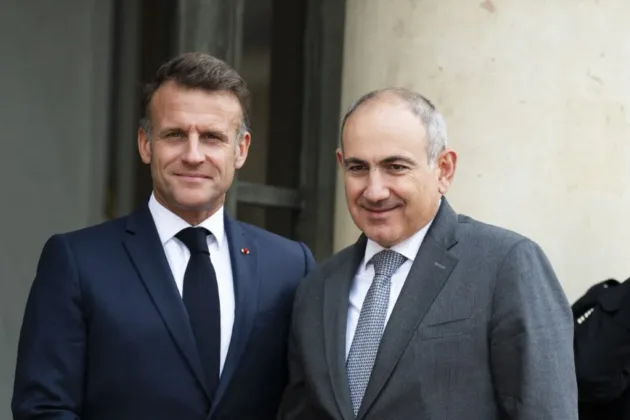
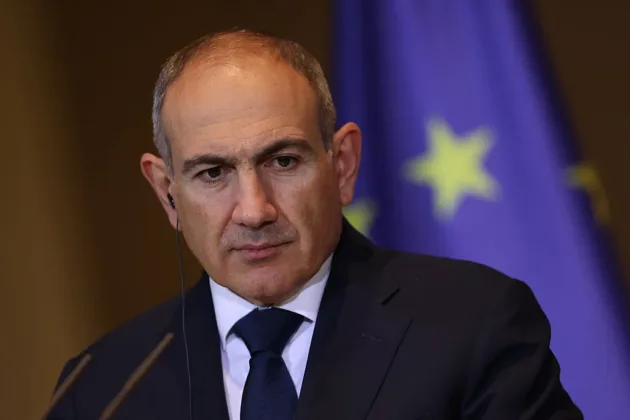
The elections come at a moment when the Armenian Government, led by incumbent Prime Minister Nikol Pashinyan, has embarked on a broader geopolitical recalibration, pursuing two long-taboo objectives unfolding in parallel.
They are normalising relations with its historic enemy Azerbaijan and moving closer geopolitically to the EU by reducing its dependence on Moscow. Armenia remains formally bound by a mutual defence agreement dating back to the post-Soviet period but seeks to shift toward closer ties with the EU.
This shift was underscored in August 2025 by the Washington Declaration, a joint political statement between Armenia and Azerbaijan, which set the stage for a comprehensive peace agreement after decades of conflict. The latest escalation of that culminated in 2023 with the mass displacement of Armenians from the disputed Nagorno-Karabakh region.
In Washington, the two sides expressed their intention to bring a definitive end to the conflict, with Armenia acknowledging Azerbaijan’s sovereignty over Nagorno-Karabakh, while the declaration committed both parties to swiftly advancing toward the signing and ratification of a full peace treaty.
At the same time, Armenia has been deepening its engagement with the EU. The Armenian parliament adopted an “EU accession law” in spring 2025 and Yerevan and Brussels signed a new strategic partnership agenda on December 2, 2025. In 2024, the two sides also launched a visa liberalisation dialogue.
Armenian Government officials increasingly speak of the country’s European aspirations. A victory for Pashinyan in the upcoming elections would likely strengthen this trajectory, bringing Armenia closer to the EU and reinforcing its ongoing geopolitical realignment toward the west.
The EU has consistently expressed strong support for Armenia’s current reform trajectory and its pro-European orientation, welcoming Yerevan’s “ambitious reform agenda,” its deepening partnership with Brussels and progress toward closer political association. This engagement has been widely interpreted as indirect political backing for the country’s broader pro-western course.
Against this backdrop, two forms of strong contest are emerging: On one hand, domestic opposition forces, with segments of the public, religious circles and the political opposition mobilising against the government’s current course; on the other, some international observers (mostly linked to the Armenian diaspora) are increasingly warning of a presumed illiberal drift domestically on which this new geopolitical course is said to rest.
At the political level, opposition forces argue that while the government advocates closer alignment with the EU and the US, Turkey — Armenia’s historical adversary and Azerbaijan’s principal ally — effectively represents western interests in the region as a NATO member.
In this view, a combination of a pro-western pivot and normalisation with Azerbaijan risks turning Armenia into a Turkish protectorate, undermining its sovereignty.
For many in these circles, Russia’s continued presence in the region is still seen as a counterweight preventing excessive dependence on Ankara. In this context, some opposition actors do not conceal their political proximity to the Kremlin.
On the level of political freedoms, significant controversy has instead emerged around recent developments involving the Armenian Apostolic Church, an institution that holds a uniquely central place in Armenian national identity.
Beyond its religious role, the Church has historically functioned as a key custodian of Armenian language, culture and collective continuity, particularly during centuries of foreign rule, the dispersion of the Armenian people, and the legacy of the 1915–1923 Armenian Genocide, making it widely perceived as closely intertwined with the nation’s historical survival and identity.
In recent months, the Armenian Government has overseen the arrest of several high-ranking figures within the Church, following the institution’s increasingly vocal criticism of the authorities and amid government claims that parts of the Church hierarchy are aligned with Russian interests.
The arrests were justified by the government on the basis of alleged criminal offences and unlawful political activity, while authorities also continued to warn of what they describe as Russian hybrid influence in Armenia.
Pashinyan has also directly targeted Catholicos Garegin II, the Supreme Head of the Church, calling for his resignation and accusing him of violating his vow of celibacy. In early 2026, Armenian authorities imposed a temporary travel ban on him as part of an ongoing judicial investigation.
For the current government, the Church’s influence has increasingly been viewed through a political and geopolitical lens.
Pashinyan and his allies have suggested that parts of the Church hierarchy are aligned with Russian interests, framing it as a potential instrument of external influence in domestic affairs. Critics of the government, by contrast, reject this interpretation as an attempt to weaken any organised opposition to its geopolitical shift.
Despite continued western support for Armenia’s pro-European trajectory, a range of international observers and civil society actors have raised concerns about what they describe as a growing illiberal drift.
Human rights advocates briefing the US Congress in late 2025 warned that actions against senior figures of the Armenian Apostolic Church could amount to political pressure amid an intensifying domestic power struggle.
Similarly, Armenian and diaspora-linked organisations have criticised what they see as weakening checks and balances, arguing that increased executive influence over the judiciary and religious affairs may conflict with Armenia’s commitments under the European Convention on Human Rights.
While these assessments remain contested and are not echoed by most western governments — which continue to prioritise Armenia’s geopolitical shift away from Russia — they nevertheless reflect a parallel strand of international commentary highlighting concerns over liberal-democratic standards alongside Armenia’s westward realignment.
The outcome of the June 2026 elections may therefore prove decisive in determining Armenia’s long-term geopolitical trajectory, which Pashinyan frames as a fundamental choice between war and peace.
The opposition, much of it coalescing around the Church, instead views the vote as a question of national security, arguing that Armenia’s stability can only be safeguarded through continued Russian involvement.
For the EU, the stakes are equally delicate: How to reconcile strategic support for Armenia’s geopolitical reorientation with the risk that this very trajectory may be accompanied by increasing domestic institutional concentration and democratic fragility.