
In Italian, there is a saying: “The elephant in the china shop” — something obvious and problematic that everyone can see but no one addresses for fear of causing damage.
The phrase surfaced repeatedly on April 18 in Milan’s Piazza del Duomo during a demonstration organised by the pan-European right-wing group Patriots for Europe.
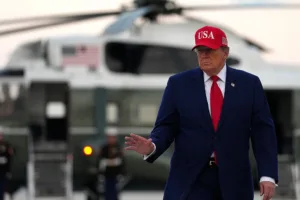
It referred to the recent tensions between the administration of US President Donald Trump and European right-wing parties — an issue widely discussed behind the scenes, but largely avoided on stage.
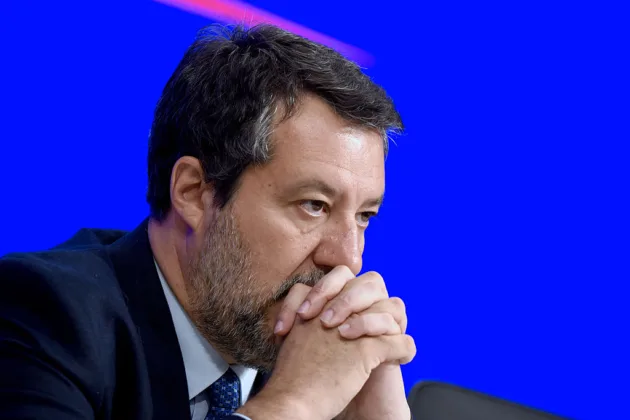
Only Matteo Salvini, Italy’s Deputy Prime Minister and leader of the League, briefly touched on it, insisting that transatlantic relations are not in question.
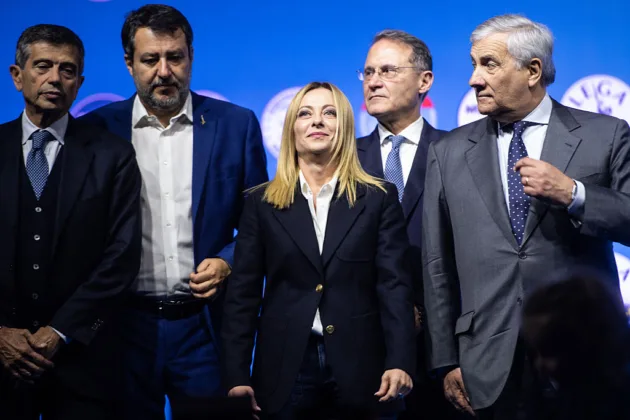
Called “Without fear. In Europe, masters in our own home,” the event was organised by Salvini, who brought together representatives from across Europe belonging to the Patriots for Europe group in the European Parliament.
Among those addressing the crowd were Jordan Bardella, President of France’s Rassemblement National (RN), Party for Freedom leader Geert Wilders of the Netherlands, Voice of Reason leader Afroditi Latinopoulou of Greece, Vlaams Belang leader Tom Van Grieken of Belgium and Vox President Santiago Abascal of Spain (via video link), alongside other party chiefs from across the continent.
The rally focused on themes typical of the sovereigntist Right: Opposition to mass immigration, criticism of Islamic extremism and attacks on the European Commission and its President Ursula von der Leyen.
The demonstration began with a march through the streets of Milan before concluding in Piazza del Duomo, beneath the city’s cathedral, where speakers addressed a crowd estimated at between 2,500 and 4,500 people.
The event took place at a politically sensitive moment, which several participating politicians as well as ordinary attendees described in interviews with Brussels Signal yesterday as “problematic,” “difficult” and “delicate” for Europe’s right-wing movements.
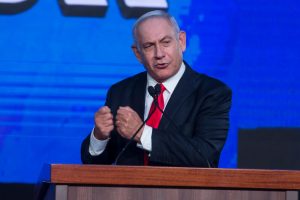
Two main concerns dominated discussions among attendees: The recent electoral setback of Viktor Orbán, a key figure within the Patriots for Europe alliance, and recent actions by the US administration seen by many as not always aligned with European interests.
In particular, the latest escalation involving Iran — and its economic repercussions for Europe — was frequently cited as already affecting citizens’ daily lives, especially through rising fuel prices.
Paolo Borchia, the League’s delegation leader in the European Parliament, told Brussels Signal there is a “cry of distress” coming from local communities due to rising prices and what he described as the harmful effects of the Green Deal, the EU Stability Pact and price increases linked to the US-led escalation involving Iran. He argued the Right must address these issues in response to its electorate.
Stressing the hope for positive relations with the US, he said Italy and Europe need predictability in transatlantic co-operation, a predictability that is not always a defining feature of Trump.
Among demonstrators interviewed, opinions on recent US actions varied.
Some strongly defended Trump, saying he should be supported “without ifs or buts”. The majority, though, expressed reservations about his recent conduct, reflecting a broader view that US decisions do not necessarily coincide with the priorities of the Italian and European Right.
Most respondents supported the critical positions adopted by Salvini and by Italian Prime Minister Giorgia Meloni in recent days, although these criticisms were not voiced from the stage during the rally.
The rally itself did not produce clear signs of a new strategy for handling tensions with the US or responding to Orbán’s electoral setback.
Instead, speakers largely called for unity and cohesion in what they repeatedly described as a “delicate,” “difficult” and “problematic” moment.
Whether the Patriots for Europe group will adjust its strategy in response to transatlantic tensions and Orbán’s defeat remains unclear. For now, the prevailing message is one of unity, as the movement seeks to navigate an increasingly complex political phase.