In just three months in 2026, Brussels has already recorded 22 shootings, resulting in at least ten injuries and one death.
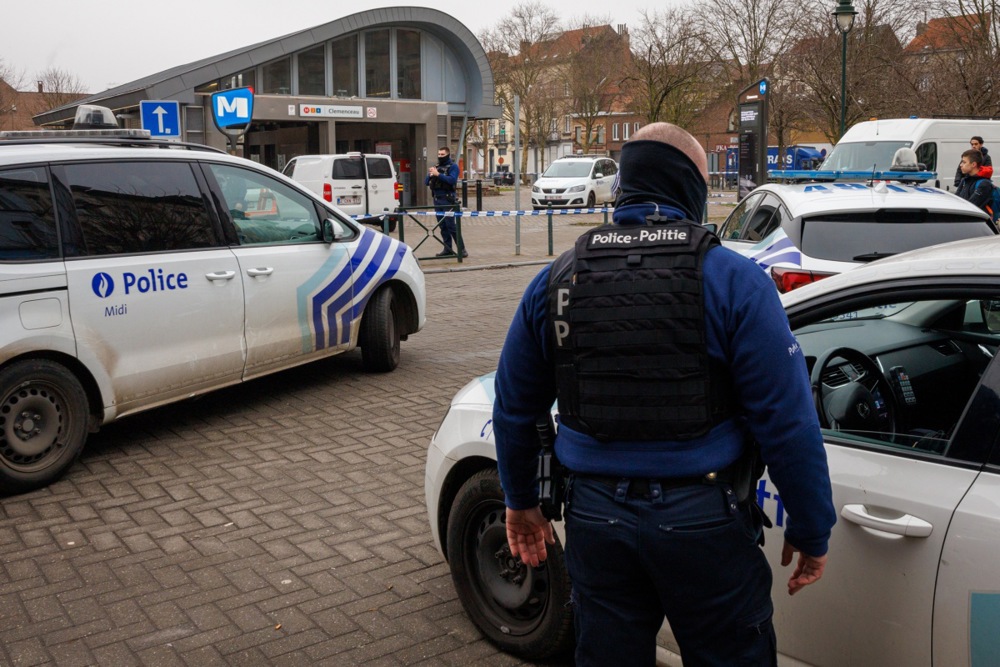
The latest incident occurred last night in the district of Anderlecht, a rough area in south-west Brussels, when a man was seriously injured by a gunshot to the arm near the Clemenceau metro station.
The shooting is believed to be linked to ongoing territorial disputes between drug traffickers.

Drug-related violence has shown no sign of abating in Brussels since the turn of the year, reported news outlet Sudinfo.
Anderlecht in particular has been hit from the first days of January, with gunshots fired on Place Alphonse Lemmens, a square which was the scene of several earlier gun incidents, and images were circulating on social media of armed individuals there.
The phenomenon quickly spread to other parts of the capital, with shootings reported in even in fashionable Ixelles, also Saint-Josse-ten-Noode, Schaerbeek and Molenbeek-Saint-Jean. Some of these shootings occurred in broad daylight and in busy public areas.
March proved particularly intense.in
In Anderlecht alone, four shootings erupted in little over 24 hours in March, leaving two people injured. The wave of violence reached the city centre, also: Two incidents in the Anneessens area, not far from the Gare de Midi, known as “a hotbed” of drugs and violence, left two victims, one gravely injured.
Of the 22 shootings registered so far in 2026 across the Brussels-Capital Region, eight appear linked to narcotics trafficking or turf wars between criminal groups.
In police terms, these incidents de tir (shooting incidents) are frequently tied to score-settling, intimidation, or marking territory in the city’s drug trade hotspots.
The drug trade in Brussels is largely dominated by organised criminal networks with migrant backgrounds. There are groups of Moroccan, Albanian, and North African origin, alongside Marseille-style drug clans.
These networks control cocaine distribution from the port of Antwerp into the capital, and engage in turf wars over street-level dealing in neighbourhoods.
This early surge in violence comes after 2025 marked the most violent year on record for shootings in Brussels. Federal police reported 96 incidents, surpassing the previous high of 92 in 2024.
Fatalities stood at eight in 2025, broadly in line with the nine the year before.
The majority of incidents continue to occur in a handful of municipalities, especially Anderlecht, the City of Brussels, Sint-Gillis, Molenbeek-Saint-Jean, and Schaerbeek.
Neighbourhoods such as Kuregem in Anderlecht and areas around the historic centre of Molenbeek have been particularly affected.
Many of the shootings follow a recognisable pattern. Examples from recent months include score-settling between drug networks in Anneessens, pursuit-style incidents in city-centre night shops, and shows of force in Anderlecht where participants film gunfire and share the clips online as intimidation.
What was once largely confined to rival criminal factions now increasingly spills into everyday life.
While victims remained relatively few compared with the volume of incidents, the risk of collateral damage from stray bullets is growing.
Residents and local workers in affected districts say they experience a heightened level of tension, and public spaces feel less safe.
At the end of March, two street sweepers were threatened at gunpoint by a man after a minor altercation.
Julien Moinil, Brussels’ Chief Prosecutor, was put under police protection following threats from the city’s criminal drug underworld. https://t.co/Bw177Y80AE
— Brussels Signal (@brusselssignal) July 8, 2025