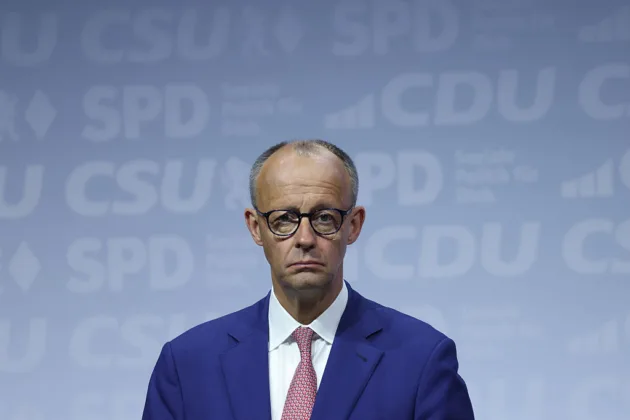










German Chancellor Friedrich Merz has stated that climate protection measures must not hinder economic growth or endanger Germany’s industrial base, warning that policies leading to deindustrialisation would lack public support and ultimately slow innovation.
Speaking at the Petersberg Climate Dialogue in Berlin on April 22, Merz reaffirmed Germany’s commitment to combating climate change while stressing the need to balance environmental goals with industrial competitiveness.
“We want to contribute to the fight against climate change and Germany will make huge efforts to combat it,” he told delegates from more than 30 countries.
However, he added: “Climate protection must not endanger the industrial base in Germany and in other countries.”
He stressed that climate policies should be “multilateral, ambitious and effective” while preserving competitiveness to retain public support and encourage economic growth.
“A transformation that leads to deindustrialisation will not find acceptance among the public. And it will eventually hamper innovation,” he said. “Nevertheless, we will continue to be an important donor for public climate action.”
He added that green energy has become a driver of growth.
“In Germany, the clean-tech sector has grown 50 per cent faster than the overall economy since 2010,” he said, referring to areas such as the circular economy, solar and wind power, and hydrogen.
The remarks come amid ongoing debates over the pace and cost of Germany’s energy transition, further strained by the latest Middle East crisis and renewed pressure on raw-materials and energy markets, with the government under Merz maintaining the target of climate neutrality by 2045 while reviewing certain regulations inherited from the previous administration.
Merz’s government, struggling with high energy prices and low growth, has faced accusations from opposition figures and environmental groups of slowing progress on renewables and adjusting rules on heating systems and vehicle emissions to ease burdens on industry and households.
He also used the speech to defend carbon pricing as a market-based instrument, while calling for changes to the EU Emissions Trading System to keep it “fit for the future” and focused on competitiveness, particularly for energy-intensive industries.
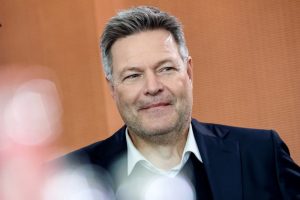
Robert Habeck, the former Vice-Chancellor and Economy and Climate Minister from the Greens, addressed the same issue at the Sustainable Economy Summit in Berlin earlier the same week.
Habeck has repeatedly argued that ambitious climate action is compatible with economic strength and has warned against any perceived regression in policy.
In earlier statements, Habeck maintained that climate protection in Germany would no longer fail due to a lack of funding but only due to “incompetence or unwillingness”. He has criticised approaches that he believes dilute green industrial policy or delay key measures such as the phase-out of combustion engines.
Habeck has also rejected claims there was a connection between Germany’s weak economic performance and the nuclear phase-out.
“I don’t see that,” Habeck told Euronews. “Nuclear energy still accounted for only around five percent of electricity demand in 2022.”
The Petersberg Climate Dialogue, now regularly held in Berlin, serves as a preparatory meeting ahead of major UN climate conferences. This year’s edition also underlined a widening divide in Germany’s climate debate: Whether decarbonisation should be pursued above all as an environmental imperative or reshaped more explicitly around industrial survival and economic security.