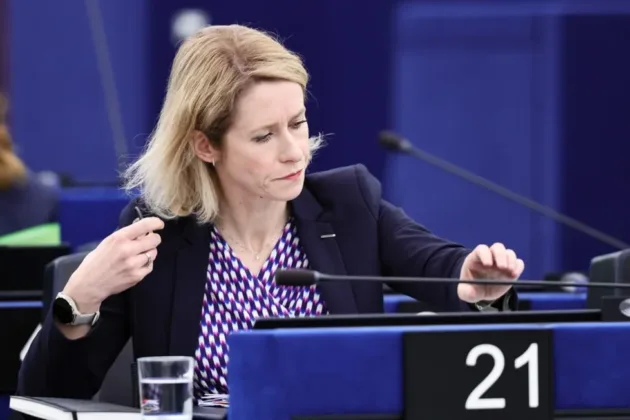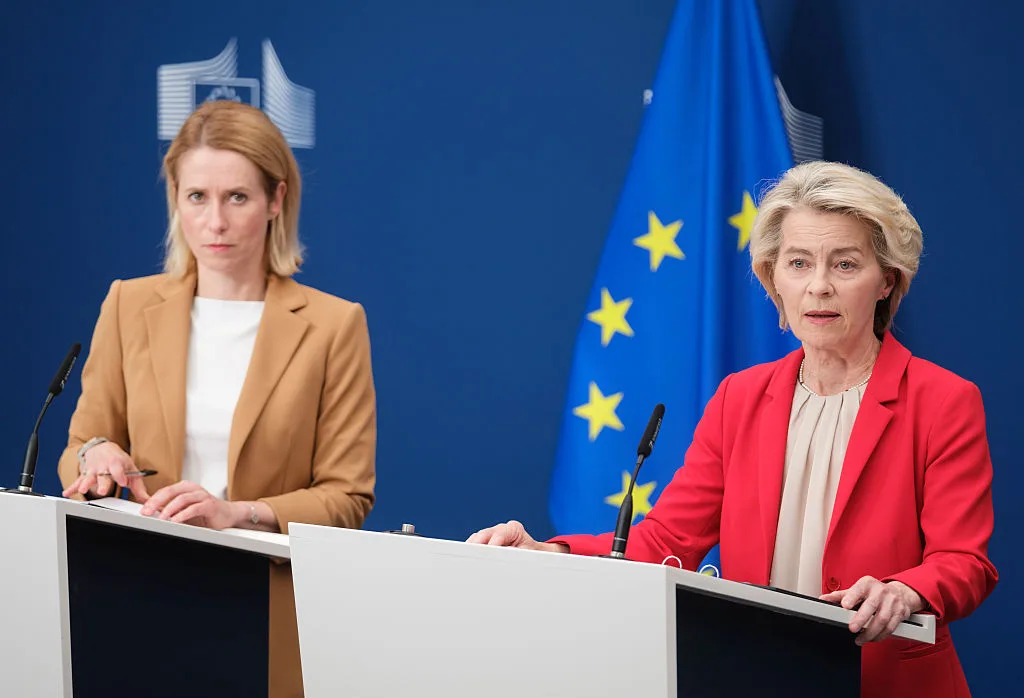





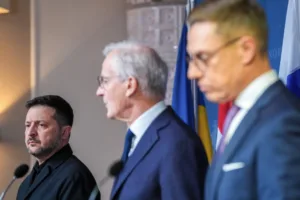
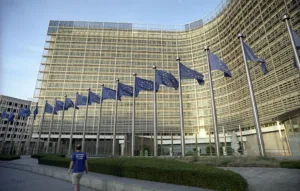
The European Union’s foreign policy chief, Kaja Kallas, told a conference at the European Parliament in Brussels on Wednesday that new member states should join the bloc by 2030. It was, she said, a “geopolitical decision.”
No citizen of any current EU member state has been asked, though, whether they want to live in a bloc of 35 or more countries. No referendum has been held. No manifesto was put to voters. The 2030 date is political, not contractual. No treaty enforces it and no mechanism exists to hold Brussels accountable if it passes without a single new member joining. The Western Balkans were told at a Thessaloniki summit in 2003 that their European future was assured, and most of them are still waiting.
GEOPOLITICS DRESSED UP AS VALUES
Kallas was candid about what is driving the renewed push. “The global order is shifting, and Europe’s security is increasingly at risk,” she said. Enlargement, in her framing, is not primarily about democracy or prosperity. It is about countering Russia.
It is a significant shift from the values-based language the EU has used for years to justify an accession process that demands candidate countries transform their legal systems, judiciaries, media environments and economies before being admitted. When geopolitics becomes the main justification, questions about democratic consent, institutional capacity and fiscal consequences tend to become secondary.
THE FRONTRUNNERS: SMALL COUNTRIES, LONG WAITS
Montenegro has been negotiating membership since 2012. It has opened all 33 chapters required under the accession process, with seven provisionally closed. The Commission says it could close all negotiations by the end of 2026 — which would still leave ratification by all 27 member states, a process that itself can take years.
Albania has made faster recent progress, opening four clusters of chapters since September 2024. Both countries are held up by Brussels as proof that the process works. They might equally be held up as proof of how long it takes.
SERBIA: THE AWKWARD PARTNER BRUSSELS CANNOT QUIT
No country better illustrates the gap between the EU’s stated criteria and its practice than Serbia. Belgrade has been in accession talks since 2014. Of the 35 chapters in its accession process, 22 are open and only two are provisionally closed. Progress has, for practical purposes, stopped.
Serbia refuses to impose any of the 19 packages of EU sanctions on Russia. President Aleksandar Vučić attended Russia’s Victory Day parade in Moscow in May 2025 and the Chinese military parade in Beijing in September. His government’s foreign policy compatibility with EU positions stands at 63 per cent, against more than 90 per cent for every other Balkan candidate.
The EU’s response has been to continue talking. A proposal by Hungary to advance Serbia’s talks was rejected in late 2024 by Germany, the Netherlands and the Nordic countries — not to end the process, only to pause one stage of it. The talks remain stuck. The pre-accession funds continue to flow.
UKRAINE AND MOLDOVA: THE WAR PREMIUM
Ukraine and Moldova received candidate status in June 2022, weeks after Russia’s full-scale invasion began. The speed of that decision — years faster than any other candidacy in recent memory — raised questions about whether the merit-based process is as consistent as Brussels claims.
Moldova has made genuine progress on judicial and administrative reforms. Ukraine’s situation is categorically different. Accession negotiations are being conducted with a country still at war, part of whose territory is under foreign military occupation, and whose institutions are operating under conditions no accession framework was designed to handle.
The practical consequences of Ukrainian membership — for the EU budget, for agricultural policy, for structural funds currently flowing to existing member states — are not being seriously debated in public.
GEORGIA: WHAT THE EU’S LEVERAGE ACTUALLY LOOKS LIKE
Kallas cited Georgia as an example of what happens when a country is left in a “grey zone.” The Commission’s own description of Georgia’s current status is less diplomatic: “a candidate country in name only.”
Georgia was granted candidate status in December 2023. Within months, the ruling Georgian Dream party had passed a foreign agents law modelled on Russian legislation. The EU suspended progress and froze financial support. Mass protests followed.
The episode showed the limits of the accession process as a tool of influence. The promise of eventual membership works only as long as governments value it enough to pay the political price of reform. When they do not, Brussels has limited means of response.
TURKEY: 26 YEARS AND COUNTING
Turkey applied for EU membership in 1987. An Asian country, it was granted candidate status in 1999. Accession negotiations opened in 2005. They have been effectively frozen for a decade, over concerns about rule of law, press freedom and the Cyprus dispute.
The Commission still describes Ankara as “a candidate country and key partner.” The Turkish file is a useful reference point: in EU enlargement, time limits have rarely meant much, deadlines have not been binding and candidate status, once granted, is almost never formally withdrawn.
THE EU’S OWN REFORM PROBLEM
Kallas acknowledged that the bloc must reform itself before it can absorb new members. Decision-making in EU foreign policy currently requires unanimity among 27 governments. Adding eight or ten more member states, each with a veto, would make agreement harder to reach. Internal reforms to address this have been discussed for years without result, in part because changing voting rules requires the agreement of the same governments that benefit from their current veto power.
The fiscal consequences of enlargement are equally unresolved. Integrating Ukraine alone — the largest country in Europe outside Russia, with significant agricultural capacity and substantial economic needs — would require either a significant increase in the EU budget or a restructuring of funds that current member states rely on.
Kallas spoke on Wednesday of making Europe “safer, stronger and more stable.” Whether enlargement on this scale achieves that, or complicates it, is a question that has not yet been put to the people most affected by the answer.