

Former French president François Hollande has stated that he is preparing for a potential return to the Élysée Palace in the 2027 presidential election.
In a major interview published by the weekly magazine Marianne yesterday, Hollande responded directly to the question of how he could be useful today by saying, “By preparing myself. So I am preparing myself.”
This marks the first time the former Socialist president has explicitly acknowledged his personal ambitions for the next presidential race.
Hollande, who served as president from 2012 to 2017 and was re-elected as a Socialist deputy in 2024, argued that the key issue is not being the best-placed candidate at present but succeeding in being elected president.
He suggested that political crystallisation could occur late in the campaign, giving him a year to convince voters of a possible “remontada”, or comeback.
The remarks come amid deep divisions within the French Left and the Socialist Party (PS) ahead of the 2027 election.
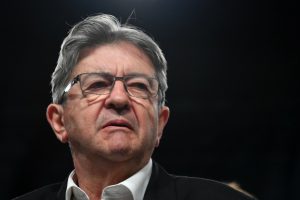
Hollande has positioned himself as a representative of reformist social democracy, distancing himself from the hard-left La France Insoumise (LFI) led by Jean-Luc Mélenchon, whom he has criticised sharply.
He has ruled out alliances with LFI and expressed scepticism about a broad Left primary.
À la une de #Marianne cette semaine :
🔸 François Hollande, la grande interview
🔸 Sarko-Guéant : la guerre est déclarée
🔸 Trump est-il (vraiment) barjot ?
🔸 Le pactole français de TotalEnergies
👉 https://t.co/4dpzuQ14Zc pic.twitter.com/fhkhiztV8n— Marianne (@MarianneleMag) April 15, 2026
Current polling shows Hollande trailing significantly, with around six per cent of voting intentions, well behind other potential left-wing figures and right-wing frontrunners.
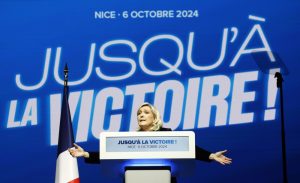
National Rally (RN) and its leader Jordan Bardella are dominating the field. In recent surveys conducted in March and April, Bardella lead first-round voting intentions with around 35 per cent to 38 per cent, far ahead of anyone else.
Hypothetical second-round match-ups consistently show Bardella defeating potential Socialist or centre-left candidates, including Hollande, by significant margins.
Hollande, though, appears to believe his experience and moderate profile could appeal in a fragmented field.
His 2012–2017 presidency was marked by historically low popularity.
Approval ratings fell to record lows, reaching as little as four per cent in some polls, making him one of the least popular French presidents of the Fifth Republic.
Persistently high unemployment, sluggish economic growth and a series of policy U-turns contributed to widespread disillusionment.
A flagship measure, the so-called “millionaire tax” (a 75 per cent supertax on earnings above €1 million), proved particularly controversial.
Introduced as a symbol of fiscal justice, it was widely criticised as anti-business, generated meagre revenue, prompted some high-profile departures (including actor Gérard Depardieu) and was eventually quietly abandoned after being struck down in part by the Constitutional Council.