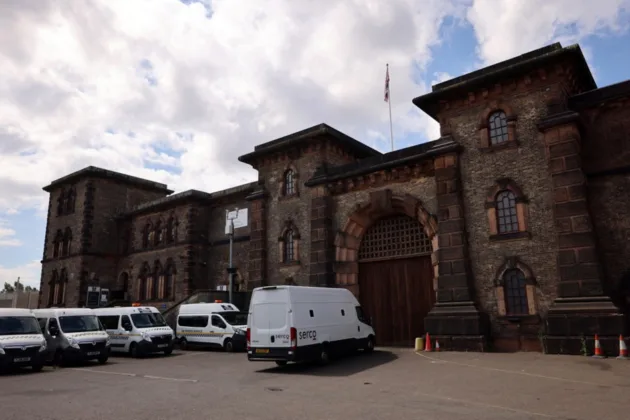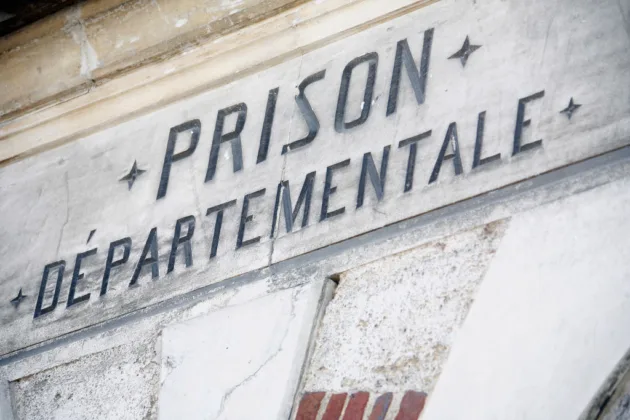






The French Government is preparing measures for automatic or facilitated early releases of certain prisoners as a way to ease chronic and record-level overcrowding in the country’s prisons.
According to reports in news outlet Le Monde yesterday, Justice Minister Gérald Darmanin is quietly advancing proposals that would allow accelerated early releases for inmates nearing the end of their sentences, particularly those convicted of less serious offences.
One major concept is the introduction of a “prison ceiling” or a “critical accommodation threshold”, a hard maximum on the possible number of detainees a prison can hold that would require the release of prisoners in order to take new ones in.
“For far too long, prison overcrowding has been undermining our penitentiary system. It degrades both the working conditions of our courageous prison officers and the detention conditions of inmates, preventing effective action against recidivism,” Darmanin said in a statement on X on April 14.
“We must act with determination. Without delay,” he said.
“This is why the Council of State examined today the “execution of sentences” bill that I will present in the coming weeks to the Council of Ministers, before its review by Parliament.
“It will include clear measures that I have formulated to combat this French scourge, including the state’s obligation to build the necessary prison spaces or the legal abolition of floor mattresses,” Darmanin said.
A parliamentary proposition of law backed by Macronist MP Florent Boudié is also under discussion. It includes emergency provisions for conditional early release in exchange for good behaviour, with stricter penalties in case of recidivism.
Prisoners convicted of crimes and acts of terrorism, as well as those under disciplinary sanctions, would be excluded from the system.
As of March 1, French prisons held 87,126 inmates for an operational capacity of around 63,353 places, resulting in a national occupancy rate exceeding 137 per cent.
Some remand prisons and local facilities continue to operate at nore than 200 per cent capacity, with inmates sleeping on mattresses on the floor.
The Council of Europe has repeatedly warned that such conditions risk turning French prisons into “holding pens for humans” that compromise human dignity.
French President Macron had promised to build up to 15.000 new cells but has not got close to that number and only added a fraction to date.
Extra prisons are opposed by the political Left, who generally do not believe in incarceration and have a tendency to attribute crime to sociology-economic factors over individual responsibility.
The initiative echoes limited early-release schemes used during the Covid-19 pandemic in 2020, when nearly 7,000 prisoners were freed to reduce density.
Proponents argue that without such “prison regulation” mechanisms, ongoing construction of new places will not suffice to resolve the structural crisis.
The proposals have drawn sharp criticism from the Right, who have denounced the plan as a dangerous softening of penal policy that prioritises “emptying prisons” over public safety.
They warn that automatic early releases could lead to increased recidivism and place law-abiding citizens at risk.
The Institute for Justice, an association and think-tank composed of citizens, victims and experts from the judicial world, mobilised to reform criminal justice, launched a petition to “prevent this judicial disaster from passing“.
Foreign nationals (excluding people with double nationality and those naturalised) account for around one fourth of the French prison population.
On January 31, 2024, there were 18,752 foreign prisoners (18,173 men and 579 women) out of a total prison population in France.
The largest groups among foreign inmates tend to come from Africa and parts of eastern Europe or the Balkans.
Foreign prisoners are over-represented relative to their share of the general population, as they make up about seven per cent to nine per cent of France’s resident population, depending on definitions.