Days after a clause in Germany’s new conscription law sparked a wave of criticism, the country’s defence ministry has announced it was repealing the controversial rule.
The rule would have required men of military age to obtain permission from the German army before travelling abroad.
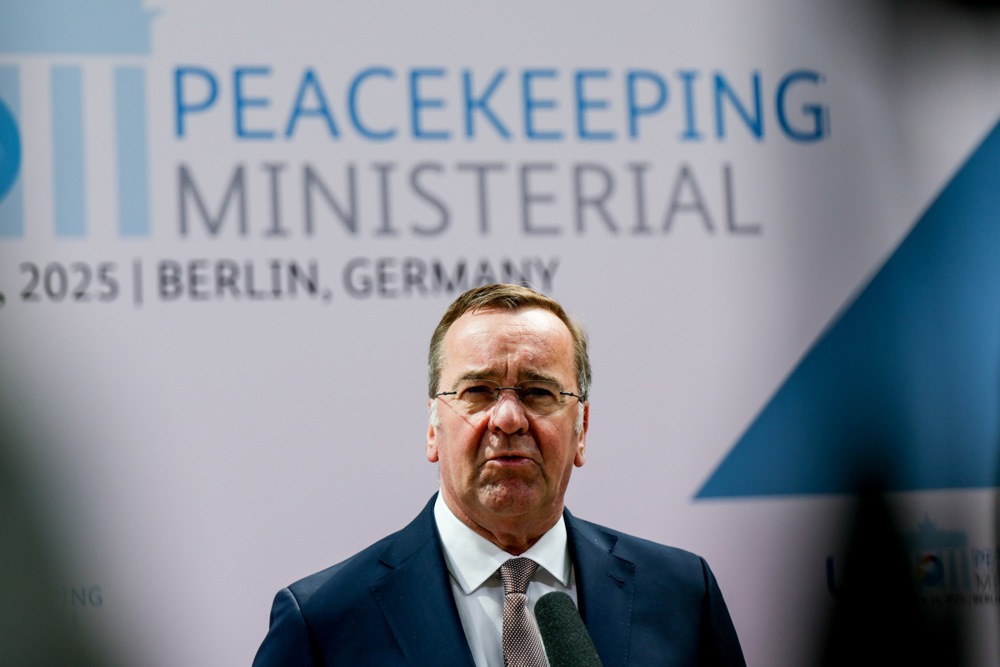
Today, defence minister Boris Pistorius (Social Democratic Party, SPD) told news agency dpa he would pass a regulation halting the requirement.

“Of course, every man between 17 and 45 years of age is allowed to travel abroad and does not require a permit for that,” Pistorius said.
“I have already urged my experts to complete a regulation putting this into practice quickly,” he added, promising that the regulation would be finished by the end of the week.
The new freedom, though, will only last for as long as military service remains voluntary in Germany.
Pistorius said: “During the current period of peace, there will be no authorisation procedures. We are suspending the requirement for authorisation for as long as military service remains voluntary.”
Experts surmise that it is only a question of time until Germany will have to reintroduce conscription – as there are too few volunteers to meet the government’s ambitious plans for building up its armed forces.
In the week before Easter it had transpired that Germany’s newly revised conscription law – which entered into force on January 1, 2026 – contained a clause requiring men between 17 and 45 to obtain a permit from their local army office before leaving the country for more than three months, irrespective of whether they were serving in the army or not.
Before the revision, this duty had only existed “in the event of a state of emergency or defence”. This qualification was dropped in the new law, which had previously escaped the scrutiny of both lawmakers and the media.
After the new rules transpired, causing a storm of outrage, Pistorius’ ministry had first accused media outlets of spreading “fake news”, claiming the permission to travel did not have to be applied for but was granted automatically. This was later shown to be wrong by legal experts.
The mishaps and misunderstandings surrounding the new law have cast a shadow on Pistorius, who still is Germany’s most popular politician, according to media rankings.
Independent journalist Boris Reitschuster said it was “a mystery” why Pistorius was so popular despite his blunders.
Left-wing politician Sahra Wagenknecht said: “Pistorius should resign in view of this appalling legislation.”