





The US-based Consumer Choice Centre (CCC) has warned that activist groups risk turning the European Union’s new anti-SLAPP (Strategic Lawsuit Against Public Participation) rules into a shield against accountability for actions ruled unlawful in US courts.
The CCC is a Washington-based, independent, non-partisan consumer advocacy group and its warning comes ahead of a planned hearing on April 16 in the Amsterdam District Court.
That court will hear Greenpeace International’s attempt to invoke the EU Anti-SLAPP Directive against US energy firm Energy Transfer, in a move widely seen as an effort to block or undermine enforcement of a $345 million (€292 million) damages award issued by a North Dakota court over protests against the Dakota Access Pipeline.
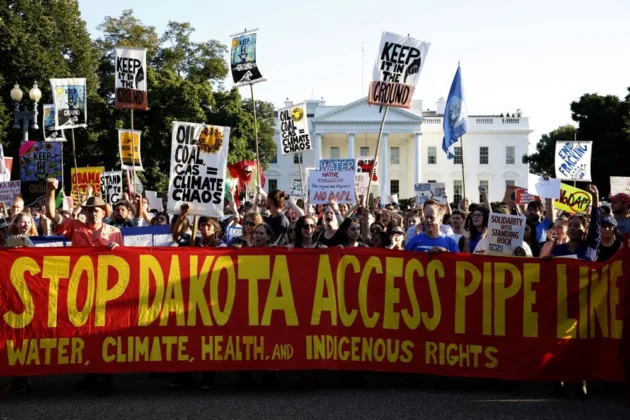
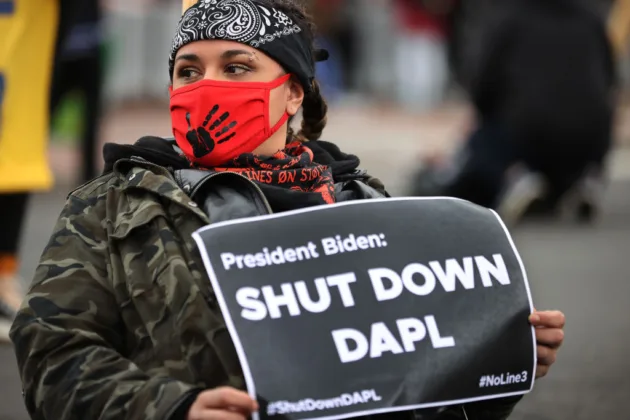
The case originates from demonstrations in 2016–2017 near the Standing Rock Sioux Reservation.
In March 2025, a North Dakota jury found Greenpeace entities liable for trespass, defamation, tortious interference with business, nuisance and civil conspiracy related to actions including property damage and disruption of pipeline construction.
The jury initially awarded more than $667 million (€565 million).
Judge James Gion reduced the amount to approximately $345 million, a figure he finalised on February 27, 2026.
The breakdown includes about $149 million (€126 million) for direct harms, $143 million (€121 million) for tortious interference, $50 million (42 million) for defamation and smaller sums for conspiracy.
Environmental network Greenpeace is turning to the Dutch courts in an attempt to have a multimillion-dollar fine imposed in a US lawsuit set aside. https://t.co/6FHB30qNme
— Brussels Signal (@brusselssignal) February 6, 2026
Greenpeace has described the US proceedings as a classic SLAPP intended to silence environmental advocacy and has filed a motion for a new trial, citing alleged bias in the jury pool.
It plans further appeals to the North Dakota Supreme Court if necessary.
The group maintains its actions were peaceful solidarity with Indigenous-led resistance.
Instead of confining its defence to the US appeals process, Greenpeace International — registered in the Netherlands — filed a suit in Dutch court in early 2025 seeking to have Energy Transfer’s litigation declared abusive under both Dutch tort law and the EU Anti-SLAPP Directive.
The organisation argues that the US judgment constitutes intimidation and is asking the Dutch court to award it costs and damages while effectively preventing enforcement of the US verdict in Europe.
The April 16 hearing represents one of the first significant tests of the directive, which aims to protect journalists, NGOs and citizens from abusive lawsuits designed to stifle public participation.
CCC Deputy Director Yaël Ossowski criticised the strategy. “Greenpeace ran a campaign against the Dakota Access Pipeline built on defamation and attempted sabotage, and a North Dakota jury awarded Energy Transfer more than $667 million for the damage it caused. A judge cut that to $345 million,” he said.
“So now Greenpeace’s answer is to haul the pipeline company to court in the Netherlands and ask the EU to declare the whole thing a ‘SLAPP suit.’ That’s not fighting for the environment. That’s escaping accountability from the verdict of a judge and jury.
“The EU anti-SLAPP directive exists to protect ordinary people from being crushed by libel suits funded by governments and oligarchs,” Ossowski added.
“Greenpeace wants to turn it into a shield against a $345 million judgment. European legislators should pay close attention to what their law is being used for, because nullifying this judgment risks not only future energy prices and projects in Europe, but the rule of law itself.”
The CCC argues that such forum-shopping undermines judicial sovereignty, delays critical infrastructure, raises energy costs for consumers and creates a chilling effect on investment.
In a primer, the CCC asks the European Commission to issue guidance to ensure the Anti-SLAPP Directive cannot be used to overturn or block fully adjudicated foreign verdicts, preserving its original intent to protect genuine civic actors.
It further asks the US Congress to consider legislation preventing recognition or enforcement in US courts of foreign Anti-SLAPP judgments that interfere with domestic cases.
The issue could also be a point of contention in transatlantic energy and trade discussions.
Greenpeace has repeatedly stated that the US case threatens its financial viability and sets a dangerous precedent for environmental activism.
Energy Transfer maintains that the lawsuit addressed concrete unlawful conduct that caused significant economic harm and delayed a lawfully permitted project.