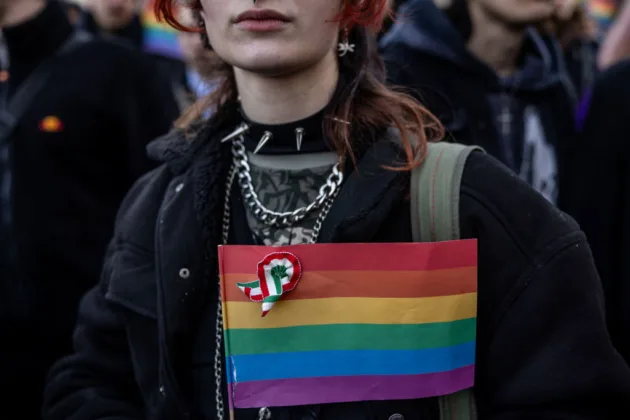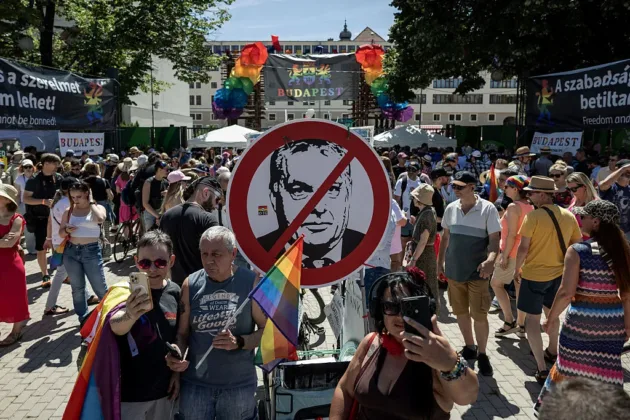






The Court of Justice of the European Union (CJEU) has ruled that Hungary violated EU law after it banned the display and promotion of LGBT content to minors under legislation introduced by Viktor Orbán’s government.
The 2021 law was officially presented as a child-protection measure, designed to strengthen rules against paedophilia.
The law also introduced restrictions on what young people can access, effectively banning or limiting content that depicts homosexuality, gender transition or gender identities different from biological sex.
Under the law, such material cannot be shown to under-18s in schools, on television, in advertising or through other media channels.
The EU’s top court found these measures unlawfully interfere with fundamental EU rights, such as the prohibition of discrimination based on sex and sexual orientation, respect for private and family life and freedom of expression and information.
In her June 2025 Opinion, the CJEU’s Advocate General Tamara Ćapeta likewise concluded that Hungary failed to provide any credible evidence justifying the restrictions.
“Hungary has not provided any evidence of the potential risk of harm that content depicting the daily lives of LGBTI+ people could pose to the healthy development of minors,” she said.
The CJEU went further, stating that the legislation itself is discriminatory in nature.
It found that the law “stigmatises and marginalises non-cisgender persons – including transgender persons – or non-heterosexual persons as being detrimental to the physical, mental and moral development of minors solely on the basis of their gender identity or sexual orientation”.
It also highlighted that the law’s wording, by linking LGBT identities with paedophilia, reinforces “stigma and risks encouraging hatred”.
It concluded that Hungary breached multiple areas of EU law, including internal market rules, the EU Charter of Fundamental Rights, Article 2 TEU and the General Data Protection Regulation (GDPR).
The European Commission can now seek financial penalties against Hungary if it fails to comply with the ruling.
Human-rights organisations see the decision as a test for Hungary’s political future and its relationship with the EU.
“If incoming Hungarian prime minister Péter Magyar truly aims to be pro-EU, he must place this at the top of his agenda for his first 100 days in office, as an essential part of his EU-facing reforms,” said NGO ILGA-Europe’s Deputy Director, Katrin Hugendubel.
“There is now no excuse for the Commission not to require Hungary to quickly withdraw the law. Hungary cannot enter a post-Orbán era without repealing this legislation, including the Pride ban,” she added.
Eszter Polgári of the Hungarian LGBTQI organisation Háttér Society highlighted the significance of the ruling, saying it sets an important precedent: “The CJEU has, for the first time, found an independent violation of Article 2 TEU for systematically undermining the rights of sexual and gender minorities.”