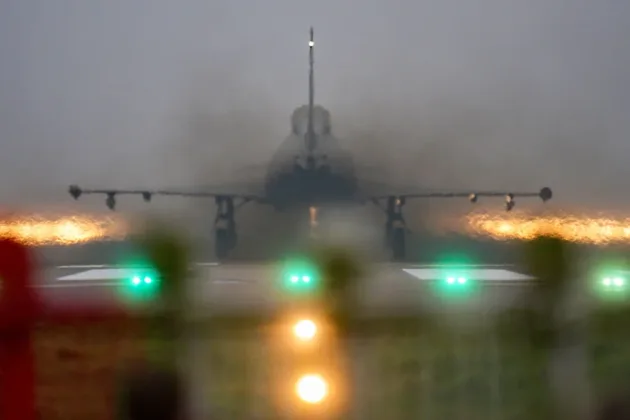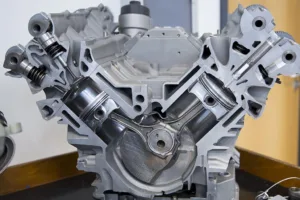



Another round of couples counseling last week failed to resolve the grinding Franco-Teuton dispute over the beleaguered Future Combat Air System (FCAS). In one corner stands Dassault, maker of the Rafale and reigning European champion of advanced fighter design. In the other, Airbus Germany, eager to use Berlin’s money to acquire French technical expertise. Each of these frenemies are backed by their respective national leaders. President Macron and Chancellor Merz have (again) pledged to save the partnership, which promises to be the most lucrative arms program in European history. They share a fear of being left behind in the race for sixth generation fighter jet capability. The American F-47 program is nearing first flight; the Anglo-Japanese-Italian Tempest program is well underway. Should the FCAS program collapse, neither France nor Germany has the capacity to field a comparable aircraft alone.
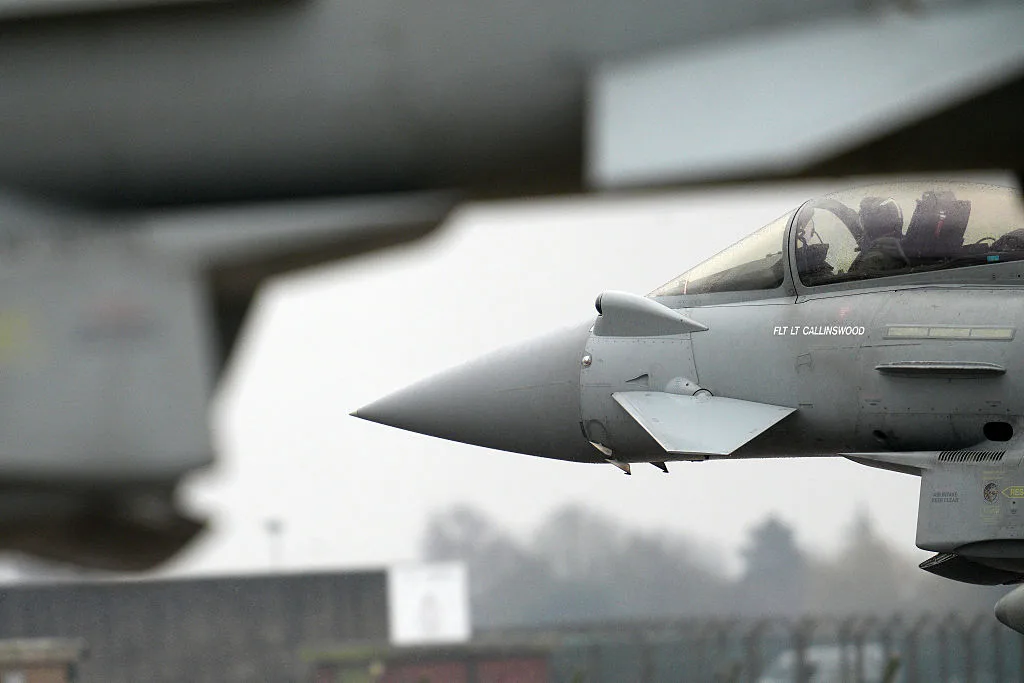
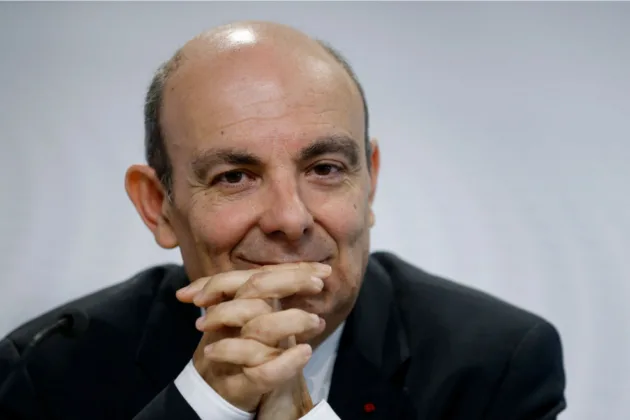
On the surface, the merits of the FCAS partnership seem obvious: France has the skills; Germany has the money. Any dispute should be resolved like any number of European procurement squabbles over money and production shares. Yet neither side is willing to compromise. Dassault demands complete control over the design of the fighter jet at the core of the program, seeing no value in German technical contributions. Dassault owns a complete production vertical, extending from its industry standard Catia design software to its mastery of the advanced technologies embedded in the Rafale. CEO Éric Trappier regards a multi-national design process as an inefficient complication. Airbus Germany wants to participate in key design decisions, gain access to Dassault’s proprietary technology and claim a healthy manufacturing share once the FCAS enters production. The Merz government hopes its massive financial contribution to the program will bolster Germany’s technological prowess and placate its notoriously restive aerospace unions. Germany points to its successful participation in the design and production of the Eurofighter Typhoon as proof of its value as a full partner. Dassault regards the Typhoon’s massive cost overruns, protracted delays and complicated production spread over four different national assembly lines as an object lesson in the dangers of a fully equal partnership with the Germans.
While Macron and Merz hope to iron out differences by sorting out design and production shares with a typically awkward European compromise, they will be unable to resolve a fundamental conflict over the mission requirements of the FCAS. Germany needs a heavy land-based fighter capable of penetration deep into Russian airspace, while France requires a light weight, nuclear-capable fighter able to operate off her aircraft carrier. These missions are unlikely to be fully resolved in an aircraft without dramatic design differences between national versions, a complication that Dassault wishes to avoid.
The attempt to force conflicting mission requirements into a single airframe could serve as a microcosm for the EU’s attempts to forge a common foreign and security policy. Member states have wildly divergent strategic objectives: Poland sees a direct military threat from Russia; Spain does not. Warsaw invests in military hardware and preparation, while Madrid maintains armed forces capable of little more than chucking Moroccans out of Ceuta and Melilla. Finland, Portugal and Bulgaria share few foreign policy goals or common defence missions. NATO can generate awesome military capacity from its 32 members only because its governing American hegemon is willing to spend the money needed to organise an effective deterrent over and above the parochial interests of its allies. The EU has no equivalent hegemon and no mechanism for reconciling the security objectives of 27 different member states, each of whom enjoy a veto over foreign and security policy.
Could the EU evolve and assume the role of governing hegemon for European security policy? Were the Commission to acquire the power to impose direct taxes, issue Eurobonds, and allocate funds for defence, it could use these fiscal powers to organise forces around collective defense objectives. The EU’s SAFE program already provides a modest start: €150 billion in long term loans for defense, with an emphasis on joint procurement and a 35 per cent cap on non-EU sourcing. Most of the loans have gone toward relatively low tech purchases in ammunition, artillery and drones rather than big ticket procurement items like jets and tanks. Specific spending decisions under SAFE remain with member states, who pursue national objectives like border security rather than collective goods like cross-border force integration and intelligence sharing. Replacing the C³I backbone provided by the US will require fiscal and policy powers far beyond SAFE or the current financial capacity of the EU.
You might think that an EU equipped with fiscal powers capable of financing a common defence would be attractive to member states: They could maintain their generous social programs and offload onerous defense spending to Brussels. But member states clearly prefer their full control of inadequate defense budgets to a robust common defense financed by the EU. The current fraught moment in world affairs has not granted the EU the fiscal tools needed to create a common security policy, nor has it prompted any serious discussion of the dramatic treaty changes needed to take executive control of military matters away from member states. One can understand the reluctance of member states: Would any prudent nation entrust Europe’s defence to the likes of Kaja Kallas, Ursula von der Leyen, or António Costa?
Yet should the US reduce its commitment to European security or even abandon it entirely, the EU is the only entity remotely capable of filling the void. The example of the FCAS shows how far the EU must evolve should that scenario emerge: It is at present impotent when national governments defend the primacy of their particular military objectives and their respective industrial champions. The clear threat of Russian military aggression has been insufficient to unify Europe around a single future fighter jet program. Depriving Germany of high-tech know-how is more important to France than strengthening Germany’s ability to deter Russia. Should the FCAS collapse, Europe may find itself with three smaller programs competing against an American F-47 enjoying huge economies of scale thanks to an initial Pentagon order of at least 185 aircraft. Until the EU acquires a fiscal capacity sufficient to discipline and guide the defence plans of its member states, it will be unable to replace that offshore American hegemon covering the majority of Europe’s defence spending needs. Given this stark fact, European leaders may wish to reconsider the joys of insulting Donald Trump.