
Italy’s Liberation Day celebrations were shaken by tensions as demonstrations marking April 25 — the anniversary of the country’s liberation from Fascist rule — were overshadowed by confrontation, with pro-Israel and pro-Ukraine activists among participants.
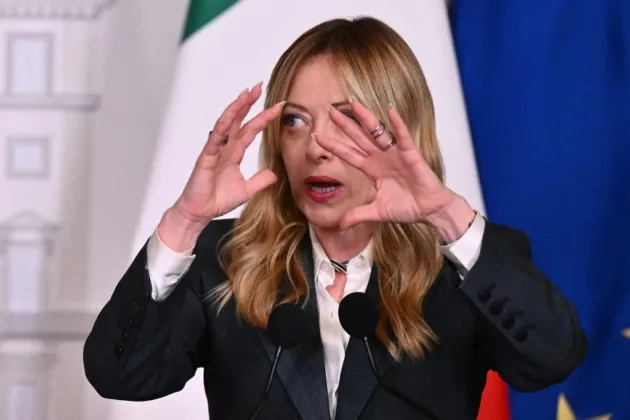
“Attacks against those carrying a Ukrainian flag, mayors insulted, members of the Jewish Brigade forced to leave. If these are the people who claim to defend freedom and democracy, I would say we have a problem,” Prime Minister Giorgia Meloni wrote on social media on April 25.
This development prompted some politicians and commentators to describe the occasion as a moment of division rather than national unity.
As every year, hundreds of demonstrations take place across the country, with the largest gatherings in Rome and Milan.
It was in these two cities that the most serious tensions were recorded. In contrast with previous years — when clashes often followed a more traditional left-right political divide — this year’s disputes increasingly reflected geopolitical fault lines linked to the wars in Ukraine and the Middle East.
In Milan, one of the country’s largest marches was disrupted by confrontations involving the Jewish Brigade, which represents Jewish volunteers who fought against Nazi forces during World War Two.
As the group advanced along the route of the procession, waving symbols of Israel, it was met with confrontation from segments of demonstrators, amid whistles, slogans, a heavy display of Palestinian flags and moments of close-range tension.
Some protesters attempted to block the passage of the group, with isolated episodes escalating into physical confrontation.
The atmosphere prompted the intervention of law enforcement, which surrounded the Jewish Brigade to prevent further clashes and restore order along the march. For safety reasons, the Jewish Brigade subsequently and gradually left the demonstration before the end of the planned route.
Pro-Palestinian demonstrators had earlier shouted slogans such as “Zionists out of the march” and attempted to block the group’s participation. Authorities reported that around 10 individuals were taken in for questioning following the incident
In Rome, tensions also escalated during a march, particularly in relation to the presence of pro-Ukrainian demonstrators.
Earlier in the day, friction had already emerged over the presence of Ukrainian flags carried by activists linked to pro-European groups. These were contested by anti-imperialist demonstrators, leading to verbal clashes and moments of heightened tension within the procession.
A particularly tense episode involved Matteo Hallissey, President of the small pro-European liberal party +Europa, who was at the march alongside supporters displaying Ukrainian flags. His presence was reportedly contested by other demonstrators and the situation escalated into a close-range confrontation. That involved the use of pepper spray, requiring intervention by law enforcement to separate the groups and restore calm, with Hallissey later requiring hospital treatment.
In other cities across Italy, there were also isolated incidents of individuals being removed from demonstrations for displaying Ukrainian symbols.
The widespread display of Palestinian flags, alongside chants directed against the government, underscored how international conflicts — particularly the war in the Middle East and the war in Ukraine — have increasingly spilled into Italy’s domestic political and civic spaces.
Leaders on the Left denounced the clashes, stressing the importance of preserving April 25 as a shared moment of remembrance, while warning against rising extremism and deepening polarisation.
Despite strong turnout across the country, the events in Milan and Rome highlight the growing difficulty of separating historical remembrance from current geopolitical disputes, transforming occasions such as April 25 into a stage for competing narratives — where present-day conflicts risk overshadowing the memory of Italy’s liberation.