






Tensions between Italy and Russia have escalated sharply in recent hours, further straining already fragile relations between the two countries, after a Kremlin-linked television presenter launched an abusive tirade against Italian Prime Minister Giorgia Meloni on Russian state television.
The remarks, broadcast during a widely watched programme in Russia, prompted a strong reaction from the Italian authorities, who summoned the Russian ambassador in Rome and lodged a formal protest.
The figure at the centre of the controversy is Vladimir Solovyov, one of Russia’s most recognisable television hosts and among the most influential pro-government commentators in the country.
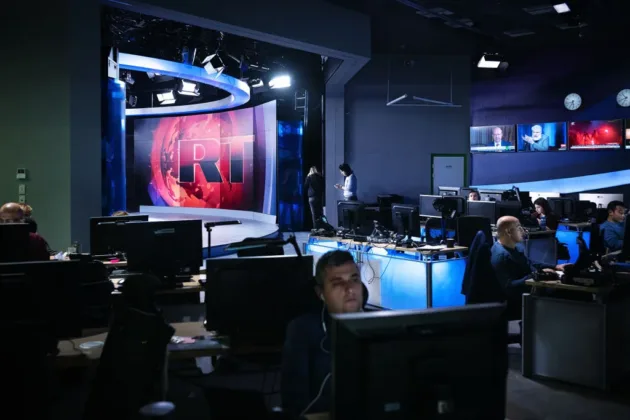
He presents the programme Evening with Vladimir Solovyov on state-controlled media outlets and is widely regarded as closely aligned with President Vladimir Putin, playing a significant role in shaping domestic narratives on the war in Ukraine and relations with the West.
During a broadcast aired on April 21, 2026, Solovyov launched a series of sharply critical personal attacks against Prime Minister Meloni, using highly derogatory and vulgar language. He referred to her, among other things, as a “certified idiot”, a “natural-born beast”, a “shame to humanity”, and a “fascist”, while also using vulgar expressions and distortions of her surname. Beyond the personal insults, he accused her politically of being a traitor and of shifting her position regarding the United States and Donald Trump, framing his remarks within a broader aggressive narrative.
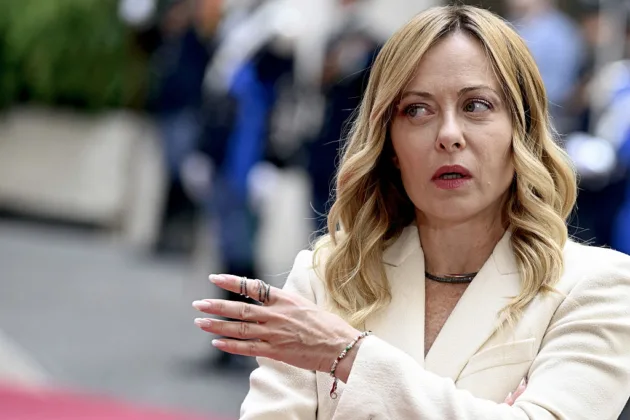
The comments triggered an immediate political reaction in Italy. Prime Minister Giorgia Meloni responded via X, describing Solovyov as a “regime propagandist” and stressing that Italy “does not have masters”, in a direct rebuttal to the Russian commentator’s statements. Foreign Minister Antonio Tajani also intervened publicly on X, announcing that he had summoned the Russian ambassador to the Foreign Ministry in Rome. Tajani condemned what he called “extremely serious and offensive statements” and expressed full solidarity with the Italian prime minister.
According to diplomatic sources, the ambassador was formally summoned to the Farnesina to deliver Italy’s protest and request clarification over the remarks broadcast on Russian television.
The move marks a further deterioration in already tense diplomatic relations between Rome and Moscow, strained since Russia’s invasion of Ukraine and Italy’s continued support for Kyiv, while also highlighting a more complex and at times oscillating bilateral relationship in which occasional openings have not been entirely ruled out.
Relations had reportedly deteriorated further in recent days from the Russian perspective following Prime Minister Meloni’s meeting with Ukrainian President Volodymyr Zelensky in Rome on April 15, 2026. During that visit, the two leaders discussed the strengthening of bilateral co-operation in the defence sector and announced the launch of a joint drone production initiative, informally referred to as the “drone deal”.
The project aims to combine Ukrainian expertise in unmanned systems — widely considered highly advanced — with Italian defence industry capabilities, including collaboration between technical teams and relevant industrial actors.
Under Meloni’s leadership, Italy has maintained a firm pro-Ukrainian position within the Euro-Atlantic framework, including continued military and political support for Kyiv, a stance that has consistently drawn criticism from Russian officials and media figures. That has turned Rome into a recurring target not only of Russian diplomacy but also of Moscow’s propaganda machinery.
However, within Italy itself, voices advocating a partial recalibration of relations with Moscow remain present across the political spectrum, including within the ranks of the League, one of the governing coalition parties.
Only last Saturday, Deputy Prime Minister Matteo Salvini called at a rally in Milan for Italy to resume purchasing Russian gas. Earlier, Claudio Descalzi, CEO of Eni — the Italian partly state-owned energy company active globally in oil, gas and renewable energy — had also suggested reassessing energy ties with Russia as part of efforts to mitigate pressures linked to ongoing geopolitical instability and crises in the Middle East.
Some pro-Ukrainian observers continue to describe Italy as Europe’s “soft underbelly”, arguing that it is more vulnerable to Russian propaganda and hybrid warfare narratives.
Politically, the incident risks weakening domestic positions more favourable to a re-engagement with Russia, which now find themselves in the position of having to express solidarity with Meloni in the face of the personal attacks.
The affair is expected to remain a fresh point of friction in an already volatile geopolitical landscape. It also underlines how quickly personal insults aired on Russian state media can spill over into formal diplomatic confrontation at a moment when Europe’s internal debate over Russia remains far from settled.