



A lot will be written about the end of the era of Orbán in Hungary, so allow me to add a bit of a meta perspective. If you are interested in a nitty-gritty analysis of the election, let me point you towards the most recent Brussels Signal column by our very own Henry Olsen.
I would only add that it was always an uphill battle for Fidesz: After being in power for 16 years, it is no surprise that the Hungarian people were longing for change for the sake of change. One could call it Fidesz-Fatigue if it would not be so common in other European countries as well. Take, for example, German Chancellor Helmut Kohl of the (then still) conservative CDU: A true giant (both literally and figuratively) of post-war Europe, he not only presided over German reunification in 1989, but also played a key role in ending the Cold War. Alas, after 16 years in office (1982 to 1998) the German people had had enough and handed the chancellorship to the Socialist Gerhard Schröder, who ruled together with the Greens for seven years, exiling the conservatives into opposition.
Schröder was followed by Angela Merkel, who was the chief executive for exactly 16 years and 16 days. Her tenure was disastrous for both Germany and Europe, since she signed up to every single mad idea coming from the Left, including open borders and the so-called “Energy Transition,” including the acceleration of shutting down Germany’s fleet of nuclear power plants, that had been among the best operated facilities in the world. That being said, I think even if she would have been a better chancellor in the mould of her former mentor Helmut Kohl, she would still have had to go. Sixteen years appears to be a magic number that triggers people to desire someone new at the helm. Even Germany’s first chancellor after World War Two, Konrad Adenauer, “only” stayed in office for 14 years.
And this pattern is hardly confined to Germany. In Britain, Margaret Thatcher reshaped the country so thoroughly that even her opponents eventually accepted the broad outlines of her economic settlement. Yet after eleven and a half years, her own party removed her – not because she had run out of ideas, but because the electorate had run out of patience. Even then, the Conservatives limped on under John Major for another seven years before Tony Blair’s 1997 landslide buried them, handing Labour 418 seats, the largest parliamentary majority in its history. Eighteen years of continuous Conservative rule had simply exhausted the public’s willingness to listen. Blair himself, despite presiding over sustained economic growth, could not immunise Labour against the same virus: After thirteen years, Gordon Brown was unceremoniously ejected in 2010. Performance, it turns out, is no antidote to fatigue.
The same story repeats across the continent. In Spain, Felipe González of the Socialist PSOE governed for fourteen years (1982 to 1996), during which he modernised the country, anchored it in NATO, and steered it into the European Community. By any reasonable measure, his record was transformational. The Spanish electorate thanked him by handing power to José María Aznar and the conservative Partido Popular.
In Austria, Bruno Kreisky – still arguably the most beloved post war chancellor – dominated Austrian politics for thirteen years (1970 to 1983), winning three consecutive absolute majorities for the SPÖ in 1971, 1975, and 1979, a feat no Austrian party has repeated since. Yet even the “Sun King” of the Ballhausplatz could not outrun the clock. The pattern transcends ideology: It does not matter whether you govern from the Left or the Right, whether your record is stellar or mediocre. After somewhere between twelve and eighteen years, the democratic immune system kicks in and demands a change of personnel.
This does not mean, however, that no mistakes were made by Fidesz. The almost exclusive campaign focus on foreign policy issues and the supposed threat from Brussels and Kiev resonated with Washington and other European right-wingers, but not so much the broader Hungarian population. Although Fidesz still managed to get almost 38 per cent of the vote, the Tisza Party will have 138 out of 199 seats in parliament, enabling it to alter the constitution. The record turnout of nearly 80 per cent – the highest in post-Communist Hungarian history – suggests that the desire for change ran far deeper than any single policy disagreement.
One also must admit that the Orbán government could never fully shake the accusations of nepotism, and that those who are close to the party do much better than those who are not. And this is where the rubber hits the road: The Hungarian economy basically stagnated after 2022 with GDP contracting in 2023, and slow growth by only 0.5 and 0.4 per cent in 2024 and 2025 respectively. Meanwhile inflation had peaked above 25 per cent in early 2023, devastating household purchasing power for many Hungarians. If people feel that their living standards are deteriorating it is hard to win as an incumbent, especially if there is an impression that the ruling political class has insulated itself from the broader economic malaise.
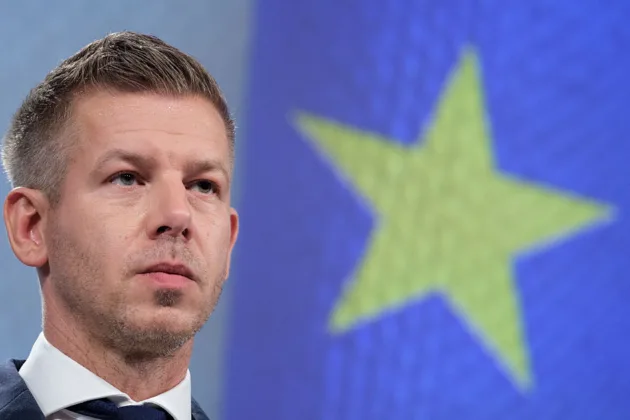
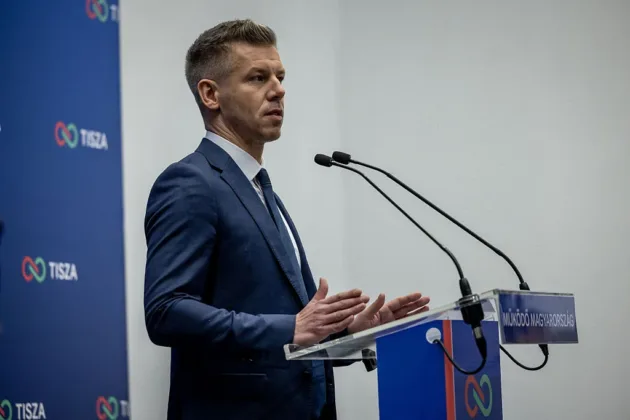
It also deserves mentioning that the leader of the opposition party, Péter Magyar, has been a member of Fidesz until five minutes ago (he only left the party in 2024, after a pardon scandal involving the cover-up of child abuse forced the resignation of both the Hungarian president and Magyar’s own ex-wife, the justice minister). This is at least an indicator that not Orbánism itself was the problem, but the way in which it was executed: With maybe the exception of younger voters, there is no appetite in Hungary for a shift towards the Left. What the majority seems to want are new faces on a well-known programme.
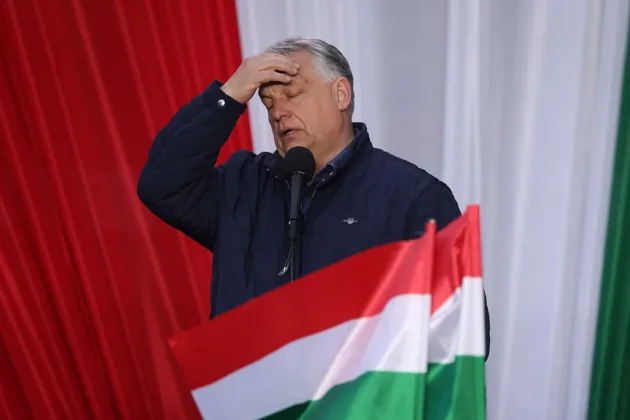
The question, of course, will be if Péter Magyar is going to govern like a younger Orbán, or if he is going to be more like a Justin Trudeau on the Danube. Time will tell, but with Viktor Orbán only being 62 at the time of writing, there is no guarantee that he cannot stage a comeback. After all, he has already done so in the past: He served as prime minister from 1998 to 2002, lost to the Socialists, spent eight years in opposition, and then swept back to power in 2010 with a two-thirds supermajority.