Dutch authorities announced they have recovered the Golden Helmet of Coțofenești, one of Romania’s most revered national treasures, stolen during a January 2025 museum heist at Assen’s Drents Museum in the north west of the Netherlands.
The recovery follows an investigation that spanned 14 months and involved close cooperation between Dutch and Romanian police.
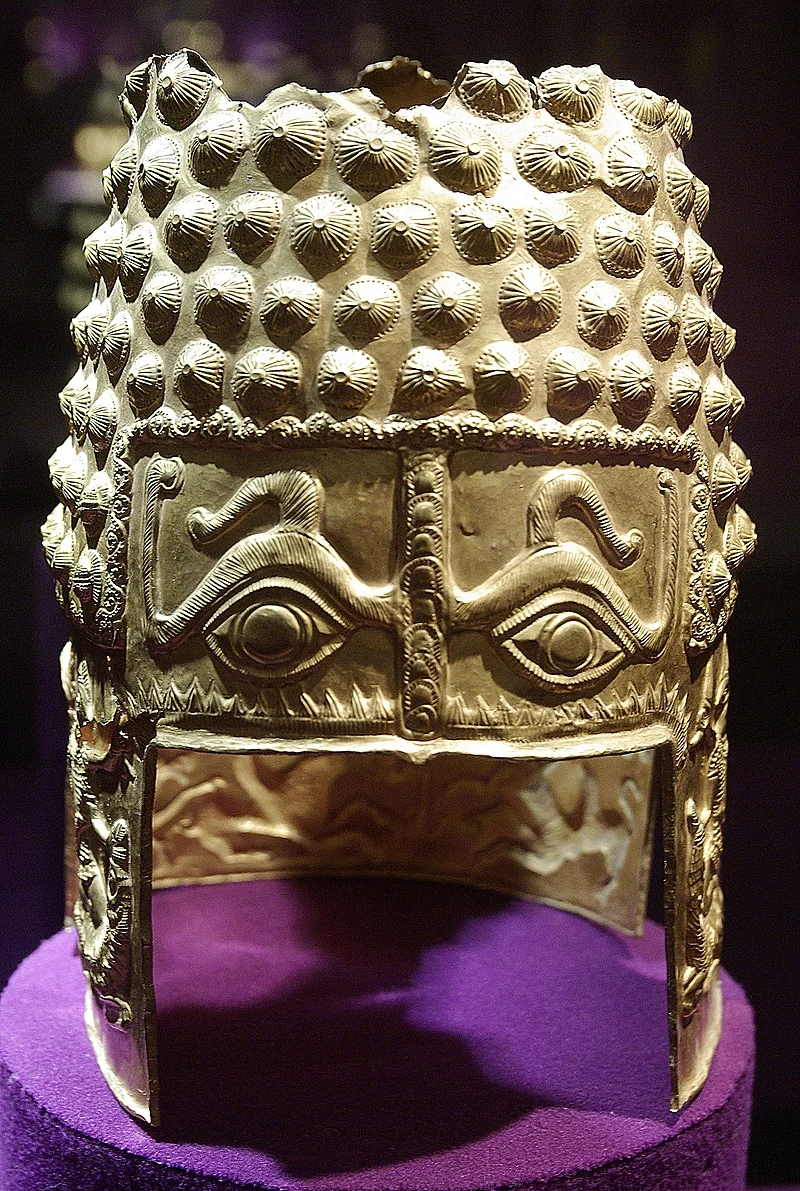
The helmet is a 2,500-year-old solid gold artefact from the ancient Dacian (or Geto-Dacian) civilisation in what is now Romania, dating to around 450 BC.

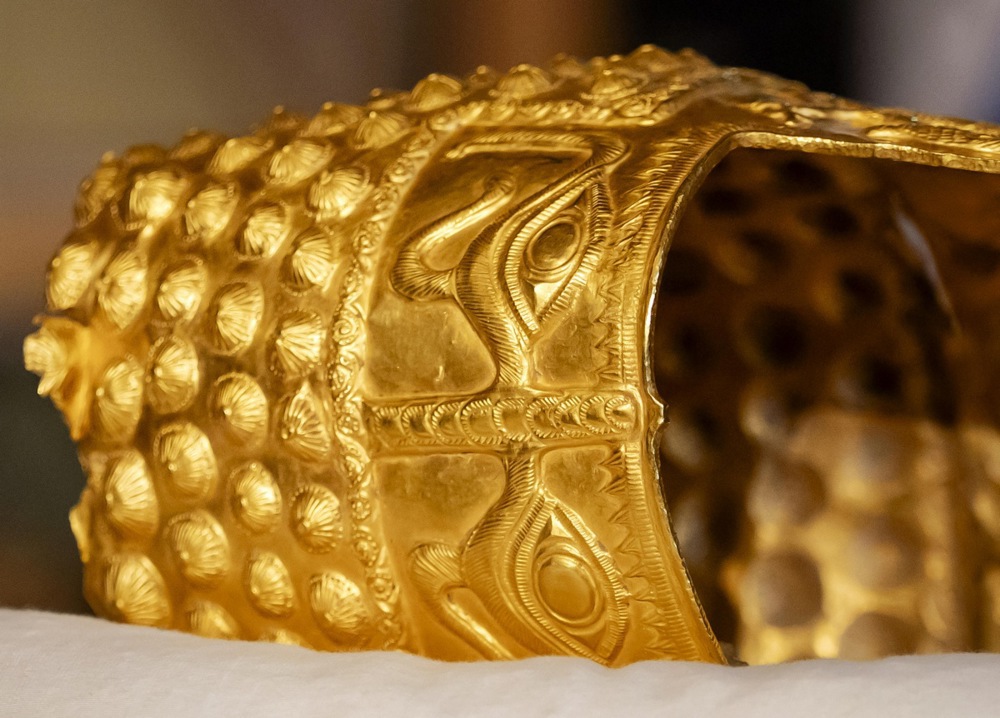
It is of exceptional high quality and was stolen along with three royal gold bracelets in a raid that shocked both nations.
The thieves used explosives to blast open a side door of the museum overnight, then leaving with the items in under three minutes.
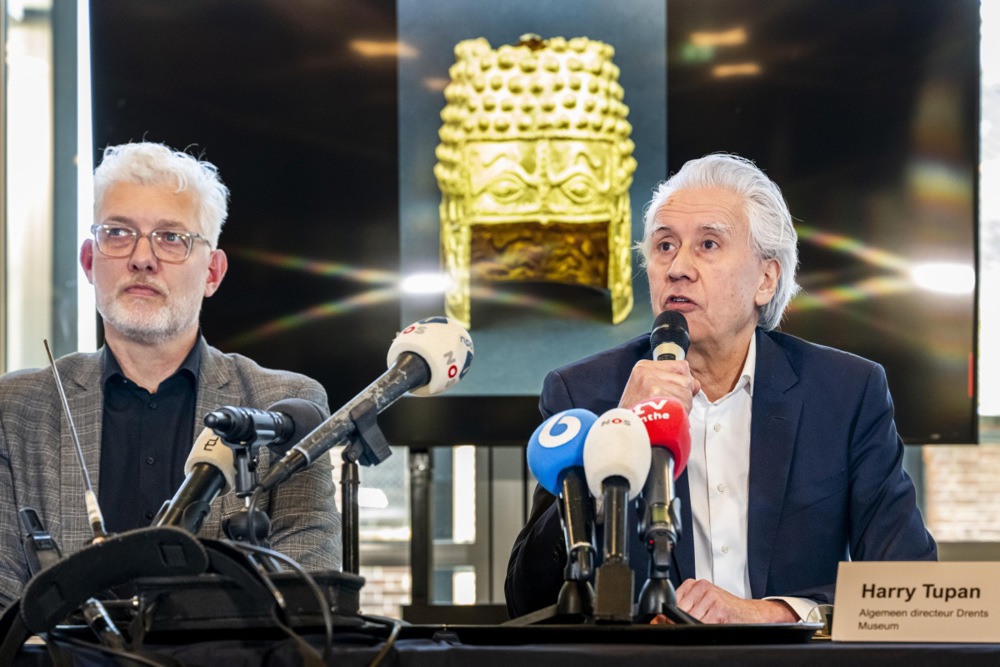
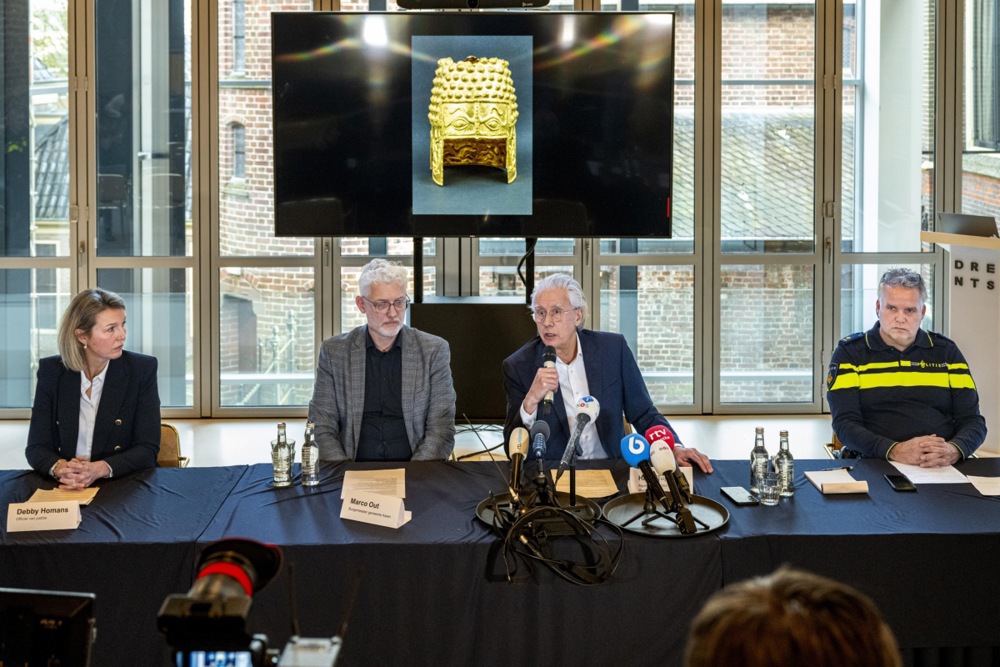
During a press conference broadcast on both Dutch and Romanian national TV, the Dutch public prosecutor showed the recovered helmet together with two golden bracelets – dramatically pulling back a black cloth to reveal the items in a glass case.
Two heavily armed and masked police officers attended the event as well, possibly reflecting Dutch intentions to guard better the pieces of Romanian national heritage.
Dutch head public prosecutor Corien Fahner said the police began a large-scale investigation after the heist, to retrieve the stolen items and arrest those behind the theft quickly.
She thanked the police for their work that led to the discovery of the items and said the trial would begin in twelve days.
The suspects had indicated where to find the artefacts as part of a plea deal with police, though one golden bracelet still is missing.
The prosecutor was careful in her wording, given criminal proceedings were forthcoming, and negotiations were ongoing on retrieving the third golden bracelet.
Prosecutors from Romania, who had flown in on short notice, were visibly elated, saying the artefacts could return to where they belonged in Romania, though adding they also formed part of European heritage.
The retrieved items are meant to go to Romania as quickly as possible.
Romanian prosecutor Daniela Buruiana and colleague Stan Rares-Pétru said the success was the result of international cooperation and promised those behind the theft would soon face justice.
Robert van Langh, the museum’s director since November 2025, said the robbery had been a particularly violent attack against the museum, and thanked police and prosecutors for their work.
Van Langh said the helmet had suffered minor damage but could be easily repaired.
He added other damage had taken place in the undoing of older repairs.
The Romanian government would decide on who would do the repairs, and when.
The golden bracelets were “in perfect condition”, he said, however.
The museum director was at the scene of discovery yesterday to verify the authenticity of the items.
The theft of the priceless Golden Helmet of Coțofenești and three golden bracelets — irreplaceable Romanian archaeological treasures – was reportedly committed at the behest of the Romanian underworld. https://t.co/QFmnxwKOt9
— Brussels Signal (@brusselssignal) May 22, 2025
The artefacts had been on loan from Romania’s National History Museum in Bucharest as part of an exhibition called “Dacia – Empire of Gold and Silver”.
Security footage showed three hooded individuals carrying a duffle bag, crowbar, and flashlights, before the explosion caused significant damage to the museum entrance.
No guards were inside the building at the time.
The stolen pieces included the intricately decorated helmet — which weighs nearly 1 kg and features mythological motifs, including eyes believed to ward off evil — and three spiral gold bracelets from around 50 BC. The bracelets are believed to have been royal offerings rather than daily jewellery.
The helmet was discovered accidentally in the 1920s by children in the Romanian village of Coțofenești after a landslide.
In Romania, its cultural significance has been compared to Rembrandt’s The Night Watch in the Netherlands. Experts described the loss as a “crime against our state” and a blow to national heritage.
There had been initial fears that the irreplaceable artefacts might be melted down for their gold value.
The helmet alone was estimated at around €80,000 in raw gold, with insured values reaching millions.
However, prosecutors later indicated through wiretap evidence that the items likely remained intact, possibly because they were too recognisable to sell on the open market.
Dutch police moved quickly, arresting three suspects days after the theft in late January 2025. Further arrests followed in the months afterwards.
Sources linked the operation to individuals connected with an outlaw motorcycle club.
The heist may have been commissioned by figures in the Romanian underworld, possibly to use the helmet as leverage in negotiations for reduced sentences for their members.
Interpol was brought in early, and Romanian forensic experts and police assisted the Dutch investigation.
A Dutch entrepreneur based in Bucharest offered a €100,000 reward for information leading to the artefacts’ recovery.
The case highlighted concerns over the museum’s security, with criticism in Romania the loaned treasures were not adequately protected despite assurances from the Drents Museum.
The former director of the Romanian National History Museum, Ernest Oberländer-Târnoveanu, who had been responsible for lending the artwork out. said in a reaction the finding was “remarkable news”.
“I am very relieved, more than happy and I thank those who helped find the helmet,” he said.
It was “a unique piece in the European and even world cultural heritage. The helmet is an important social and political symbol of the Dacian civilisation. It has been featured in numerous documentaries and exhibitions and even appears on the covers of school textbooks,” said the former director.