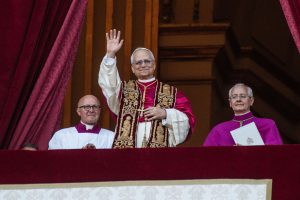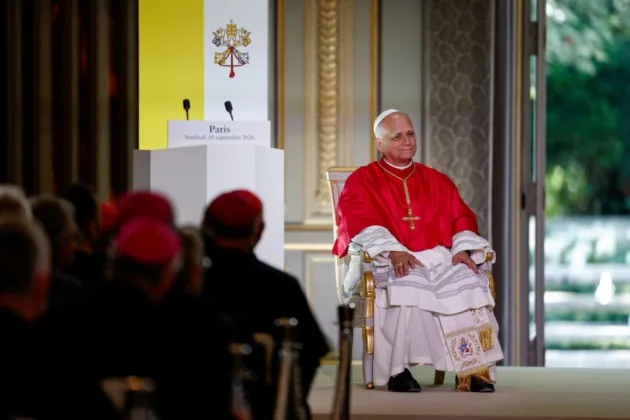





Pope Leo XIV has stated that sovereign states have the legitimate right to control their borders, rejecting the idea of uncontrolled entry that could create new injustices.
The comments, made during an in-flight press conference yesterday following his apostolic journey to Africa, mark a shift in tone on migration compared to that of his predecessor, Pope Francis.
Returning from visits to Equatorial Guinea, Angola, Cameroon and Algeria, the Pope responded to a question from a Spanish journalist about immigration ahead of his planned trip to Spain in June.
He described migration as a “global phenomenon” driven by lack of opportunities in the global south.
“Personally, I believe that a State has the right to regulate its borders,” he said.
“I am not saying that everyone must be allowed to enter without order, sometimes creating in destination countries situations more unjust than those they left behind.”
The Pontiff balanced this realism with calls for addressing root causes.
He questioned what richer nations in the global north are doing to promote development, opportunity and justice in Africa and other poorer regions, criticising resource extraction and human trafficking linked to irregular migration.
He insisted that migrants, once they arrive, must be treated with full human dignity and not “worse than animals”, as he said is often the case now.
While Pope Francis frequently emphasised welcome, hospitality,and criticism of restrictive policies — often framing migration in terms of a “culture of encounter” — Pope Leo’s latest remarks place greater explicit weight on the sovereign right of states to manage flows orderly.
Observers note this as a more balanced articulation of long-standing Catholic social teaching, which has historically recognised both the right to migrate and the right of nations to regulate borders in service of the common good.
Pooe Leo has made similar points before, including about US immigration policy, where he affirmed that “no one has said that the United States should have open borders” and that countries have the right to determine who enters, how and when — while still stressing humane treatment.
The latest statement comes amid intense European debates on irregular migration, particularly in Spain’s Canary Islands.
Pope Leo, the first US Pope, stressed that his trip should be understood above all as “an expression of wanting to announce the Gospel, proclaim the message of Jesus Christ”, and as a way “to draw close to the people in their happiness, in the depth of their faith, but also in their suffering”.
He did give some answers, though, on hot-button issues dominating political discourse internationally.
Regarding the war in Iran, he called for a mindset rooted in peace rather than in violence.
“The question is how to promote the values in which we believe without the death of so many innocent people,” he said.”
Pope Leo also addressed the blessing of same-sex couples after a decision by German Cardinal Reinhard Marx in Munich and Freising.
He said the Holy See had already made clear to the German bishops that it does not agree with the “formalised blessing of couples”, including homosexual couples or couples in irregular situations, beyond what Pope Francis had permitted.