
Russia has significantly expanded its list of European officials and representatives banned from entering the country, in retaliation for the European Union’s twentieth package of sanctions against Moscow.
The Russian Ministry of Foreign Affairs announced the move, saying it was a direct response to what it called “illegal decisions” by Brussels.
The sanctions package, approved by the EU last week, was introduced in response to Russia’s ongoing invasion of Ukraine, which began in February 2022.
In a statement, the ministry said Russia had “significantly expanded the list of representatives of European institutions, EU member states and European countries aligned with the EU’s anti-Russian policies who are prohibited from entering the country.”
Moscow accused the bloc of “continuing its pressure” against Russia through “unilateral restrictive measures” that it claimed represented “a flagrant violation of international law” — adopted, it said, in breach of the United Nations Security Council.
The Kremlin has yet to publish the full names of those newly added to the list.
WHO IS ON THE LIST?
According to the ministry, those included are people it accuses of involvement in “decision-making on military aid to Ukraine” and in “activities aimed at undermining Russia’s territorial integrity.”
It also said those on the list had been involved in imposing anti-Russian sanctions, damaging Russia’s relations with third countries, obstructing maritime navigation and pursuing what Moscow described as “fabricated charges” against Russian officials.
The ministry went further, saying it had also imposed travel restrictions on civil society activists and academics in European countries who hold what it termed “hostile positions towards Russia.”
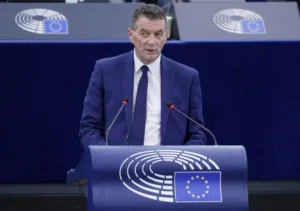
Members of national parliaments in EU member states, as well as Members of the European Parliament (MEPs) who voted in favour of what Russia called “anti-Russian resolutions and projects,” have also been added to the banned list, it said.
RUSSIA’S POSITION
The announcement follows a pattern of tit-for-tat measures between Moscow and Brussels that has intensified since the full-scale invasion of Ukraine more than three years ago.
The EU has progressively tightened its sanctions regime across twenty rounds, targeting Russian individuals, entities, financial institutions and sectors of the economy. Each package has drawn a formal response from Moscow.
The Russian ministry reiterated its standard position that Brussels’ restrictive policies “cannot have any impact whatsoever on the country’s foreign policy.”
“Russia has been and remains committed to protecting its national interests and the rights and freedoms of its citizens, while consistently participating in the formation of a just and multipolar world order,” it said.
The ministry did not specify precisely how many individuals have been added in this latest expansion, nor did it clarify whether the new restrictions extend beyond EU member states to include officials from non-EU European countries aligned with Brussels on Russia policy.
THE EU’S TWENTIETH SANCTIONS PACKAGE
The EU’s latest round of sanctions, adopted last week by the Council of the European Union, is among the most extensive to date. It includes measures targeting Russia’s so-called “shadow fleet” — the network of vessels used to circumvent oil export restrictions — along with additional designations of individuals and entities linked to the Russian defence sector and state apparatus.
Brussels has framed each successive package as a response to continued Russian military action in Ukraine and what EU officials have described as Moscow’s unwillingness to engage in credible peace negotiations.
Russia has consistently rejected the EU’s sanctions as unlawful under international law, arguing they are applied without a mandate from the UN Security Council, where Moscow holds a permanent veto.
The expanding ban list is seen by analysts as part of a broader Russian strategy to signal that Brussels’ pressure carries diplomatic costs, even as the economic impact of EU restrictions on Russia remains a matter of ongoing debate.