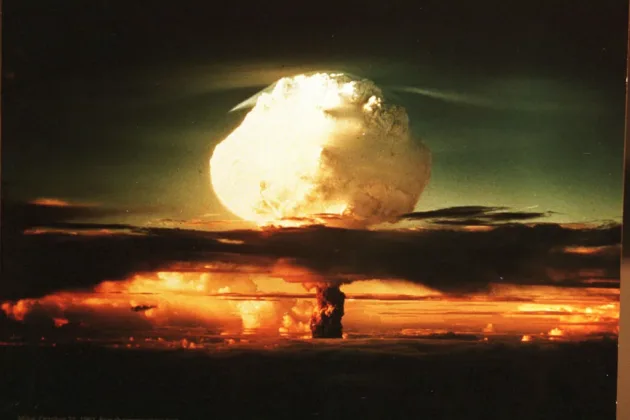



Nuclear weapons are treated by the governments that have them as a useful tool. Obtaining a nuclear weapon enters you into a rare club where you are Taken Seriously. It also allows you to credibly defend yourself against countries much more powerful, larger, and more militarised than oneself.
Which is why the European Union is becoming increasingly interested in developing an independent nuclear deterrent. Contrary to the headline-inducing claims of their leaders, most European Union member states are not actually rearming (sans the Baltics, Poland, and a few others). But they are aware that Russia remains eager to restore its control over its near-abroad, which now includes a fair few EU member countries. This caused Western European leaders – who are aware that Russia does not really threaten their own states – to pursue an all-out attempt in order to keep the Trump administration involved in NATO, the cheapest way to keep the EU defended without them having to actually spend significantly more money.
Over a year since President Trump re-took office, however, it is clear that it has not worked. The administration – which was temporarily mollified by NATO member states’ agreement to spend 5 per cent of GDP on military and military-related expenditures by 2035 – has increasingly soured on the organisation lately, particularly after multiple member states refused American access to their bases or overflight rights during the Iran War. Lists are reportedly being drawn up of countries which need to face consequences, and even formerly supportive figures like Secretary of State Marco Rubio has been asking why the United States is in NATO if members will not allow America to project power.
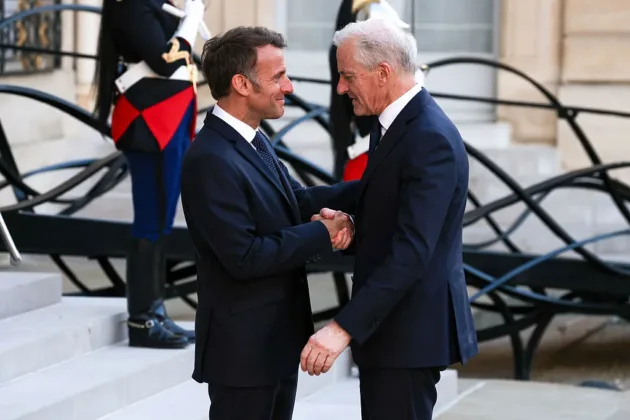
Losing America’s protection from Russia – particularly, its nuclear umbrella – has, as mentioned above, caused some in Europe to pursue alternative nuclear arrangements. This week, Polish Prime Minister Donald Tusk spoke with French President Emmanuel Macron about the possibility of joint Polish-French nuclear exercises. And former Finnish Prime Minister Sanna Marin urged member states to develop their own nuclear deterrence structures, though she did not go so far as to suggest independent nuclear weapons development. Earlier this year Swedish Prime Minister Ulf Kristersson made similar noises as well.
These efforts are going to go nowhere, at least in the short- to mid-term.
Firstly, there are the technical limitations. There are only two friendly nuclear states in Europe: the United Kingdom and France. Only one, France, actually is within the European Union. After a decade of mockery from Brussels to the United Kingdom for Brexit, it would be rather rich to find the former becoming reliant upon a nuclear umbrella provided by the latter.
Even if they wished to rely on the United Kingdom, however, it is unlikely that they could. America has a nuclear triad, meaning it utilises three nuclear delivery systems: Land-based silos, submarines, and aircraft. The United Kingdom only has submarines, and those are linked to only one base, located in Scotland. If Scotland ever successfully leaves for the European Union, London would have to scramble in order to find a new base.
Should Scotland stay in the union, there are still other problems. All of their nuclear weapons are stored in one place in Scotland; in a nightmare scenario, it would be extremely easy for a well-placed strike to eliminate most of those or make them unreachable. As for the four nuclear submarines – does the entire European continent want to rely upon those? Each of them have a secret letter from the prime minister with instructions on what do if they cannot reach London during a conflict. What would those letters say if the UK became responsible for Europe’s defence? Currently, one of the options is to turn over command to Washington – which would be an issue for a supposedly European deterrent! And who would command be turned over to: Brussels? The European Union currently has two presidents.
Perhaps command could be turned over to Paris, the other nuclear-armed power. France would likely love to expand its influence into Eastern Europe – after all, it was Napoleon who created the Duchy of Warsaw – and is already seeking to replace the United States as the protector of the continent. But while France’s nuclear deterrent is not as weak as the UK’s, it still possesses no land missiles and they only possess roughly 300 missiles – far fewer than Russia and even China.
Plus, there is a question of whether they actually would be welcomed by all other members of the European Union. America and even the United Kingdom have no say over internal EU affairs, and are thus “neutral” umbrella-holders. But entirely turning over security to France means Paris – which already has incredible influence in Brussels – would see that influence heightened further, likely surpassing Berlin’s. Is this something that European member states will want to lock themselves into?
The European Union as a whole cannot ever obtain a weapon – in its current form – because, as previously mentioned, it has two presidents. Who would give the order? Would the European Council have to vote on it first? Would a launch required a qualified majority? Does the European Parliament get a say? The European Commissioner of Defence and Space does not even have a say over the European Union’s defence forces; that instead goes to High Representative Kaja Kallas. The incumbent Defence Commissioner, Andrius Kubilius, has recently suggested a new defence union, modelled on Schengen, but he has been vague on any specifics beyond discussions of a 100,000-man army.
And even if such a treaty were agreed, three EU member states – Ireland, Austria, and Malta – have already signed the Treaty on the Prohibition of Nuclear Weapons. That treaty requires adherents to never “receive the transfer of or control over nuclear weapons” and to never “assist, encourage, or induce” anyone to engage in the use or procurement of nuclear weapons. They can also never use or threaten the use of such weapons. This would essentially block those three member states from overseeing any part of the EU related to nukes and would arguably require them to do everything possible to block the use of nuclear weapons.
Individual states can pursue their own weapons; Warsaw would be foolish if it has not already quietly begun looking into what it would take to speedily develop a nuclear weapon. This would be far more effective than relying on a weak British/French deterrent – or a nonexistent Brussels-based one.