
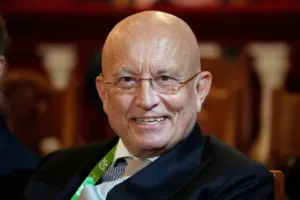


UK Prime Minister Keir Starmer is fighting for his political life over an unrelenting scandal related to the appointment of ex-Jeffrey Epstein associate Peter Mandelson as British ambassador to Washington.
The 63-year-old’s popularity among the public has tanked since he led Labour to a landslide general election win less than two years ago, while his own MPs are growing increasingly exasperated with his performance.
Starmer is only the fourth Labour leader to have won a majority at a general election in the party’s century-plus history. But is he now a dead man walking or can he turn his fortunes around and serve out a full five-year term?
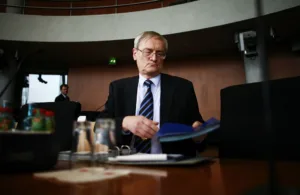
The premier insisted on Wednesday he would not resign, claiming that evidence given Tuesday by a senior civil servant, sacked over the appointment of Mandelson, “puts to bed” opposition allegations of dishonesty against him.
But the pressure shows no sign of abating. Starmer has immediately come under fresh scrutiny over separate allegations that Downing Street also considered giving a plum diplomatic posting to former spin doctor Matthew Doyle — who like Mandelson was brought down by his association with a known child sex offender.
Starmer’s political spokesman insisted to reporters Wednesday that he would still be prime minister come the next general election, expected in 2029.
The spokesman also said that Starmer retains the confidence of his top ministerial team. While some ministers have spoken out in support of their leader, others have distanced themselves, suggesting that cracks are forming.
“Starmer’s difficulty is that cabinet support appears to be weakening. As a result, his political authority is draining away,” political expert Patrick Diamond, a former No. 10 aide, told AFP.
A string of cabinet resignations would almost certainly sound the death knell for Starmer’s premiership, as it did for former Conservative prime minister Boris Johnson.
“He appears to be at the mercy of events not under his control — never a good place for a prime minister to be,” added Diamond, a politics professor at Queen Mary University of London.
Another scenario which could trigger Starmer’s downfall would be a leadership contest from inside the Labour party. Any contender would need the backing of 81 Labour MPs to mount a challenge.
Starmer’s team has insisted he would fight any attempt to oust him, raising the prospect that a contest could plunge the party into the sort of bitter infighting that plagued the last Tory government’s final years.
Analysts and lawmakers say Starmer faces his biggest moment of peril after what are predicted to be bruising local elections in England, Scotland and Wales on May 7.
“Any contender will want Starmer to take all of the responsiblity for what everybody assumes is going to be a cataclysmic set of results,” political scientist Steven Fielding told AFP.
Fielding, a politics professor at Nottingham University, expects a challenge from former deputy prime minister Angela Rayner, who is well-liked amongst Labour’s left-wing base.
An outstanding case over her tax affairs, which triggered her resignation last year, could hamper her chances, however.
Another widely touted possible future Labour leader is Greater Manchester Mayor Andy Burnham, though he would first need to find a way to become an MP.
Other possibilities are Health Secretary Wes Streeting and hardline interior minister Shabana Mahmood, who are popular on the right of the party but viewed by some as being too divisive.
The lack of consensus has led some Westminster watchers to speculate that there could be a move behind a so-called unity candidate like Defence Secretary John Healey or armed forces minister Al Carns.
The lack of an obvious successor means there is every chance Starmer will live to fight another day.
“He still has advantages on his side, notably the size of his parliamentary majority and the difficulty of engineering a leadership contest in the Labour party,” said Diamond.
“Only rarely in history has the party directly removed its leaders.”