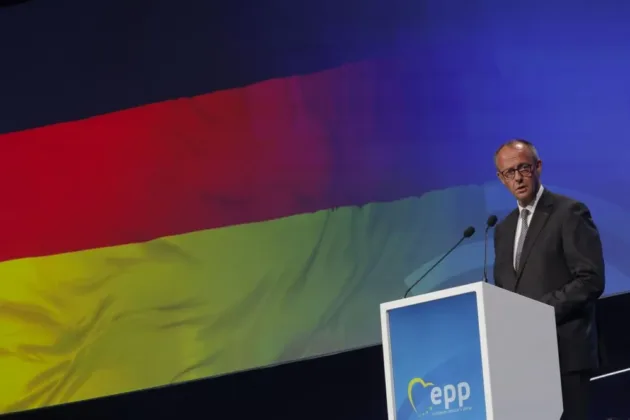











German Chancellor Friedrich Merz (Christian Democratic Union, CDU) has spoken out in favour of far-reaching reforms of the country’s creaking public pension system.
“The state pension insurance alone will at best serve as a basic safety net in old age. The state pension will not be sufficient anymore to secure one’s standard of living long-term,” Merz said yesterday during a speech at the Association of German Banks.
The Chancellor urged a reform of the German pension system, including a much greater focus on capital market-based instruments.
Most Germans largely depend on the state pension system for their old age provisions. The public insurance is a pay-as-you-go system, in which the contributions of working citizens are used to pay the pensions of today’s seniors – the so-called “contract between the generations”.
Owing to the excessive generosity of existing pensions and a widening mismatch between contributors and pensioners, though, the public pension system is underfunded and in need of ever greater subsidies from government coffers.
Currently, Germans can also make provisions for old age by investing money in stocks, bonds or exchange-traded funds (ETF). These instruments, though, are largely voluntary.
Merz said this would not be enough: “We need capital-funded elements of occupational and private pension provision on a far larger scale than we currently have, which is largely based on voluntary participation.”
A commission nominated by the German Government is currently working on reform proposals to make the public pension system more sustainable.
Merz’ ambitious reform plans, though, may once more get shipwrecked by his own coalition partner, the Social Democratic Party (SPD).
Dirk Wiese, the SPD’s parliamentary secretary, criticised Merz today for his ominous warnings: “People need to be able to rely on the state pension … It can’t just be a basic form of cover; you need to be able to rely on the state pension scheme.”
While the CDU wants to reform the public pension system by raising the retirement age and lowering pensions, the SPD categorically declines such measures, instead arguing for raising pension contributions.
The pension debate was also at the heart of one of the gravest crises of Merz’ fragile government coalition so far: In autumn 2025, a group of predominantly young CDU MPs rebelled against SPD’s plan to freeze pension levels until 2031 – arguing that it was unsustainable and disadvantaged young working people.
Ultimately, Merz overrode the resistance from his own party to grant the SPD its wishes in order to save his coalition.