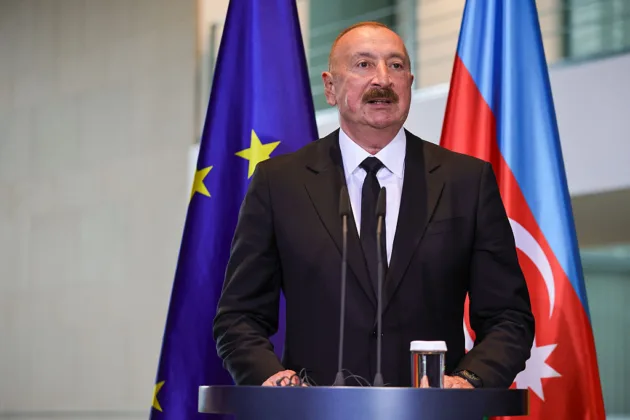



Azerbaijan suspended institutional co-operation with the European Parliament on May 1, accusing Brussels of interference in its sovereignty over Nagorno-Karabakh.
The move came after the European Parliament adopted a resolution on the post-conflict situation in the region, sharply criticising Baku over the treatment of Armenian detainees, the rights of displaced ethnic Armenians and the protection of Armenian cultural and religious heritage.
Nagorno-Karabakh, long contested by Armenia and Azerbaijan, was brought fully under Azerbaijani control by military force in 2023. That operation prompted the mass exodus of around 100,000 ethnic Armenians from the enclave.
Although the rupture marks a serious deterioration in relations between Baku and the European Parliament, its wider political impact is likely to be limited.
The suspension applies to parliamentary channels and does not extend to the European Commission, with which Azerbaijan continues to maintain close and strategically important relations, particularly in the energy sector.
Since 2022, the Commission has deepened engagement with Azerbaijan as part of the European Union’s effort to reduce dependence on Russian gas following Moscow’s invasion of Ukraine. Azerbaijan has since emerged as an important alternative supplier, with energy agreements and infrastructure discussions placing Baku at the centre of the EU’s external diversification strategy.
In practice, while relations with the European Parliament have deteriorated sharply, engagement with EU executive institutions remains close, structured and strategically prioritised on both sides.
The immediate trigger for the break was the European Parliament resolution on Nagorno-Karabakh and Armenia, adopted at the end of April. Backed by a broad cross-party majority, the text reaffirmed support for the rights of ethnic Armenians displaced after Azerbaijan’s takeover of the region, including their right to return.
It also called for the release of Armenian detainees held in Azerbaijani prisons or, at minimum, full guarantees of fair trial and due process.
MEPs further urged stronger protection of Armenian cultural and religious heritage in Nagorno-Karabakh, which many observers consider to be at risk.
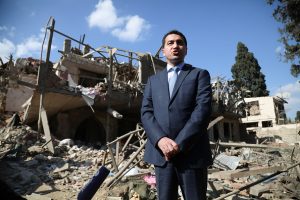
In recent weeks, images and reports have circulated showing the destruction of churches and Armenian political and religious sites by Azerbaijani authorities. Baku has defended such actions by arguing that some of the structures were built during what it calls the period of Armenian “occupation” and therefore should be removed.
Although non-binding, the resolution carried significant symbolic weight and was widely seen in Baku as the direct trigger for the diplomatic rupture.
Azerbaijani officials strongly rejected the text, arguing that European Parliament positions had become increasingly hostile and politically motivated. They accused the EU legislature of interfering in Azerbaijan’s internal affairs and violating the country’s sovereignty.
In its official statement, Azerbaijan’s parliament accused the European Parliament of having abandoned democratic values and of being a body where “corruption and bribery have taken deep root”. It further claimed that the institution “serves lobbying groups and various circles of interest” and had become a structure in which “Azerbaijanophobic and Islamophobic thinking is consistently expressed”.
As a result, Azerbaijan’s parliament decided to suspend co-operation with the European Parliament “in all directions” and began the process of terminating its participation in the Euronest Parliamentary Assembly.
In practical terms, the decision freezes formal parliamentary channels between Azerbaijan and the European Parliament, including Euronest, bilateral parliamentary meetings and structured interparliamentary dialogue.
While executive-level contacts with EU institutions remain in place, the suspension removes the main institutional platform for direct political engagement between lawmakers.
The European Parliament has not announced any comparable retaliatory step.
Despite the parliamentary confrontation, analysts believe the EU is unlikely to take concrete punitive measures against Azerbaijan. That is due primarily to two factors.
First, the strategic relationship between Baku and the European Commission remains underpinned by Europe’s demand for non-Russian gas. Second, ongoing peace negotiations between Armenia and Azerbaijan are reshaping the regional balance in the South Caucasus.
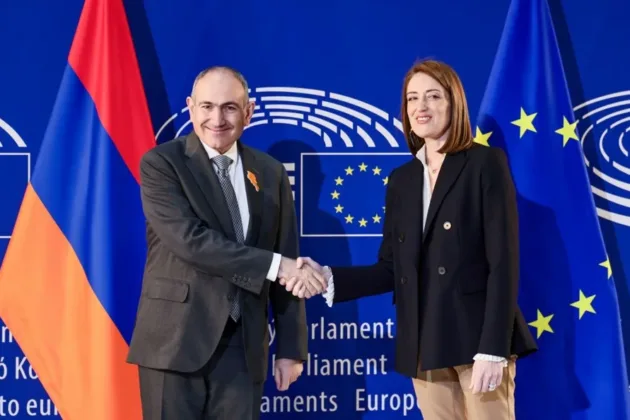
The current Armenian government is openly pro-European and has sought to distance itself from Russia, with which Armenia remains historically and institutionally tied as part of the post-Soviet space.
Yerevan has signalled its intention to move beyond the Nagorno-Karabakh dispute in order to facilitate a peace agreement, effectively recognising Azerbaijani sovereignty over the territory while pursuing a broader geopolitical realignment away from Moscow.
That orientation is actively supported by the European Union, which appears to be prioritising Armenia’s gradual rapprochement with European structures over renewed confrontation with Azerbaijan over Karabakh.
The approach remains contested by large parts of the Armenian opposition, many of whom are pro-Russian and want to return the Karabakh issue to the centre of the political agenda ahead of upcoming elections.
Against that backdrop, EU policy is expected to remain focused on stabilisation and long-term alignment rather than escalation.
As a result, the European Parliament’s position is likely to remain largely declaratory, with limited prospects of being translated into concrete EU policy against Azerbaijan.