



The West’s populist wave has now lasted for over ten years. In that length of time, it has brought a sea of new faces to power, or to the cusp of it. But it has also lasted long enough to bring back a series of familiar faces. Slovenia looks set to return former Prime Minister Janez Janša to power, and Slovakia brought back Robert Fico. The United Kingdom looks primed to give Nigel Farage yet another nationwide first-place showing, and, most famously, America’s Donald Trump returned to power in 2025.
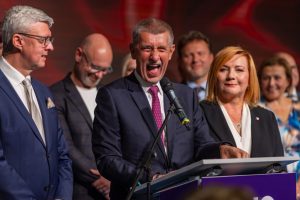
But one wave-riding returnee sticks out among the rest: The Czech Republic’s Andrej Babiš. Babiš, like the others, led his country once before, when the wave had already started: 2017 to 2021. But then, he governed with the support of two left-wing parties: the centre-left Social Democracy and the Communist Party of Bohemia and Moravia (the latter of which was not formally in his coalition but supported him in key votes in a confidence-and-supply agreement).
After losing power in 2021, he spent some years in the wilderness, running for president and losing handily to the incumbent, Petr Pavel. But in 2025, the incumbent government was incredibly unpopular; the coalition, a mix of right-wing, centrist, and left-wing anti-establishment parties was genuinely based purely on a dislike of Babiš, and not much else. As a result this infighting – plus the effects of the Russo-Ukrainian War – Babiš was able to storm back to power with a solid coalition majority.
But this time, his partners were different. Instead of being composed of the Left, they were composed of the Right – and not just any Right. His largest government ally, the Freedom and Direct Democracy party, is one of the most right-wing populist parties in Europe. And the third party in their coalition is, arguably, one of the most unique political parties to ever exist: Motorists for Themselves, or Auto, which fights on behalf of motorists. Their past candidates advocated for the elimination of all bike lanes, but in running in 2025, they had broader ideas in mind: Fighting against Brussels’ green energy policies – including the 2035 combustion engine ban – and being generally sceptical of the EU itself.
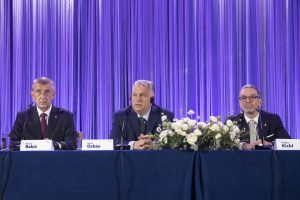
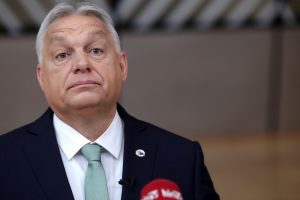
Babiš’ party, ANO, likewise has shifted allegiances. Until 2024, it was affiliated with the centrist ALDE group in the European Parliament. That year, he switched to the then-new Patriots of Europe, with founding members Viktor Orbán and Austria’s Herbert Kickl. With Hungary’s election results, that leaves him as the only member of the Patriots of Europe to be leading his country.
An odd shift for a man who historically has had no real ties to the Right beyond being vaguely populistic. His ability to shift with the political winds has helped him stay afloat, but it now presents him with a problem: He actually has to be right-wing.
Some aspects are out of his hands. His government recently approved a gender equality law which will require companies with more than 250 employees to have a set number of women on their boards – but this was mandated by European Union rules, and a failure to approve it would have incurred fines.
His most controversial move thus far, and the most populist-right-coded, has been what his opponents have decried as the “Orbanisation of Czechia”: Changes to public broadcasting. Babiš’ government plans to end the practice of paying for public television and radio via license fees, replacing them with state grants. The government has portrayed the move as sensible, as not everyone watches state TV or listens to state radio, and that it is unrealistic to make everyone pay.
But there is also an obvious subtext: That state media is biased. Western nationalists are intensely sceptical of state-owned media, and for good reason. Political bias in American outlets like National Public Radio and the Corporation for Public Broadcasting led the Trump administration to end funding for it last year, forcing the latter to shut down.
The same claims have been levied against Slovak public media (which was altered by Fico, himself claiming they were biased), Hungarian media (which Orbán changed while in power and now is being altered to suit his successor), and Polish media (which has been at the centre of a back-and-forth between Poland’s major parties for over a decade). Babiš has critiqued the country’s “independent” public media for bias before, as has the country’s far Left. Potential bias was also critiqued in 2017 when Czech Television aired a special which was supportive of Hillary Clinton over Donald Trump.
While this will be a useful first step for Babiš, it does not a populist-right revolution make. And Babiš may not be interested in pursuing one, as he reportedly wants some distance between himself and others in the Patriots for Europe group. Here it will be incumbent on his coalition partners to keep him on the right track. This may prove difficult: Both are brand-new to running a country, whereas Babiš is quite experienced. But if they do not want to see their voters abandon them, they must ensure that there are more wins than just taking control of public media.
Starting with keeping up the fight against mass migration: 2026 has brought a stark jump in illegal migration into the Czech Republic. Now the numbers are rather small (just over 2,000 people), but a trickle can become a flood. Babiš began his government promising to oppose the EU’s migration pact, coming into force this June, but has so far been wobbly on that issue.
More specifically controversial, however, has been the presence of Ukrainian refugees. While they have not caused much of a concern in other countries – due to their scarcity and the fact that most are women – in Czechia, it is a different story. The country has more than any other EU member state per capita, even more than Poland; their presence, coming alongside rising cost of living, has received pushback from some parts of Czech society.
Including from the new government, which this week announced formal plans to alter refugee rights. Ukrainian-registered cars will now have to follow the same rules as those registered in Czechia, and newcomers will have to register their cars in the country. Being absent from the country for a month will cause those with temporary protection to lose it, among other shifts.
Other things, like changes to tax laws and an increase in child payments to spur birth rates, have been promised. But promises will need to become action, on those and a whole host of other things. Which may prove hard for Babiš, who may not want to be the inheritor of a populist movement. But regardless of what he may want, the populist wave has lifted him back to power. And it will wash him out again if he does not follow through.