



A piece in the London Spectator of May 2 by Rod Liddle is a reminder of the imperishable spiteful envy towards America that still disturbs the minds of many of the British. “One day it will percolate through to us that the ‘special relationship’ does not exist and has never existed.” He describes the United States as “a country that has abused our supplicant faith and goodwill perhaps more than any other.” Liddle completely ignores and rewrites history by further stating of the early stages of World War II: “The American public and government were determined to keep out of the war until they themselves were attacked by an Axis power at Pearl Harbour.”
The unchallengeable facts are that Britain and the Commonwealth could not have continued in the war without Roosevelt’s Lend-Lease Act, which guaranteed the sale to the democracies of anything they asked for, with payment to be made when it would be possible. At the same time, Roosevelt extended American territorial waters from three miles to 1,800 miles and ordered the United States Navy to attack on detection any German or Italian ship. Because Hitler ignored the provocations that then occurred, Roosevelt also embargoed the sale of oil and scrap iron for steel production to Japan unless that country abandoned its invasion of China and Indochina.
Japan imported 85 per cent of its oil from the United States and Roosevelt had no doubt that Japan would not accept such a humiliation. The fact that they attacked at Pearl Harbour with no warning at all played perfectly into his hands as Roosevelt led an absolutely united country into war and Hitler obligingly declared war on the US three days later. None of this deters Liddle from railing on against “American deceit and chicanery”. He represents the agreement on atomic development to have been an American promise to proceed in lockstep with the UK towards the development of the atomic bomb, but this is a partial misread, since the United States absorbed 90 per cent of the cost of developing the atomic bomb. Britain was still exempted from legislation restraining the sharing of atomic secrets with other countries (which greatly vexed General de Gaulle when it applied to France).
According to Liddle, the subsequent 80 years have been: ”America demanding support and obedience from the UK, usually getting it, and giving absolutely nothing back in return. We went along with the Truman Doctrine and supported military action in Korea.” The Truman Doctrine was established when Clement Attlee dumped the Greek Civil War into the lap of the Americans and with no notice at all said that Britain could no longer defend Greece from the Communists. The Americans took up that task successfully. Britain’s contribution to Korea was a token and as soon as the Chinese became involved, Attlee rushed across the Atlantic with his coattails trailing behind him offering to mediate American withdrawal from Korea. Britain was worried that the war might make their position in Malaya and Hong Kong more difficult.
“The US was instrumental in ensuring a British humiliation in Suez.” The British and French managed that on their own by pre-positioning forces in Cyprus, prearranging an Israeli invasion of Sinai, and then purporting to intervene as peacekeepers to separate the Israelis and Egyptians and take back the Suez Canal, without a word of notice of this to their chief ally. Liddle regards this as American hypocrisy because after the Spanish declared war on the United States in 1898, the US had the temerity to defeat Spain and seize the Philippines, upon which it conferred independence as soon as that country or perhaps even before it was ready for it (as if there was the slightest similarity between the two events).
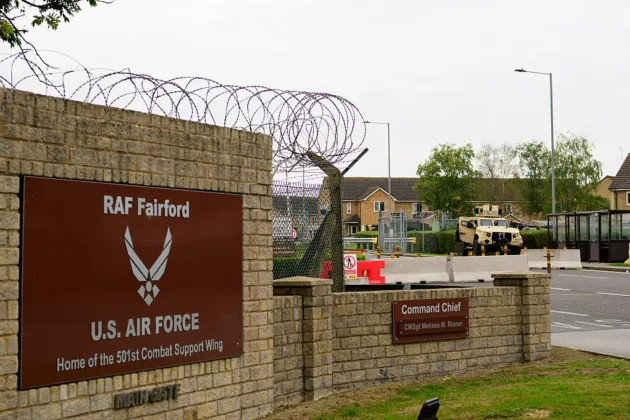
Trump achieved a state of “incandescence at the UK’s failure to send troops to sort out his latest folly, the war in Iran”. All Trump requested was use of US airbases and British airspace and a British contribution to a force to open the Strait of Hormuz to facilitate the flow of oil to Western Europe. Since Liddle cannot entirely deny the great assistance rendered by the Reagan administration to Britain in the Falklands War, he grumbled that the administration “was split on whether or not to support the British efforts”. Not for long. His final whinge is that the United States, at the invitation of neighbouring countries occupied Grenada in 1983, without telling the British, (who had failed even to suggest any action after a Castroite coup placed the entire population of the country under house arrest).
Like a jilted teenage girl bursting into sobs after babbling out her grievances, the writer protests that the Americans don’t like the British and vice versa. “We are, to the US, useful idiots who can be commandeered to spill our blood in the pursuit of lost causes but are to be despised for our antiquity and pretensions to being a major power.” Some versions of British absurdity are always incubating and are never permanently banished, like Camus’ Plague. In this baneful hour of the seventh consecutive failed British regime, let no one doubt British hypocrisy and envy are alive and well.