










It does not seem that the world is paying much attention to the vacuum in international relations and public policy that has been created by the sudden transformation of the United Kingdom from one of the world’s most politically respected and accomplished countries to a ludicrous Gong Show that descended to its lowest point to date this week with 70 Labour members of Parliament demanding that their Prime Minister resign because of rank incompetence and 100 of their colleagues demanding that he remain and be given a chance after nearly two years of floundering to demonstrate his capacity to lead the country.
Great Britain was, with France, the first of the great nation-states of Europe to emerge and eventually exercise immense influence throughout the world. The first great gathering of European leaders was in the last days of the 12th century when King Richard the Lionheart of England, King Philip Augustus of France, Friedrich Barbarossa, proverbial founder of the first German Reich, and Saladin were simultaneously in the Holy Land in different capacities, shortly before the blind 96-year-old, recently excommunicated, Enrico Dandolo, Doge of Venice, conquered and pillaged Constantinople, his supposed ally that he was coming to support in holy crusading endeavours.
When the Hundred Years’ War and other disagreeable formative nation-building experiences had been endured, the four great monarchs of Europe in the mid-16th century were the supreme governor of the Church of England and flamboyant royal husband, King Henry VIII of England, King Francis I of France, Charles V, Holy Roman Emperor and King of Spain, as the huge wealth of its discoveries in what became Latin America were being exploited, and Suleiman the Magnificent leader of the Turks. Britain was already the most advanced important country in parliamentary matters. As the great French statesman Cardinal Richelieu suppressed governmental collegiality and dismissed the Estates General with such finality that it did not have the temerity to reassemble for 175 years, in Britain power steadily devolved to representatives of a gradually increasing electorate, leading to the shameful execution of King Charles I in 1649, and the betrayal and expulsion by his daughters and son-in-law of King James II in 1687.
The first and most durable holder of the great British office of prime minister was Sir Robert Walpole, 1721-1742. The summit of British power, the Pax Britannica, the century between the Battle of Waterloo and the beginning of World War, saw a series talented British parliamentary statesmen. Other important countries had occasional great leaders such as Lincoln and Bismarck and Theodore Roosevelt, but Britain had Liverpool, Grey, Peel, Russell, Palmerston, Disraeli, Gladstone, and Salisbury. None of them achieved quite the stature of Lincoln or Bismarck but they were outstanding leaders who governed for 73 years between 1812 and 1902.
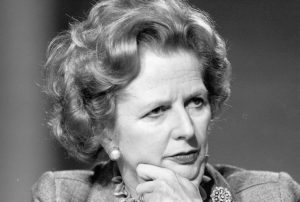
In the last century, David Lloyd George was not out of his depth with France’s formidable Georges Clemenceau and the profit modern piece Pres. Woodrow Wilson. The entire future of Western civilisation for some years rested almost completely on the shoulders of Winston Churchill and Franklin D. Roosevelt, and as she promised to do, Margaret Thatcher put the word “great” back into Great Britain and apart from Churchill exercised more once in the world that any British leader since Disraeli. In the last ten years, the UK has had six failed prime ministers: David Cameron promised “full on treaty change with the EU,” came back from Brussels with less than Mr. Chamberlain brought back from Munich, lost the Brexit referendum and his office. Theresa May defined leaving Europe as remaining within it while claiming to leave, and lost the leavers and the remainers. Boris Johnson got Brexit done, lied to Parliament, and forgot to leave his diverting circus buffoonery at the door of Downing Street and the majority government that he had achieved evicted him. Liz Truss brought in a Thatcherite budget she could not defend, and was given the boot after 45 days. Rishi Sunak tried to run a Labour government for the Conservative Party and was overwhelmingly disembarked by the voters. Because the Reform Party chopped the Conservatives off at the knees, the Labour Party won a huge parliamentary majority with only a slight rise in popular support and Keir Starmer has been a disaster. Nothing like this has ever happened in British history since Walpole’s time: A series of failed prime ministers in quick succession, five of them from the same party.
The result of this is that Britain has had no influence in the world. It is not in Europe and it does not have a special relationship with the United States and it has no particular association with the old Commonwealth led by Canada and Australia. It is adrift, unable to prevent illegal immigration, failing to provide housing for new immigrants and representing the legitimate concerns of lower income British citizens about the resulting increase in housing costs and racism, and devising outrageous and authoritarian measures to suppress legitimate concern. Historic Britain would have rejected anti-Semitism and a powerful national majority would have demanded respect for minority rights. Instead the cowardly Labour government, intimidated by extremist Muslim voters in many districts, has abdicated, and effectively encouraged the despicable and profoundly un-British practice of Jew-baiting and scapegoating.
The world misses British political wisdom. A feeble and waffling Europe misses it, and resurgent America, astounded at Britain treating it with equivalence to the terrorist-sponsoring murderous despotism of Iran, is close to washing its hands of the British relationship. Britain has shut down its oil exploration in deference to insane climate alarmists, has stormed out of Europe, insulted its greatest ally and benefactor, and transformed Shakespeare’s “sceptered Isle” into an inert and spiteful relic with only the statues in and near Parliament Square of great figures of the nation’s past to remind the living of what the British had been.