

The European Union has been weighing the launch of a new military mission in Lebanon to fill a likely security vacuum left by the withdrawal of the United Nations Interim Force in Lebanon (UNIFIL).
The plan was outlined by Kaja Kallas, the EU’s High Representative for Foreign Affairs and Security Policy, ahead of a meeting of EU foreign and defence ministers in Brussels on May 12, when she said that “Europeans are willing to set up a mission to concretely help the Lebanese Armed Forces. It is clear that, when UNIFIL’s mandate expires, a complementary initiative will also be needed, and the ministers discussed how this could be achieved”.
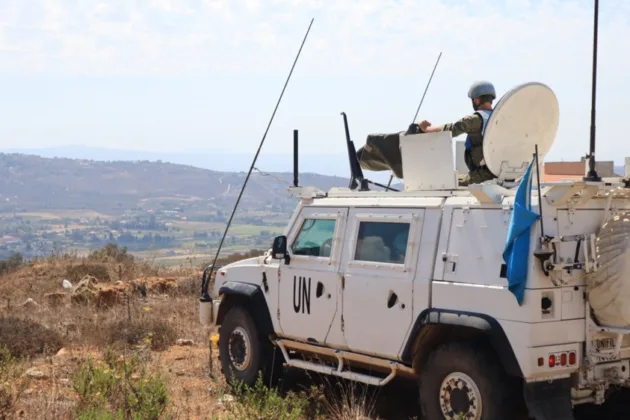
UNIFIL, established by UN Security Council Resolution 425 in March 1978 and significantly reinforced under Resolution 1701 after the 2006 war between Israel and Hezbollah, currently deploys around 10,000 soldiers from nearly 50 countries along the border between Lebanon and Israel. Italy, France and Spain rank among its largest troop contributors.
Its main mandate is to maintain a buffer zone between the two countries in which the presence of armed groups beyond the Lebanese Armed Forces is meant to be prohibited, in particular to prevent Hezbollah’s presence and reduce the risk of direct confrontation with Israel.
That objective, though, has not been achieved, as Hezbollah’s military presence and periodic clashes with Israel have continued over the years. The mission has therefore faced sustained criticism, particularly from Israel and the United States, which argue it has failed to prevent the group from rebuilding military infrastructure near the border. The most recent escalation, between late 2023 and late 2024, brought heavy exchanges of fire across the Blue Line that separates the two countries and underscored those limitations.
Following mounting political pressure and broader UN budget constraints, partly driven by Washington’s reduced financial commitment under President Donald Trump’s second administration, UNIFIL is expected to begin winding down from late 2026.
A POTENTIAL CSDP DEPLOYMENT
The potential EU deployment would aim to fill the gap left by UNIFIL’s withdrawal, but EU officials cited by Euractiv stress it would not be a direct replica of the UN operation. Instead, it would focus on supporting and training the Lebanese Armed Forces (LAF) so they can progressively assume full responsibility for internal security and the monopoly on the use of force.
Over the past decades, Lebanon has faced persistent challenges from armed groups operating outside State control, often backed by foreign powers pursuing regional influence. In this context, Hezbollah, supported by Iran, has become the dominant non-state military actor in the country, repeatedly drawing Lebanon into wider regional confrontations.
European officials argue that strengthening the national army is essential to reducing the influence of such groups and improving long-term stability, while also reflecting a broader effort by the EU to play a more active political and security role in a region where its influence has traditionally been limited.
HOW SUCH A MISSION WOULD WORK
While the EU has no standing army, any mission would be assembled through voluntary national contributions agreed unanimously by the Council of the European Union, with participating forces remaining under national command and operational coordination handled by relatively light EU military structures, often supported by national headquarters. In practice, both funding and troop availability would depend on the level of engagement of individual member states. Financing could be channelled through the European Peace Facility, the off-budget instrument that the EU has used to support Ukraine and several African partners in recent years.
Kallas has suggested the EU should prepare for a more active role in regional security as uncertainty grows over the future of international stabilisation efforts in Lebanon. While no final decision has been taken, exploratory discussions are underway among member states and regional partners on the structure and mandate of a possible mission.
POLITICAL AND OPERATIONAL HURDLES
Any deployment would nonetheless face significant political and operational obstacles. Several EU member states remain cautious about committing troops to Lebanon given the volatile regional security environment, and governments are wary of being drawn into a broader confrontation involving Hezbollah, Israel and Iran-backed armed groups across the Middle East. France and Italy, two of the historic anchors of UNIFIL, would have to commit significant resources for any new operation to be credible on the ground, while Berlin and other northern capitals have so far shown limited enthusiasm for a fresh Mediterranean deployment.