

The European Union has moved to revive ties with Syria, casting the diplomatic push as a step towards the eventual “return” of Syrian migrants to their homeland – a prospect that the bloc’s own officials and outside experts have conceded remains a long way off.
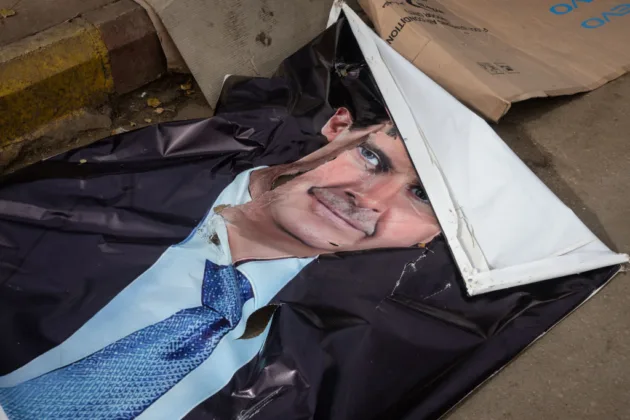
EU foreign ministers are due to meet Syrian Foreign Minister Asaad al-Shaibani in Brussels on Monday to launch a high-level “political dialogue”, 18 months after the fall of strongman Bashar al-Assad.
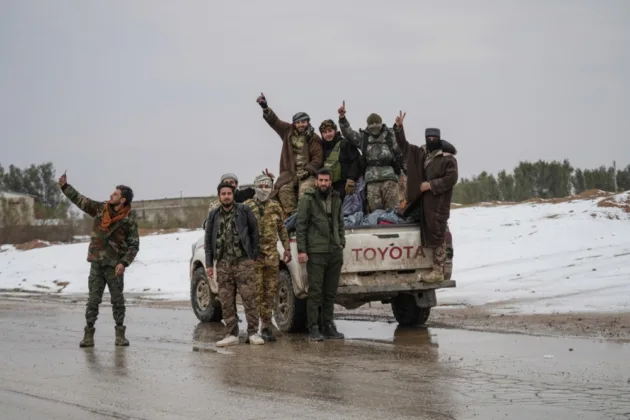
An EU official has said the aim is to back reconstruction of a country devastated by more than a decade of civil war, where “the reality on the ground is still appalling”.
Around 13 million Syrians – nearly half the population – depend on food aid, according to the official. The bloc has already pledged €620 million for the 2026-2027 period.
Syrian nationals have made up the largest share of asylum seekers in the EU for over a decade. EU officials have nonetheless made clear there is no question of forcing them to leave at the bloc level, even as some member states press for a tougher line.
“We need the Syrian transitional government to succeed in bringing stability to the country, because that’s in our interest,” one EU diplomat has said.
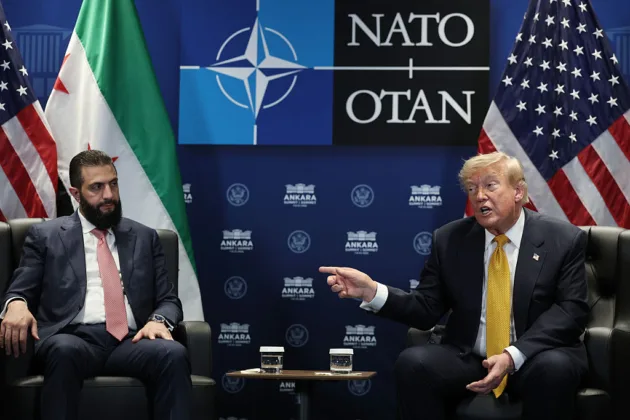
The 27-nation bloc opened a new chapter with Syria after Assad was swept from power in December 2024. European Commission President Ursula von der Leyen pledged after meeting Syrian President Ahmed al-Sharaa in Damascus in January that Europe would “do everything it can” to support the country’s recovery.
Last month, the EC proposed that EU states fully reactivate the bloc’s co-operation agreement with Syria – a step expected to be approved on Monday. The deal, which removes duties on imports of most industrial goods from Syria, was partially suspended in 2011 when Assad cracked down on protests at the start of the civil war.
Before then, Syria-EU trade had peaked at more than €7 billion in 2010 (around $9.1 billion at the 2010 exchange rate). By 2023, EU imports from Syria had fallen to €103 million, while European exports stood at €265 million.
The bloc also wants a more ambitious association agreement, similar to those agreed with Egypt, Israel and Lebanon, though officials have said that goal remains some way off.
On the “returns” question, Germany – home to the EU’s largest Syrian diaspora at more than a million – is on the front line.
Chancellor Friedrich Merz has embraced tougher migration policies as he looks to counter the Right, and triggered a backlash last month by saying during a visit by al-Sharaa that he hoped 80 per cent of Syrian refugees would go home within three years. He later clarified the figure had been put forward by al-Sharaa himself.
Danish authorities have also called for Syrians to go home.
Julien Barnes-Dacey, Middle East and North Africa director at the European Council on Foreign Relations, has said there is a consensus that conditions are not ready for large-scale voluntary returns.
“Most Europeans are cognisant of the reality that for the moment conditions on the ground are not improving fast enough, particularly in the economic sphere, to persuade Syrians to pack up their lives in Europe and head home,” he said.
The EC also wants a “straight and regular dialogue” on returns with Damascus, the official has added, saying the matter “will obviously feature” in Monday’s talks.