






Germany’s much-touted “green revolution” in electricity production has been a costly failure, according to a new analysis.
According to an analysis published by Swiss newspaper NZZ on May 16, 2026, German annual electricity production has decreased by 10 per cent since 2000. This is despite a massive increase in generation capacity, which has risen by 143 per cent over the same period.
Most of the new capacity, though, came from heavily subsidised renewable energy plants, especially photovoltaics and wind turbines.
These plants generate electricity only when nature allows, through sunshine or strong winds. As a result, they produce much less electricity than coal- or gas-fired plants or nuclear plants that can generate power constantly.
For the analysis, the authors used data for 2000 to 2024 from EU statistics agency Eurostat and the energy data platform Renewables Ninja.
An EU-wide comparison shows that a renewables build-out does not automatically lead to a fall in total electricity production. Spain, for example, produced 30 per cent more electricity in 2024 than in 2000, despite a substantial increase in photovoltaics. Similarly, the Netherlands increased its electricity output by 40 per cent.
Germany, though, was unique in Europe in pairing a massive expansion of renewables with the decommissioning and dismantling of its conventional power plants.
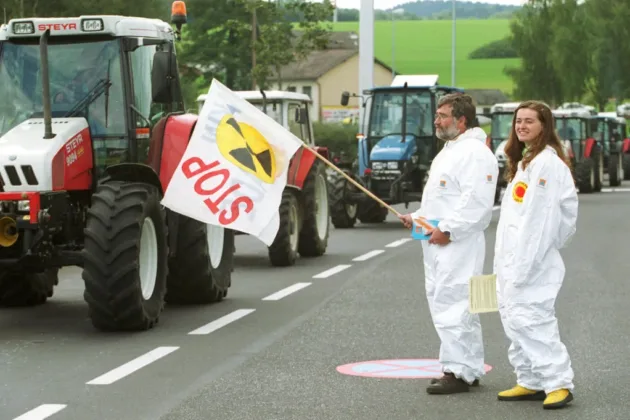
The country opted to phase out its fleet of nuclear reactors in 2011 under chancellor Angela Merkel of the Christian Democratic Union (CDU). The phaseout was completed in 2023, removing around 140 terawatt hours (TWh) of annual electricity production. That is roughly 30 per cent of Germany’s annual electricity consumption of 460 TWh.
On top of the nuclear exit, the country also dismantled several functioning fossil-fuel plants under the 2020 “coal phaseout”.
A further factor is that Germany is not well suited for renewable energy production. According to NZZ, both German photovoltaic and wind installations rank below the European average for energy efficiency. Because the government chose to subsidise renewables regardless of efficiency, though, it is not investors who bear the cost but electricity consumers.
Germany’s reliance on coal and gas back-up has also left its mark on greenhouse gas emissions. Despite the renewables push, the country had the sixth most carbon-intensive electricity in Europe in 2023, at 381 grammes of CO₂ per kWh, against just 56 grammes in nuclear-reliant France, according to data compiled by energy consultancy Enerdata. Germany remains the EU’s largest electricity consumer and is targeting 80 per cent renewable power by 2030, a level it had reached about 59 per cent of the way towards by 2024.
According to the website Strom-Report, German households currently pay the highest electricity prices in Europe, at €0.38 per kilowatt hour (kWh). By comparison, in France, which still operates a fleet of nuclear reactors, customers pay €0.27 per kWh, almost a third less.
The high electricity prices have driven an exodus of energy-intensive producers that were once the backbone of Germany’s chemicals and metals industry. On May 18, 2026, the Federal Statistical Office reported that output in energy-intensive industrial sectors had fallen by 15 per cent since 2022, and that more than 50,000 of the sector’s 848,000 jobs recorded in 2022 had been lost.
The volatility of Germany’s electricity system, where output rises and falls with the sun and wind, was illustrated by a board member of a major steel producer in Lower Saxony, northern Germany, speaking on the podcast Ronzheimer on May 15, 2026.
Georgsmarienhütte (GMH) board member Anne-Marie Großmann said the German Federal Network Agency, the Bundesnetzagentur, sometimes asked the firm to cut production when there was not enough electricity available:
“Then the Federal Network Agency tells us that there’s little electricity generation, so as major consumers, we’re asked to step aside. And even though we’re naturally given incentives not to generate electricity, it cannot be the underlying objective of policy to encourage companies not to generate electricity.”