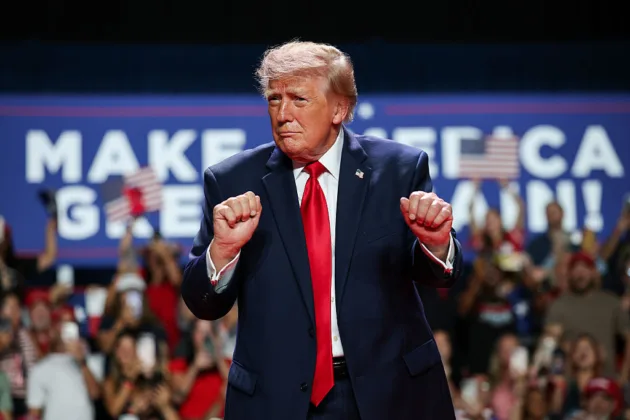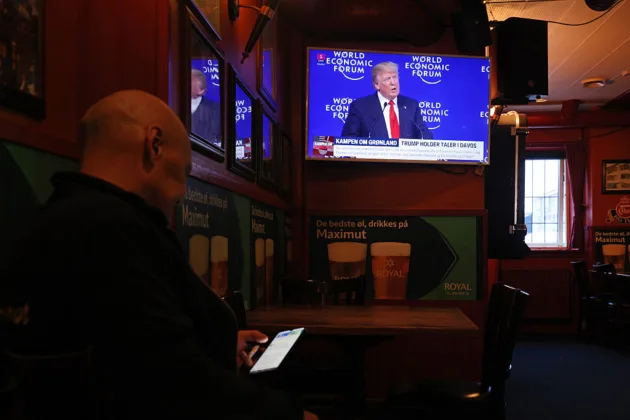

In the global competition for natural resources, the United States is still seeking to increase its influence in Greenland. For months, President Donald Trump kept up the pressure on the island, culminating last January when he declared there was “no going back” in his quest to obtain the territory. He also gave journalists the headline they were looking for when he declined to rule out clearly the use of military force. Trump dialled back his rhetoric at the World Economic Forum in Davos, after strong pushback from European countries – led by the “former” colonial power Denmark – and unease from domestic allies over his language.
Yet the objective has not changed: Greater access to oil and gas and, even more importantly, to critical minerals such as lithium and rare earth elements, which are essential for modern technologies ranging from batteries and electric motors to advanced electronics and defence systems.
According to a New York Times article published on May 18, confidential negotiations have been taking place in recent months between the United States, Greenland and Denmark. Washington’s ambitions extend beyond resources. Military presence is at the top of the list. The US seeks to revise the previous agreement – signed in 1951 after defending the territory during World War II – to ensure an indefinite American military presence in Greenland, even if it becomes an independent country. Today there is only one American installation, Pittufik Space Base, located in the northwest of the country above the Arctic Circle. The early-warning radar system there has long been considered crucial for tracking potential missile threats. The goal is not simply to preserve the base, but potentially to expand the American military footprint elsewhere on the island.
On the economic side, Washington wants to kick-start a range of projects. Investors have been travelling the island looking for mining and energy deals. This fits neatly into the Trump administration’s broader strategy: Secure the resources needed for the digital economy while denying rivals access to them. The targets are Russia and China, with a particular focus on rolling back Chinese efforts to obtain mining rights in Greenland in recent years. The United States is reported to want what essentially amounts to veto power over investment deals involving those countries.
Greenland matters because it fits into the broader strategy that has taken shape in Washington, one with three major components: Reindustrialisation, to make up for decades of outsourcing and the loss of productive capacity in crucial sectors; control over energy resources and key technologies such as artificial intelligence; and the continued dominance of the US dollar in global economic relations. This is not limited to the “America First” wing of the administration; many figures across the Washington establishment share the same objectives.
Trump pursues these goals aggressively, through threats and military action alike, as can be seen in Venezuela and Iran. Many in Washington dislike his methods, but agree with the underlying premise: The United States is locked in a global competition it cannot afford to lose. In practice, that means exploiting Trump’s erratic behaviour to achieve economic results for the United States, and highlighting contradictions in the current system that Washington believes must be addressed to reflect the changing world order.
One of those contradictions is evident in the case of Greenland. Denmark and other European countries have reacted strongly against Trump’s neo-imperial rhetoric. Yet the historical responsibility for colonialism toward the island lies with Denmark. There is a certain irony in condemning American ambitions when Denmark governed Greenland as a colony for more than two centuries and granted home rule only in 1979. Not to mention the “Danisation” policies of the mid-20th century, which included forced contraception of Greenlandic women – affecting nearly half of the childbearing population in the 1960s and 70s – the forcible relocation of local fishermen, the removal of Inuit children to Denmark to train them as a pro-Danish elite, and systemic discrimination between Danes and the indigenous population.
Vice President JD Vance has sought to exploit this history, rejecting what he describes as Europe’s paternalistic attitude and stressing the importance of letting Greenlanders decide their own future. Trump’s bombastic approach, however, seems to have the opposite effect. It has slowed momentum for full independence, strengthening the argument for moving cautiously so as not to lose outside assistance and military protection. There are also concerns about what a closer partnership with the United States could mean, from reduced Danish contributions for social spending to the rollback of environmental regulations.
This is another example of Trump overplaying his hand and ending up with results that appear contradictory to his goals. Yet despite all the controversy, Greenland and Denmark have gradually moved in the direction hoped for by Washington. While rejecting requests to change the territory’s national status, officials have promised greater access and cooperation. Greenland’s leaders have pledged deeper collaboration on both military and economic matters. The result is the current round of negotiations, aimed at strengthening ties across defence, investment and resource development.
Greenland’s Prime Minister Jens-Frederik Nielsen has publicly stated that if forced to choose between the United States and Denmark, he would choose Europe. And the local population has also been far from enthusiastic about the envoys sent from Washington to win support for Trump’s position. Yet Greenland is now part of a larger contest: A new “Great Game” over energy resources and strategic influence in the Arctic. Europe’s appeals to the existing rules – including those shaped by its own colonial past – are unlikely to halt the emergence of a new geopolitical reality.