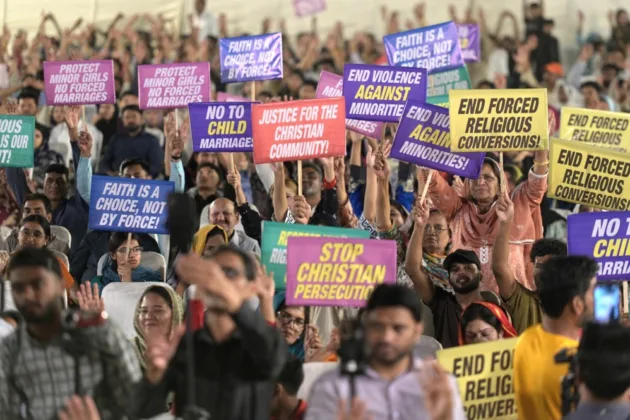




The systematic degradation of Christian communities in South Asia is not an accident, but a policy. The millions of Christians trapped in the slums of Lahore, Karachi, and Dhaka are victims of calculated exclusion. These are not merely poor neighbourhoods. They are ghettos of a permanent underclass. In the shantytowns of Pakistan and the slums of Bangladesh, clean water, electricity, basic sanitation and safety are luxuries reserved for the majority faith. Those living there are literally destined for the gutter.
In Pakistan, this exclusion has been institutionalised through a modern-day caste system. Approximately 80 per cent of the country’s sanitation workers are Christian, a staggering statistic that reveals a society segregating its citizens according to religious faith. This is not a coincidence. It is a structural feature of a state that relegates Christians to the most hazardous and degraded occupations, often forced into work deemed “unclean” for others. An entire community is confined to the sewers and the slums. It is essential for the maintenance of the city, but it is not permitted to belong to it.
The pathology is identical in Bangladesh, where the situation has moved from quiet marginalisation to active siege. Following the political upheavals of the last two years, the safety of the Christian minority is in continuous danger. From the shantytowns of Dhaka to rural outposts, we are seeing a coordinated campaign of land seizures and intimidation. In the chaos of transition, radicalised mobs have targeted Christian schools and homes, viewing the community as an alien body to be expelled.
Perhaps the most disturbing element of this crisis is the utter indifference from the international community. We hear endless lectures from Brussels about human rights and global solidarity, yet when it comes to this systematic degradation, the silence is complete. There is a strange, self-imposed paralysis in Western diplomacy that avoids addressing the struggles of Christians abroad – when it is the Christian West that ought to rush to their rescue first.
This neglect has lethal consequences. In Islamabad, thousands of Christian residents in settlements like the H-9 Rimsha Colony are currently facing mass eviction orders with no alternative housing provided. In Lahore, infrastructure in Christian-majority areas is left to rot, with sewage flooding the streets and roads remaining unusable for years. In the eyes of the bureaucrats, these people are invisible. In the eyes of the radicals, they are disposable.
Foreign policy must stop looking away from these inconvenient victims. If Europe claims to stand for universal values, then those values must apply to a mother in a Lahore slum or a worker in a Dhaka shantytown. Trade agreements and development aid should not be offered unconditionally to regimes that treat groups of their own people as disposable waste. Solidarity, as rooted in the core of liberal societies, is not a selective virtue. It is a commitment to the dignity of the individuals, regardless of how they pray.
The Christian slums in South Asia are not just a humanitarian crisis. They are a mirror of our profound hypocrisy and moral bankruptcy. By allowing these communities to suffer, the West signals that its commitment to human rights is arbitrary, dependent on political convenience. The state-sponsored marginalisation of minorities must be met with real diplomatic costs, while Christian rights in Islamic countries must be protected. Anything less is a betrayal of the very foundations of our culture and identity.