

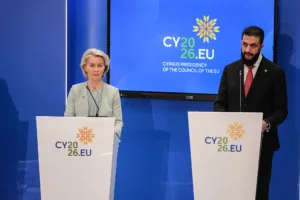

Hungary’s new Government has signalled a significant departure from the border defence policies that defined the era of former prime minister Viktor Orbán, with Foreign Minister Anita Orbán telling parliament that Budapest intends to allow “asylum applications” at its frontiers to bring an end to the EU’s daily €1 million fines.
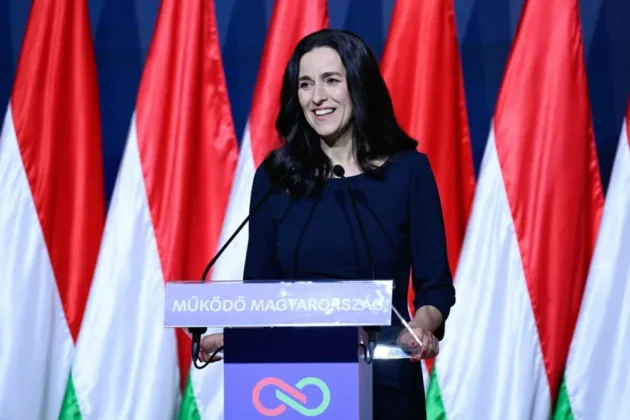
Anita Orbán, who is not related to the former PM, made the comments on May 11, 2026 during her pre-appointment hearing before the European Affairs Committee of the Hungarian Parliament. She was approved for the post with six votes in favour and two abstentions. The same hearing saw the minister-designate set out a wider foreign-policy reset, including a more restrained use of Hungary’s veto in the European Council and a recalibrated relationship with Moscow.
On immigration, Anita Orbán said the daily fine, imposed in June 2024 by the Court of Justice of the European Union (CJEU) for Hungary’s non-compliance with EU asylum law, “must be brought to an end”. She argued this would require permitting asylum seekers arriving at Hungary’s borders to submit applications for refugee status, reversing a key pillar of the previous administration’s stance on immigration.
The minister also sought to play down the political weight of the EU’s Migration Pact, which is due to take effect in June 2026. She told MPs the pact did “not entail mass immigration into Hungary”, but rather “mutual assistance” among member states under migratory pressure. Compliance, she suggested, could mean accepting a limited number of immigrants or offering financial and logistical support.
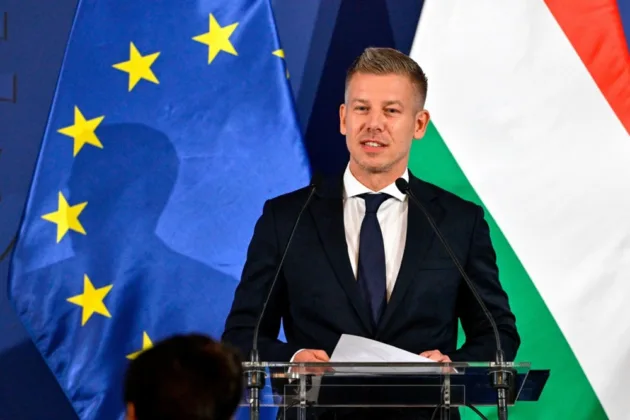
The remarks have caused friction among right-wing commentators and voters, who have accused Prime Minister Péter Magyar and his Tisza Party of reneging on campaign pledges. At his April 13 press conference, Magyar said his Government would maintain a “very strict position” on immigration, reject “any pact or allocation mechanism”, and keep the southern border fence built by Orbán in 2015.
German economist Richard Werner wrote on X that Hungarian voters might “feel betrayed”, echoing wider criticism that the new administration is moving closer to Brussels’ immigration framework.
The Tisza Party, which won the April 12 general election with a supermajority, has presented itself as a constructive partner in the European Union after 16 years of confrontational relations under Orbán. The European Commission has suspended €17 billion of the €27 billion in EU funds allocated to Hungary, and unlocking that money is Magyar’s top priority.
Anita Orbán told the committee that restoring trust within the EU and NATO was Hungary’s most pressing foreign-policy objective. Under the new pact, member states will be required to either take in relocated asylum seekers or provide financial and material support to frontline countries such as Italy, Greece and Spain.
Magyar was sworn in on May 9, ending Orbán’s 16-year rule.