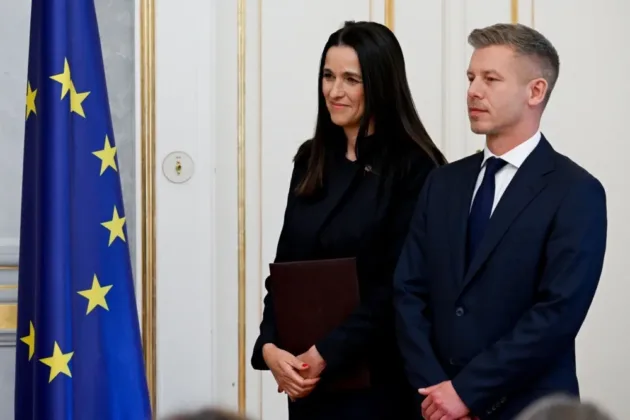

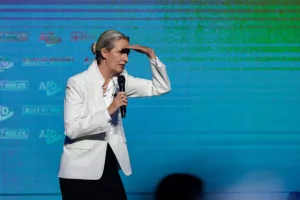

Hungary’s new government will maintain its relations with Russia, the country’s incoming foreign minister Anita Orbán has said, telling lawmakers in Budapest that Moscow remained “an important partner” though future cooperation would no longer rest on the “unilateral dependence” of recent years.
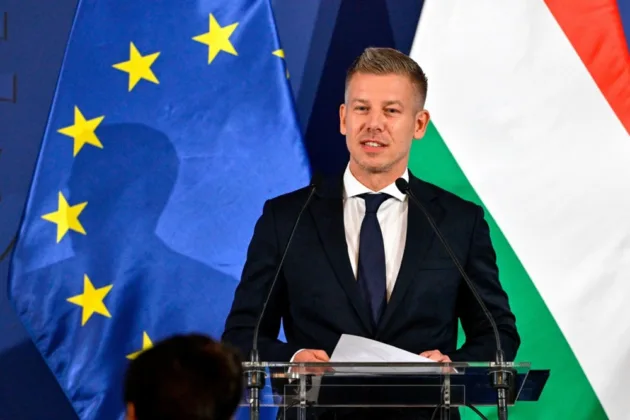
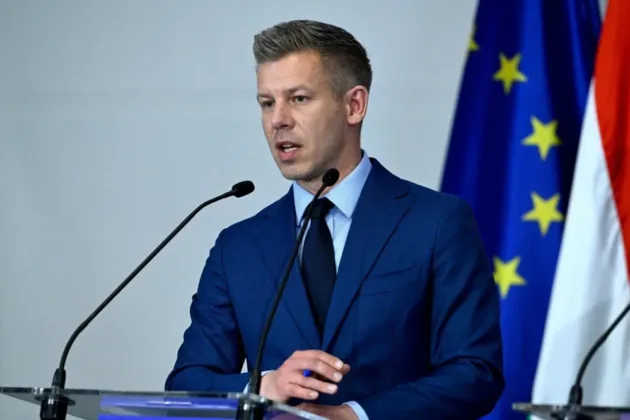
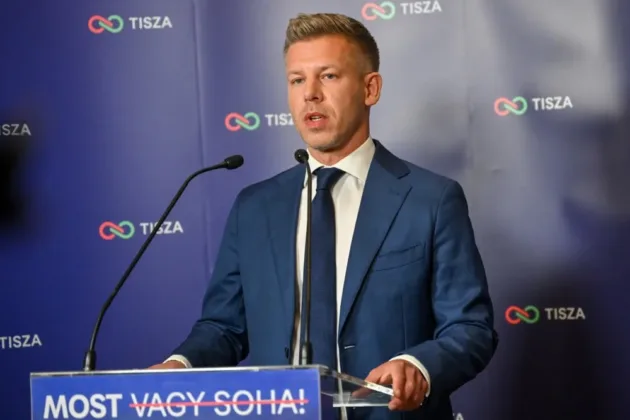
Speaking on Monday at her pre-appointment hearing before the Committee on European Affairs of the Hungarian Parliament, the foreign minister-designate set out the priorities of the incoming cabinet led by Prime Minister Péter Magyar, who was sworn in on May 9, 2026 after his Tisza Party’s landslide win in last month’s general election.
“Russia remains an important partner because of its regional role, but the relationship with it cannot be based on unilateral dependence,” Anita Orbán told the committee, according to the Hungarian daily Magyar Hirlap. “With respect to Russia, Hungary will seek to establish a transparent system of relations between two sovereign States, based on mutual interests.”
The remarks suggest the new administration is not seeking a full break with Moscow despite presenting itself as a pro-European alternative to former prime minister Viktor Orbán, whose 16-year rule was marked by close ties with the Kremlin and persistent clashes with Brussels over Ukraine.
Restoring Hungary’s standing within the European Union remains a stated priority for the incoming cabinet. Recovering frozen EU funds, the future minister said, was “an absolute priority”. She added that the use of the veto in the European Council had been resorted to too frequently in recent years and would in future be reserved for cases where Hungary’s national interests were genuinely at stake.
“We can defend our values and national interests more effectively by preserving our sovereignty within European cooperation,” she said. Hungarians, she argued, had voted on April 12 “for Europe instead of an eastern-oriented foreign policy”.
The future minister told MPs the new approach was not aimed at “frustrating allies or questioning common values” but at “diversifying” relations and maintaining “predictable cooperation”. She also called for “a stronger Europe” able to coordinate more effectively with the United States.
Strengthening the Visegrád Group – the regional alliance of Czech Republic, Hungary, Poland and Slovakia founded in 1991 – was named as another pillar of the new policy. Magyar is due to make his first official trip as Prime Minister to Warsaw next week, in what Budapest describes as a gesture to normalise relations with Poland.
Relations with Slovakia, though, remain in deadlock after the government of Robert Fico passed legislation seen in Budapest as undermining the rights of the Hungarian minority, drawing comparisons in Hungary to the post-war Beneš Decrees.
“It is not possible to strengthen relations with a country where the Hungarian minority is judged by collective guilt. This not only impedes good neighbourly relations but also runs completely counter to EU law and values, as well as fundamental universal Human Rights,” Anita Orbán told MPs.
Following the hearing, the Committee on European Affairs recommended her appointment as Minister of Foreign Affairs by six votes in favour and two abstentions.