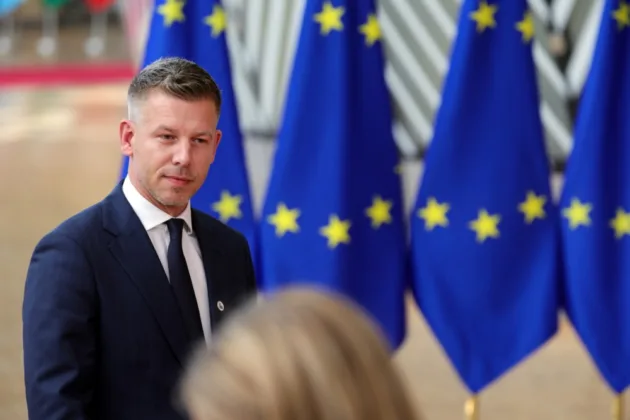
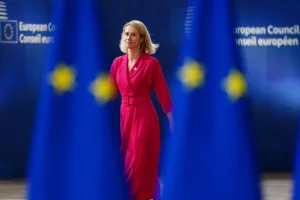


Italian Prime Minister Giorgia Meloni and Hungary’s newly elected Prime Minister Péter Magyar met in Rome on Thursday in what analysts see as an effort to preserve strong bilateral ties following Viktor Orbán’s electoral defeat.
Over the past 15 years, Meloni had developed a strong political and personal relationship with Orbán, becoming one of his closest allies within Europe’s conservative camp.
For this reason, after Magyar’s victory in the Hungarian parliamentary elections on April 12, several observers in Brussels questioned whether the political change in Budapest would lead to a cooling of relations between Italy and Hungary.
Shortly after the Hungarian elections, Meloni moved quickly to dismiss the idea that Orbán’s departure could result in a rupture in bilateral relations, underlining that Italy’s strong ties with Hungary would continue regardless of leadership changes in Budapest.
“I am convinced that Italy and Hungary will continue to work together,” the Italian PM said just two days after the election result. Yesterday’s meeting in Rome appeared to confirm that line of continuity.
The meeting marked Magyar’s first major bilateral visit since his election victory and it focused on migration, European Union competitiveness, defence co-0peration and the future of the Western Balkans.
Both sides also sought to identify key areas of co-operation developed under Orbán’s leadership, with the aim of ensuring continuity in bilateral relations.
“Both sides confirmed the solidity of relations between Italy and Hungary,” the Italian government said in a statement after the talks, which Magyar later described as “productive and far-sighted”, stressing the willingness of both governments to maintain close cooperation.
Yesterday’s discussions indicated broad continuity on several strategic issues, starting with illegal migration, which both leaders described as a key priority.
Speaking after the talks, Magyar said Italy and Hungary shared “similar views” on tackling illegal migration and supporting EU enlargement in the Western Balkans.
He also stressed the need to improve Europe’s economic competitiveness amid growing pressure from the US and China.
A key issue discussed during the meeting was the long-delayed Hungarian port project in Trieste, considered strategically important by Budapest as a gateway for global trade and energy routes. Magyar said both governments agreed to accelerate the project and strengthen cooperation between Italian and Hungarian investors.
Neither side has referred to any potential co-operation on Ukraine, leaving the extent of their alignment unclear.
Meloni has so far positioned herself as an unequivocal supporter of aid to Kyiv, closely echoing the positions of the European Commission. The Hungarian side did not comment on the matter on this occasion.
According to sources close to the Italian Government, the transition from the Meloni–Orbán to the Meloni–Magyar relationship has been facilitated by the fact that Italy and Hungary had already developed a strong institutional relationship that increasingly stood apart from the personal and ideological ties between Meloni and Orbán, which in fact had cooled over time.
This shift was mainly reflected in Meloni’s approach since taking office in 2022. In the years leading up to 2022, Meloni and Orbán had developed a strong political alignment, particularly within the European conservative camp, based on shared positions on migration, national sovereignty, and criticism of EU institutional overreach.
This alignment was expressed through regular political co-ordination, mutual support in European debates, and participation in the same ideological networks within EU politics.
After 2022, though, Meloni adopted a more co-operative relationship with the European Commission, despite the pressures it exerted on Budapest due to its lack of alignment with EU policy demands.
Key divergences have emerged, particularly over Ukraine, following Orbán’s more critical stance on sanctions and military support.
This contributed to a gradual shift from an initial phase of strong alignment to a more pragmatic and institutional approach, with Meloni at times aligning more closely with EC positions than with those of her Hungarian ally.
This evolution was also reflected in the European Parliament after the 2024 elections, when Orbán’s Fidesz party did not join the European Conservatives and Reformists (ECR) group led by Meloni’s Fratelli d’Italia, instead aligning with the Patriots for Europe group.
This choice highlighted the absence of a privileged political alliance between Meloni and Orbán at the European parliamentary level. It marked a further step in the gradual erosion of the idea of a stable political axis between Rome and Budapest, while still preserving ongoing institutional dialogue.
This dialogue is now expected to continue despite the change in leadership in Hungary.
At the conclusion of the meeting, Magyar invited Meloni to visit Hungary in the coming months, signalling that Rome and Budapest intend to maintain close ties after the end of the Orbán era.