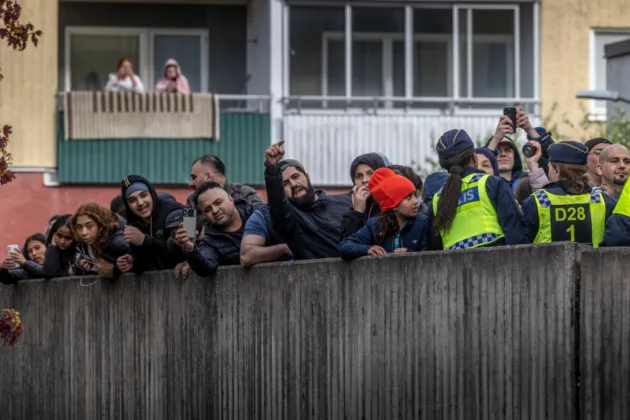






Twenty-three innocent bystanders have been killed and 30 others wounded in gang-related shootings in Sweden over the past three years, according to police statistics released on Monday that have laid bare the Nordic country’s struggle to rein in a wave of violent crime rooted in failed migration policy.
The figures have come as Sweden continues to grapple with the legacy of decades of large-scale migration, with the country having received the highest per capita intake of migrants in Europe during the 2015 migration crisis. Swedish police have estimated that around 30,000 people in the country are directly involved with or have ties to gang networks, with newer assessments putting the figure of those connected to organised crime at more than 60,000.
A 2021 report by Sweden’s National Council for Crime Prevention (Brå) found a strong overrepresentation of people with an immigrant background among those registered as suspected offenders, with the highest excess risk among those born in Sweden to two non-native parents. Linda H Straaf, head of intelligence at the National Operations Department, has said gang members were from poor areas, with many being second- or third-generation immigrants.
Prime Minister Ulf Kristersson, in a televised address to the nation in 2023, said the violence was the result of “an irresponsible immigration policy and a failed integration”.
The data, published by Swedish police, have shown that the innocent victims include people hit by stray bullets, those mistaken for the intended target by gunmen and relatives of gang members.
Alexander Wallenius, operations coordinator at the Swedish police’s department of national operations, told Swedish news agency TT that one of the reasons for the high number of bystander casualties was the youth of those carrying out the shootings.
“We are dealing with very young perpetrators who, in many cases, have no previous experience of violent crime, which means a greater risk that third parties or the wrong target will be hit,” Wallenius said.
Swedish gangs have increasingly turned to social media platforms and encrypted messaging apps to recruit teenagers, who are paid to carry out attacks on their behalf. These recruits are often below 15, the age at which criminal responsibility kicks in under Swedish law, meaning they cannot be prosecuted and instead fall under the remit of social services. That has made underage children particularly valuable to organised gangs.
The minority right-wing government, which is propped up by the Sweden Democrats, has been pushing through a series of measures to crack down on crime and immigration ahead of a general election scheduled for September 13, 2026.
Last week, ministers said they would introduce legislation requiring social media platforms such as TikTok and Snapchat to take down gang-related “murder adverts” within an hour or face hefty fines. The government has also previously announced plans to lower the age of criminal responsibility from 15 to 13 for offences punishable by at least four years in prison.