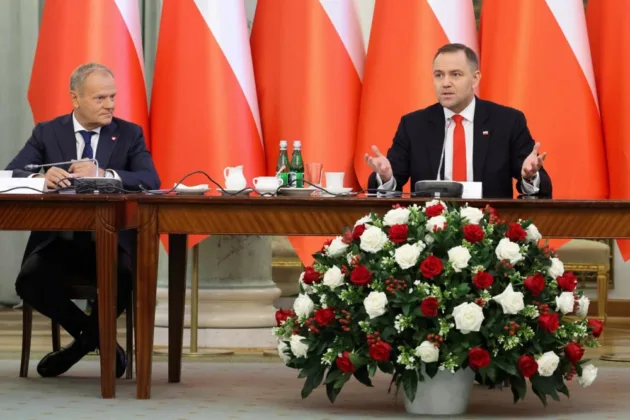









Poland’s President Karol Nawrocki has submitted a motion to hold a national referendum on EU climate policy, citing the high cost of living in Europe’s largest coal-reliant country.
The eurosceptic head of State announced the move on X on May 7, 2026, taking aim at the EU’s Green Deal and the Emissions Trading System (ETS).
“The Green Deal and the ETS mean higher energy prices, a decline in the competitiveness of the economy, and the collapse of agricultural production,” Nawrocki wrote.
The proposed referendum would ask Poles whether they support “implementing a climate policy that has led to an increase in the cost of living for citizens, and in energy prices, and the costs of conducting business and agricultural activity”.
Nawrocki, who took office following the 2025 presidential elections, had pledged during his campaign to support Poland’s coal industry, lower energy prices and withdraw from the ETS, positioning himself as a sceptic of Brussels’ climate agenda.
The Polish Government, led by a centrist pro-European coalition, has reacted critically to the proposal. While ministers have argued that the ETS should be “revised”, they consider the system part of European law that Warsaw cannot unilaterally reject.
Under the Polish Constitution, the president has the right to order a referendum, though it must be confirmed by a majority in the Senate, the upper house of the Polish parliament. That body is currently controlled by the ruling coalition.
“This proposal will land where it belongs – in the trash,” Senate deputy speaker Magdalena Biejat, of the Left party, wrote on X following the announcement.
“It’s the drought and addiction to coal and oil that drive up food and electricity prices, not the EU,” she added.
Anna Maria Żukowska of the New Left party described the president’s move as “absurd” and an “attempt to politicise the very concept of a referendum”.
In 2025, Poland relied on coal for nearly 51 per cent of its electricity production, by far the highest proportion in the EU.
Nawrocki defended his initiative, framing it as a question of democratic legitimacy.
“Consent to a referendum will be an expression of respect for the voice of the citizens,” he said, warning that a refusal “would also be a decision that the citizens will evaluate”.
Should the referendum be confirmed by the Senate, it must be held within 90 days. For its result to be binding, more than 50 per cent of eligible voters need to participate.
Poland has long been among the most vocal member states resisting elements of the EU’s climate agenda, particularly the Green Deal and its associated mechanisms targeting fossil fuel use.