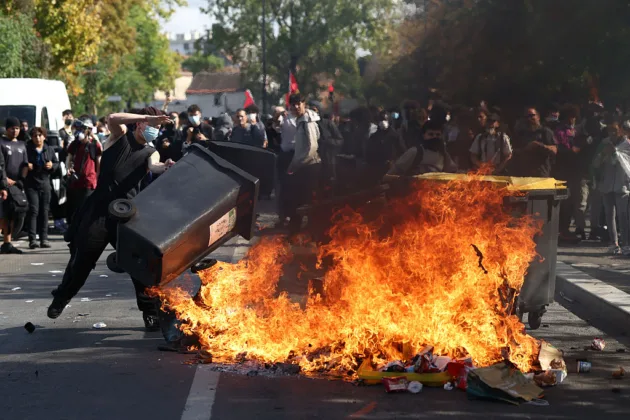






Following the sexual abuse scandals in the Parisian after-school care system (périscolaire), many school staff have gone on strike to denounce what they call institutional “repression” by the City of Paris.
The walkout runs May 11-22, 2026, and has been called by a rare seven-union coalition — Unsa, Supap-FSU, CFDT, CGT, FO, UCP and CFTC — in what organisers describe as an unprecedented joint front, according to the inter-union statement reported by the French labour press.
The sector’s inter-union coalition has said it expects a “highly supported” strike, with after-school programmes shut in “200 to 300” of Paris’ 620 schools, according to Nicolas Léger of the Supap-FSU union. Some canteen services could be suspended.
The claims involve incidents dating back more than a decade and concern approximately 200 staff members, spread across at least nine of the capital’s arrondissements.
On May 17, Paris public prosecutor Laure Beccuau said the prosecutor’s office was investigating “84 nursery schools, around 20 primary schools and around 10 day-care centres”.
Beccuau also announced the opening of three criminal investigations. Since early 2026, 78 staff members have been suspended from Parisian schools, including 31 on suspicion of sexual abuse of minors.
The unions have denounced the “climate of widespread suspicion and arbitrariness that has taken hold” since Socialist mayor Emmanuel Grégoire’s action plan against child sexual violence in after-school care was introduced.
“Suspensions are skyrocketing, with no support for the staff and teams involved,” they said.
Grégoire, 48, succeeded Anne Hidalgo as mayor in March 2026 after winning the municipal election, and had pledged to make périscolaire safety his “first fight to protect our children”.
Speaking on French television yesterday, Grégoire said parents must be able to trust their children’s schools.
“Mistakes have been made, but we must not lump all professionals together. The vast majority of them provide genuine support,” he said.
“We have put in place extremely effective emergency safeguards,” he added.
The scandal has exposed shortcomings in recruitment, with the city forced to hire applicants with little or no experience or qualifications, because few other candidates apply. The sector relies on roughly 14,000 largely casual staff (vacataires) in a chronically understaffed and precarious workforce. Observers trace the strain to a 2014 reform that introduced a 4.5-day school week, obliging the city to recruit large numbers of staff at speed.
According to the unions, the measures Grégoire put forward under his €20 million action plan are “completely insufficient to address the structural problems” of the sector. The unions also point to an unkept pledge to upgrade directors from category B to A and animateurs from category C to B, and are demanding an end to what they call “automatic suspensions”.