
Voters in 136 local authorities went to the polls on May 7 to elect more than 5,000 councillors. With 100 councils declared by the evening of May 8, Reform UK had won outright control of seven for the first time, taking 936 councillors – a gain of 873 on its previous total – and overtaking both the Conservatives and the Liberal Democrats in seats. Labour had lost control of 20 councils and shed close to 600 seats.
Reacting to the results on May 8, Prime Minister Keir Starmer ruled out stepping down, telling supporters in west London he took “responsibility” for the defeats but would not abandon his five-year mandate.
The vote was the largest electoral test since Starmer’s July 2024 general election landslide and was widely seen as a midterm verdict on his government. It also confirmed the rise of Reform UK, which took its first 10 councils at the May 2025 local elections and has since polled level with or ahead of both Labour and the Conservatives in most national surveys.
‘RED WALL’ BREAKTHROUGH
Reform’s most symbolic gain was Sunderland, in northeast England, which had been under Labour control for more than 50 years. Labour slipped to third place behind Reform and the Conservatives, and council leader Michael Mordey lost his seat.
In Tameside, a metropolitan borough of Manchester, Labour retained 25 seats but lost 14, while Reform secured 19 after gaining 18. Redditch, south of Birmingham, fell into no overall control, with Labour reduced to 13 councillors after losing five and Reform taking eight.
In Tamworth, in central England, Labour slipped to 14 seats after losing one, while Reform climbed to 10 after gaining nine. In Hartlepool, in northeast England, Labour and Reform tied on 15 councillors each, the former having shed six and the latter added 11. Reform also took Newcastle-under-Lyme outright, in west-central England, and the east London borough of Havering.
ESSEX AND THURROCK
Reform overturned a quarter of a century of Conservative dominance in Essex, in southeast England, taking 53 seats against 13 for the Tories. The party also seized neighbouring Thurrock from Labour with at least 27 councillors, the council’s Labour leader, Lynn Worrall, losing her seat in the process.
Labour did hold Reading and Plymouth, and retained the London boroughs of Ealing, Hammersmith & Fulham and Merton. The Conservatives took Westminster City Council from Labour and pushed Wandsworth, in south London, into no overall control, while the Liberal Democrats gained Stockport and Portsmouth.
STARMER REFUSES TO STEP ASIDE
Speaking to local activists in west London, Starmer rejected calls to resign. “The results are tough, they are very tough, and there’s no sugarcoating it,” he said. “Days like this don’t weaken my resolve to deliver the change that I promised.”
The Prime Minister said the loss of Labour councillors “hurts, and it should hurt, and I take responsibility”, but insisted he would not “walk away and plunge the country into chaos”. Pointing to his 2024 general election majority, he said he had a “five-year mandate to change the country” and confirmed he would stand again at the next general election.
Pressure on Starmer has built in recent months over his appointment of Lord Peter Mandelson as UK ambassador to Washington despite the peer’s friendship with the late paedophile financier Jeffrey Epstein. Mandelson was dismissed in September 2025 after emails detailing the relationship were published.
FARAGE PREDICTS STARMER ‘WILL BE GONE BY MID-SUMMER’
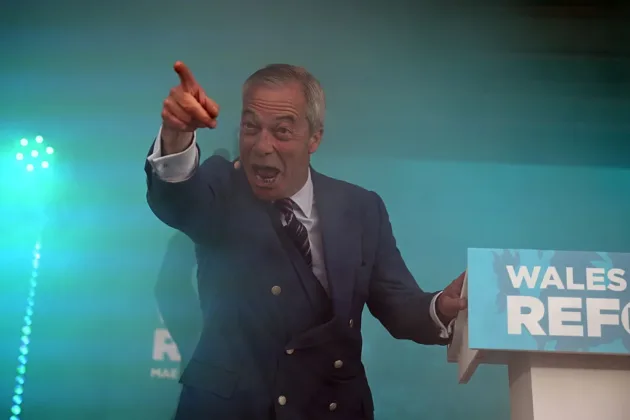
Speaking from Chelmsford, in Essex, Farage said the results marked “a truly historic shift in voting patterns” and described the swing in former Labour areas as “truly astonishing”. He claimed Reform was “taking votes directly from the old patriotic Labour Party” in areas Labour had “practically taken for granted since the end of the First World War”.
Farage went further, predicting Starmer’s exit within weeks. “By mid-summer the most unpatriotic, worst and least prepared prime minister we have ever seen in this country will be gone,” he said. “We will have got rid of him.”
SCOTTISH AND WELSH VOTES
The English contests coincided with elections to the 129-seat Scottish Parliament at Holyrood, in Edinburgh, and the debut of an expanded Welsh electoral system at the Senedd, in Cardiff. Early counting in Scotland pointed to a comfortable victory for John Swinney’s Scottish National Party, with Labour relegated to fighting Reform for second place.
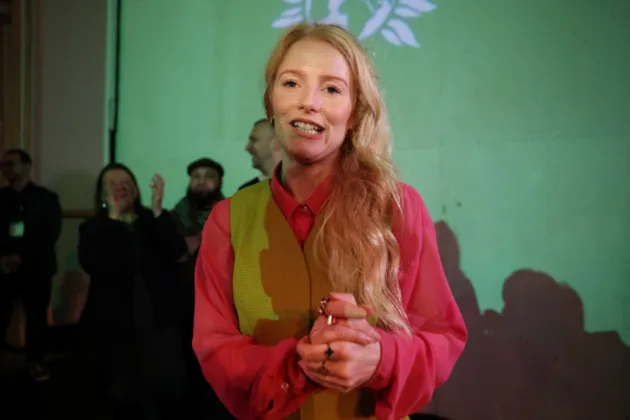
Scottish Labour leader Anas Sarwar, who in February 2026 became the most senior Labour figure to call publicly for Starmer’s resignation, conceded defeat and reaffirmed his position. “I said what I said in February and I stand by it,” he told reporters, “but now I’m going to focus on what this means for my party here in Scotland.”