











Switzerland’s Federal Council has backed the extension of its nuclear reactors.
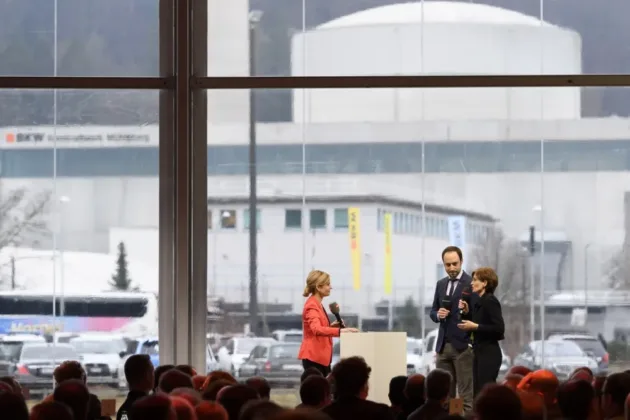
A report published yesterday shows that operating the country’s Gösgen and Leibstadt nuclear power plants for up to 80 years is “technically feasible” and “likely profitable”, thus opening the door to a significant extension of their working lives beyond the currently planned 60-year horizon.
Commissioned studies by Frontier Economics and Siempelkamp NIS estimate the investment required for long-term operation beyond 60 years at between 0.7 billion Swiss Francs (€0.77 billion) and 1.2 billion Swiss Francs (€1.31 billion) per plant, spread over 36 years.
The Federal Council (Bundesrat) is the seven-member executive cabinet serving as the collective head of state and government of Switzerland. Elected for four-year terms by the Federal Assembly, the council operates as a consensus-based coalition, typically representing the country’s major political parties and language regions.
It believes operators can absorb the costs without state support under most realistic price scenarios.
Switzerland currently operates four reactors across three sites, Beznau, Gösgen and Leibstadt, which together supplied around 30 per cent of domestic electricity production in 2024, rising to 36 per cent during the winter semester.
The report also leaves open the possibility of constructing a new nuclear plant – a 1.6 gigawatt facility entering service around 2050 in a scenario where renewable energy development falls short of targets.
The report comes as a time when many European Union countries are rolling back on their nuclear phase-out.
In March this year, Switzerland’s upper house of parliament, the Council of States, voted in favour of lifting the country’s longstanding ban on the construction of new nuclear power plants.