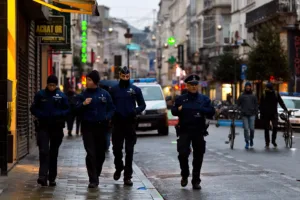




Belgian coastal police have been facing increasingly violent resistance from groups of former Iraqi and Afghan soldiers who are actively protecting small boat departures for the United Kingdom (UK), according to the chief of the Westkust police zone.
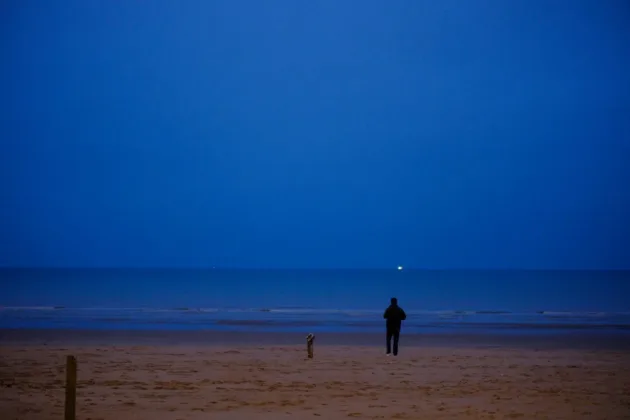
Nicholas Paelinck told Belgium’s House Committee on Home Affairs on May 19 that ex-military personnel from conflict zones have become a serious obstacle to stopping illegal Channel crossings. The Westkust zone covers the coastal towns of De Panne, Koksijde and Nieuwpoort in the north-western tip of West-Flanders, just over 30km from the English shoreline.
According to Paelinck, these battle-hardened guards circle the boats to keep officers away, throw stones, smash police vehicles, and have been linked to the discovery of weapons of war and munitions in migrant camps near launch sites in areas such as De Panne.
“Normally, we try to puncture the boat beforehand to prevent the crossing to the United Kingdom,” Paelinck said.
“But that is not possible here, because you see ex-military personnel from Iraq circling the boat to ensure the police cannot get to it.
“Officers were threatened by the soldiers, and a mirror was even smashed with an iron bar. We conducted a risk analysis, and it is too dangerous to operate on that beach anymore. We will not do that again.”
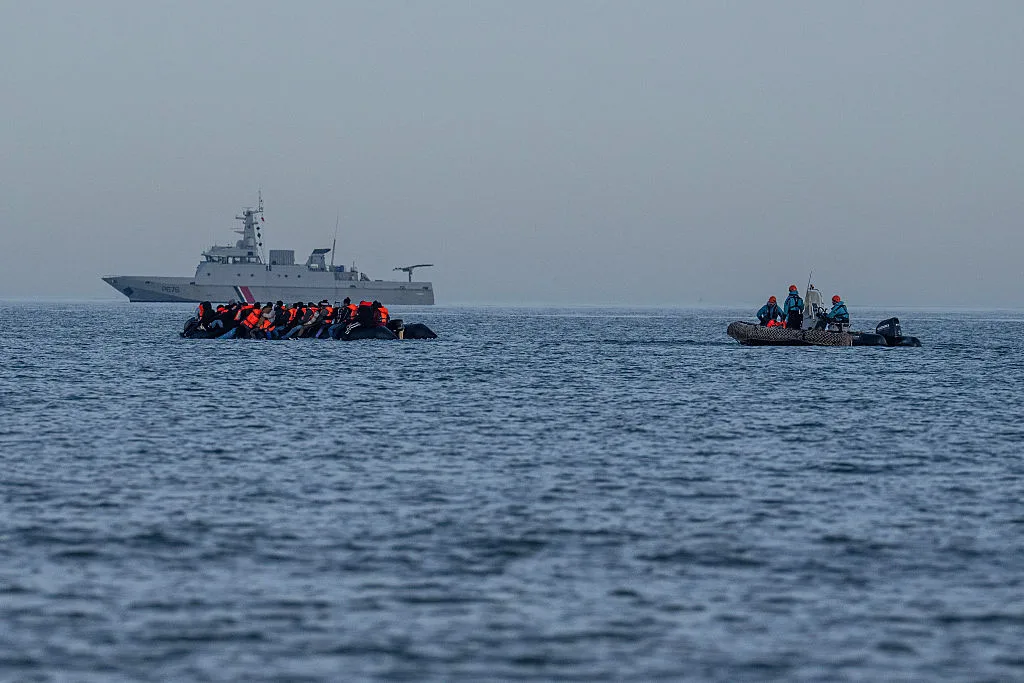
In recent months police still managed to intercept five boats carrying around 200 migrants and push them toward French waters, but routine operations on Belgian territory have effectively stopped.
Police have largely abandoned direct beach interventions after a risk assessment concluded the threat level had become unacceptable.
The surge in activity on the Belgian coast is a direct result of tighter French controls around Calais, northern France, which have pushed smuggling networks northward into West-Flanders, a stretch of coastline that until recently saw only sporadic launches.
With summer approaching and better weather conditions, police fear the migration crisis on the coast will deteriorate further.
Paelinck has appealed for urgent federal support, including more resources, drones, thermal cameras and technical equipment, warning that local forces are increasingly powerless against these militarised smuggling operations.
National police representatives did not show much eagerness to help in the federal parliament. Chief Commissioner Kurt Desoete said that his forces had a “supportive role” and a national orientation.
“The people and resources we are currently deploying locally are being drawn from the national reserve.”
In total, some 41,472 people arrived in the UK via small boats in 2025, according to provisional Home Office figures. This was the second-highest year on record, representing a 13 per cent increase compared to 2024, and was below only the 2022 peak of about 45,774 arrivals.
The UK Green Party leader Zack Polanski wants illegal migrants to be given free housing and paid an income with no requirement to work. https://t.co/3Oysk4DdWG
— Brussels Signal (@brusselssignal) February 25, 2026