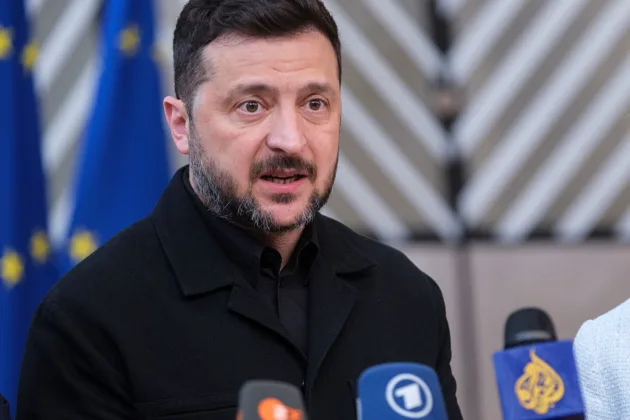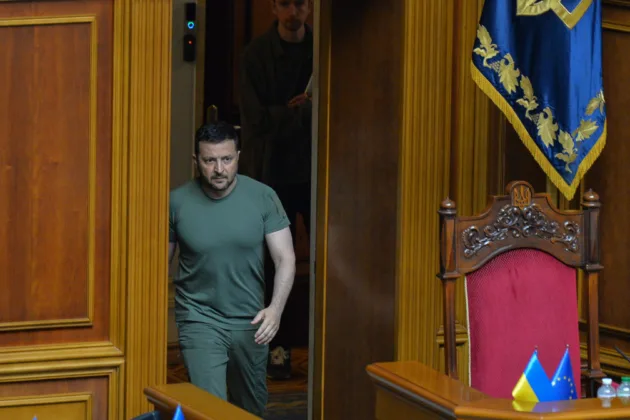






Ukrainian President Volodymyr Zelensky has confirmed he met the chief executive of US technology firm Palantir in Kyiv, in a move aimed at widening artificial intelligence (AI) cooperation between Ukraine and one of Washington’s most influential defence contractors.
In a statement posted on social media on May 12, 2026, Zelensky said the talks with Palantir CEO Alex Karp had centred on technological development “both in the context of combat operations and civilian needs”.
“There certainly are areas where we can be useful to one another, strengthening the defence of Ukraine, America, and our partners,” Zelensky said.
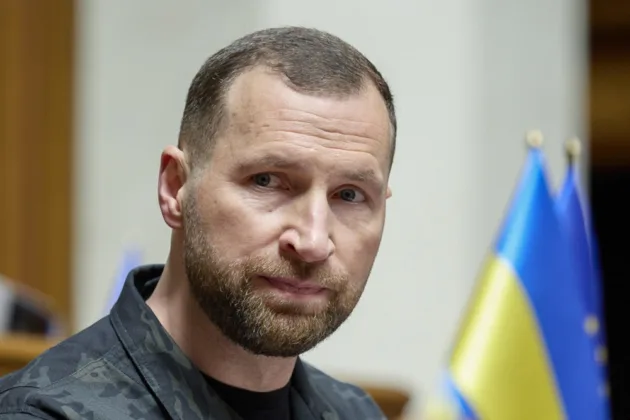
Ukrainian defence minister Mykhailo Fedorov confirmed in a separate statement that he had also met Karp. According to Fedorov, the two sides discussed how to expand a partnership that began when the Palantir boss first travelled to the country in June 2022, four months after Russia launched its full-scale invasion.
“During the meeting, we showed the Palantir team how Ukraine protects its skies, holds back the enemy at the front, and strikes at the Russian economy,” Fedorov said. “Our goal is to deepen our partnership with Palantir on AI solutions and defence tech projects that provide Ukraine with a technological edge.”
Palantir, founded in 2003 and listed on the Nasdaq, has grown into one of the largest software suppliers to the US military and intelligence community. Its data-analysis platforms are used by Western armed forces to fuse satellite imagery, signals intelligence and open-source data, helping commanders to track troop movements and identify targets close to real time.
The Ukrainian Government has positioned itself as a testing ground for Western military technology since the start of the Ukraine War in February 2022. Drones, electronic warfare kit and AI-driven targeting tools have been deployed at scale along the more than 1,000-kilometre front line.
Russia, which invaded its neighbour in February 2022, has been racing to build comparable capabilities, drawing on domestic firms and reported assistance from third countries. The competition between Moscow and Kyiv to integrate AI into reconnaissance, strike planning and unmanned systems has come to embody a wider international arms race that Western officials say is reshaping modern warfare.
Karp has been one of the more outspoken voices in Silicon Valley on the use of AI for defence. He has repeatedly argued that Western democracies cannot afford to cede the technology to authoritarian rivals, a message broadly echoed in Brussels, where the European Commission has pressed member states to lift defence spending and join EU-wide procurement schemes.
Ukraine, which obtained EU candidate status in June 2022 and formally opened accession talks in 2024, is also seeking closer integration with the bloc’s emerging defence industrial base. Officials in Kyiv have argued that battle-tested Ukrainian technology, combined with US software platforms such as those built by Palantir, could feed back into European defence projects.
Neither Palantir nor the Ukrainian presidency provided further detail on the commercial terms of the cooperation.