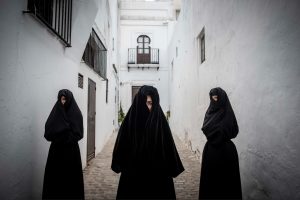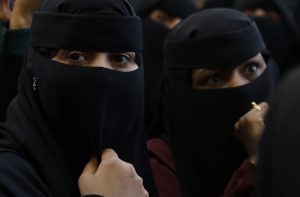






France is to ban two kinds of Islamic dress in schools after French education minister Gabriel Attal announced that students will now be barred from wearing abayas and its male equivalent qamis, both traditional Muslim robes.
This bold step comes amid growing concern over breaches of secularism in educational institutions.
Attal, who assumed office in the French Parliament July reshuffle, declared the ban during a television interview on August 27.
“Abayas cannot be worn in schools anymore,” he affirmed, believing that in the classroom, “the religion of one and all” should not be “distinguished”.
Religious symbols and clothes have long been banned in French Schools under the country’s commitment to secularism. However, Abayas, long flowing dresses worn by many Muslim women, and qamis, are in something of a grey area. Some argue the dress is explicitly religious and Islamic, while others say the attire is merely cultural.
Attal said that “the schools’ firm response is being tested”, and added that the wearing of these items of dress amounted to “challenges, attacks, and attempts at destabilisation” against the French education system.
“We must stand united. And we will stand united,” he had already stated to school administrators, indicating that he would formally contact them “in the very near future” about the approach to be taken for the new term.
The ban is in response to a surge in reported violations of secularism, with a leaked government note revealing a concerning 120 per cent increase in such incidents from 2021-2022 to 2022-2023. As well as the wearing of certain dress, incidents also involved increasing disputes between teachers and students and between schools and communities.
The decision has garnered support from educational bodies and unions, including SNPDEN, the principal union of educational management staff, and SNALC, the union of educational personnel. Both organisations advocated for a clear stance from the education ministry on the issue, relieving teachers and administrators of the responsibility of having to make case-by-case decisions.
Sophie Vénétitay, the general secretary of SNES-FSU, the largest secondary-school union, praised the move while highlighting the importance of dialogue with the students affected and of providing support to schools. She noted that, if implemented with sensitivity and dialogue, the ban would create an optimal situation, avoiding tensions and exclusions.
The move aligns with Attal’s broader vision for the education system, focused on re-establishing authority, encouraging school uniforms and addressing the rising challenge of harassment in education facilities.
His approach reflects the ongoing struggle to balance religious expression with the country’s commitment to secularism, exemplified by the 2004 law prohibiting conspicuous religious symbols in schools.
Debates have long raged in France over the appropriateness of wearing headscarves and burqas and even burkinis, Islamic swimwear dress for women. While some argue it is a question of maintaining the French Republic’s centuries-long policy of secularism, others say the debate is more a question of immigration.