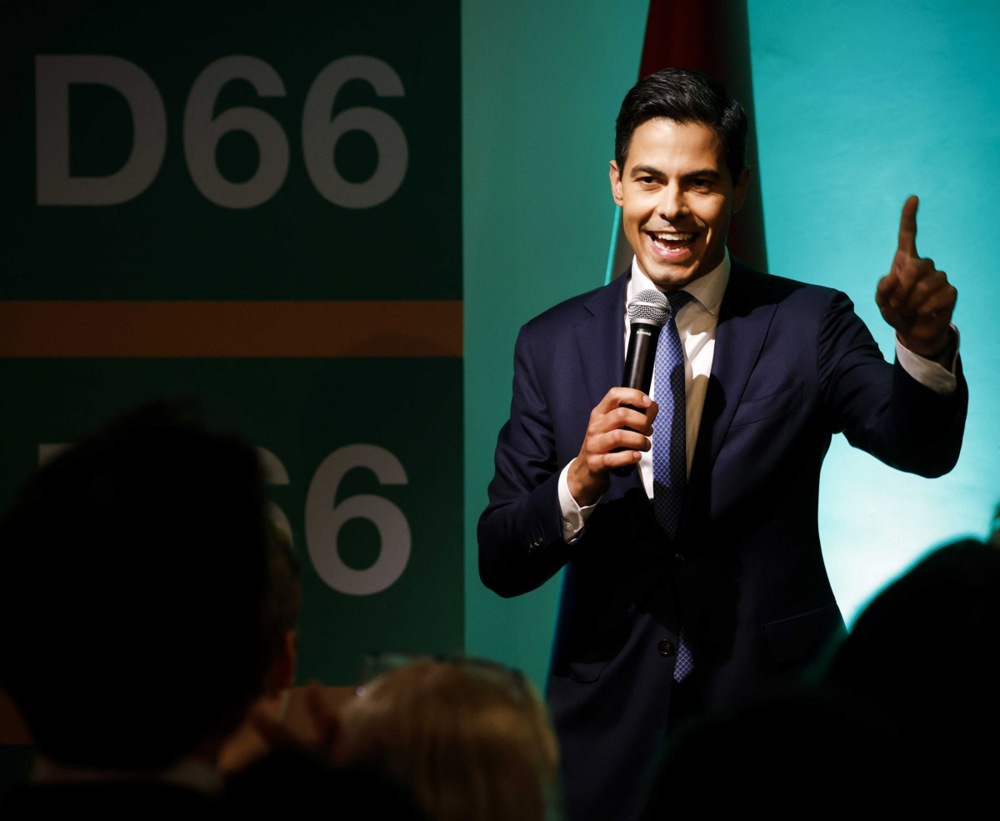
The new minority Dutch Government has a passage in its coalition agreement which says it wants to take away funds and voting power of countries perceived as Eurosceptic, explicitly naming Hungary and Slovakia.
In the agreement chapter handling international relations, both in Europe and the wider world, the new progressive Dutch coalition pledges allegiance to the European Union, saying that peace and security can only be achieved with their European allies and that the EU brings peace and prosperity.
It calls for a “coming of age” for the EU as a geopolitical force, with better and more intense co-operation on all fronts.

For this, there is a call to have a “realistic view” on the expansion of the EU, but also a multi-speed Europe, with different EU member states integrating at different paces, allowing for a maximal expansion of the bloc.
At the same time, countries perceived as Eurosceptic and recalcitrant will face a hostile Dutch government.
“We are cracking down hard on countries that actively undermine Europe, such as Hungary and Slovakia, by pushing for the Article 7 procedure to be simplified, making it easier to strip nations of their EU voting rights,” the coalition agreement states.
“Hungary will lose access to European funds. In Europe, we are championing the end of unanimity in foreign and security policy decisions.”
Since the creation of the EU, the veto, especially in areas such as the Common Foreign and Security Policy, has been a cornerstone of the bloc’s decision-making, designed to protect the fundamental interests of member states. It ensures that no country is forced into policies that directly contradict its national sovereignty, security or core values.
Since Hungary’s Government began resisting the EU’s increasingly progressive agenda, it has repeatedly wielded its veto power to block Brussels’ plans, for example on migration and asylum, climate and energy policies, the Ukraine war, or LGBTQ+ issues.
In response, the EU has frozen funds for Hungary over alleged rule-of-law concerns and threatened to revoke its voting rights.
Journalist and former MEP Derk Jan Eppink called the passage in the Dutch coalition government “ludicrous”, saying the attitude of the Jetten coalition, named after the liberal leader of the coalition Rob Jetten, is “arrogant and completely counterproductive”.
Eppink was writing in Brussels Report. He warned that unanimity is required for amending the European Treaty and remove veto power.
“Anyone who breaks open the Treaty now will not be able to close it again. Most Central and Eastern European Member States will oppose this centralist mentality, which smacks of that of the Soviet Union,” Eppink said.
More positive about the plans was German Greens MEP Daniel Freund, a fierce critic of the Viktor Orbán government. He called it his “favourite passage in the new Dutch coalition agreement”.
Dutch Euro-federalist party Volt also embraced the plan, saying: “It is good that the Netherlands is speaking out in favour of majority decision-making in EU foreign and security policy.
“In this context, the so-called Article 7 procedures, whereby violations of the EU’s core values can lead to the suspension of a Member State’s rights, must be made more effective against countries such as Hungary and Slovakia.
“Anyone who takes the European rule of law seriously must be prepared to attach consequences to violations,” Volt said.
While the Netherlands has a history of being pro-EU, the radical turn on Brussels by the progressive Dutch minority government comes against a backdrop of two nationally significant referenda directly related to the EU.
In 2005, the Dutch firmly rejected the proposed EU Constitution, with 61.5 per cent of voters opposing it. A similar number also rejected the EU-Ukraine association Agreement in 2016.
The Netherlands’ future prime minister Rob Jetten and his Argentine fiancé, Nicolás Keenan, have come under scrutiny after what critics say is the pair’s overtly intimate behaviour on Instagram and TikTok. https://t.co/znOA0stXq4
— Brussels Signal (@brusselssignal) January 23, 2026