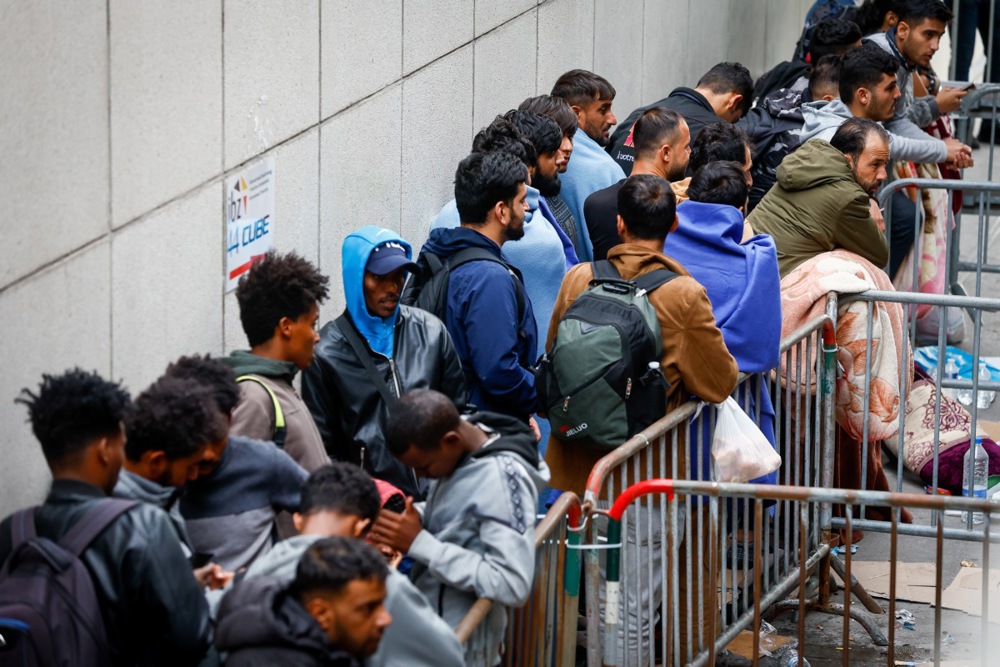
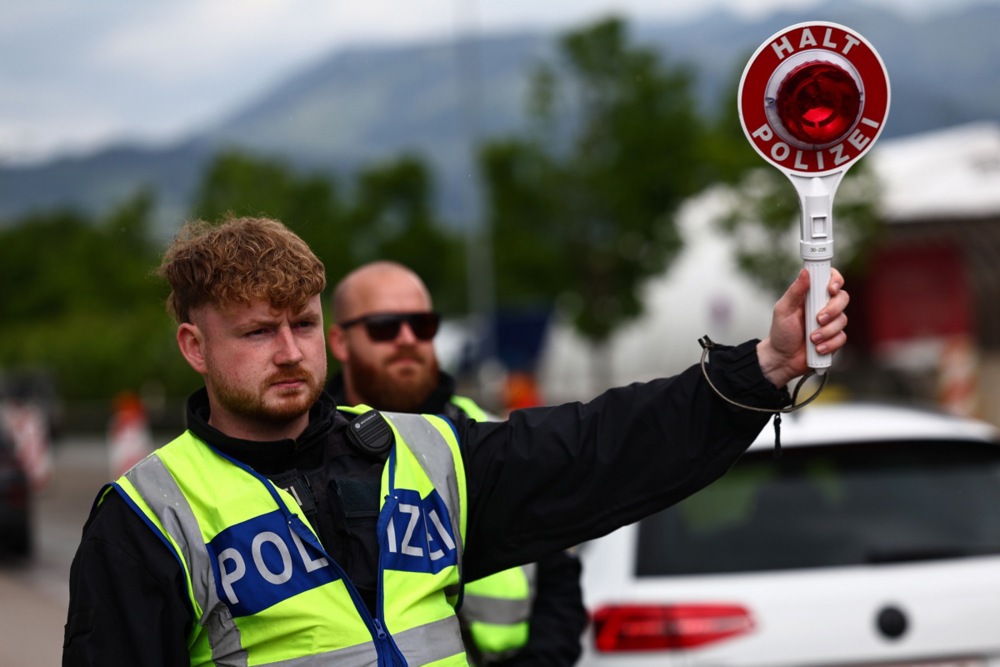
The European Parliament has voted for a tightening of asylum regulations in Europe regarding safe countries, making it more difficult for people to get into the European Union.
The majority was found today on the Right, with the so-called Venezuela coalition, consisting of representatives from the European People’s Party (EPP), the Patriots for Europe (PfE), the European Conservatives and Reformists (ECR) and the Europe of Sovereign Nations (ESN) Group.
The “Venezuela coalition” (also called the “Venezuela majority”) is an informal, ad hoc voting alliance in the EP that emerged prominently after the 2024 elections.

It refers to a loose right-wing coalition that has co-operated to pass key resolutions and amendments.
A series of countries, Bangladesh, Colombia, Egypt, Kosovo, India, Morocco and Tunisia, are to be considered safe for their own nationals, together with EU candidate countries.
The EU’s newly established list of safe countries of origin is designed to expedite the processing of asylum applications from nationals of those countries.
Individual applicants will need to demonstrate why this accelerated procedure should not apply to their case, specifically by proving a credible risk of persecution or serious harm if they were to be returned to their country of origin.
For asylum seekers who are not nationals of a listed country, EU member states may apply the “safe third country” principle and declare their application inadmissible if one of three conditions is satisfied.
These were a meaningful connection to the third country — such as family ties, prior residence, or linguistic or cultural links; transition through the third country on the way to the EU where protection is possible; or a formal agreement, either bilateral, multilateral, or at the EU level, with the third country for the admission of asylum seekers, excluding unaccompanied minors.
Any such agreements, whether negotiated by the EU or its member states, must include a binding provision requiring the third country to assess fully the merits of any protection requests made by the individuals in question.
There were 408 MEPs in favour, 184 against and 60 abstentions.
Left-wing groups reacted negatively to the changes, saying they throw the EU’s commitment to fundamental rights into question.
Conservative parties celebrated the move. EPP rapporteur Lena Düpont said the vote delivered “another building block for a functioning, credible asylum system”.
“By enabling manifestly unfounded asylum applications to be rejected more quickly and efficiently in the future, we are speeding up asylum procedures, relieving the burden on member state systems, and helping people avoid being stuck in legal limbo for years,” she said.
ECR rapporteur Allesandro Ciriani called the list of safe countries of origin “a political turning point in the EU’s management of migration”.
He highlighted the end of a period of ambiguity with the introduction of common rules, faster and more effective procedures, protection of the right to asylum for those entitled to it, and a firm approach to tackling abuse.
ECR shadow rapporteur Assita Kanko said the changes would undermine the business model of people smugglers.
“People who genuinely need protection must receive it, but not necessarily in the European Union. Effective protection can also be provided in a safe third country, while individual assessment remains fully guaranteed,” she said.
She highlighted that today only around 20 per cent of rejected asylum applicants are effectively returned and that needs to change.
PfE said the vote was “a major victory”, while ESN called it a “clear step forward made possible by a new political balance” and that “ESN makes the difference”.
On the other side of the political isle, the Socialists and Democrats (S&D) group said they regretted “that conservative and far-right groups today joined forces to rubber-stamp controversial migration reforms”.
They claimed the files passed through the EP at speed, with no time for proper reflection on the impact these new laws will have.
Ana Catarina Mendes, S&D Vice-President, called the changes “highly controversial”.
“We have warned again and again that they fundamentally change our asylum system, throwing into question Europe’s commitment to fundamental rights,” she said.
The Left group called the vote “another nail to the coffin to the right to asylum on EU soil, ” adding that “Europe follows a racist and authoritarian agenda”.
Left MEP Ilaria Salis said: “The racial approach to migration prevails, one already seen in Australia and Israel. Fascism today is not so much a political regime as it is a drift: The tendency to move the bar of rights a little further each time, further to the Right, and therefore further downward. Civil disobedience is no longer an option; it becomes a necessity. To remain human.”
The “Venezuela coalition” originated from a September 2024 EP vote where these groups united to recognise Venezuelan opposition candidate Edmundo González as the legitimate winner of the country’s disputed presidential election (rejecting Nicolás Maduro’s claims), breaking from the traditional centrist “(European Commission. President Ursula) von der Leyen majority” coalition of the EPP, S&D and Renew Europe.