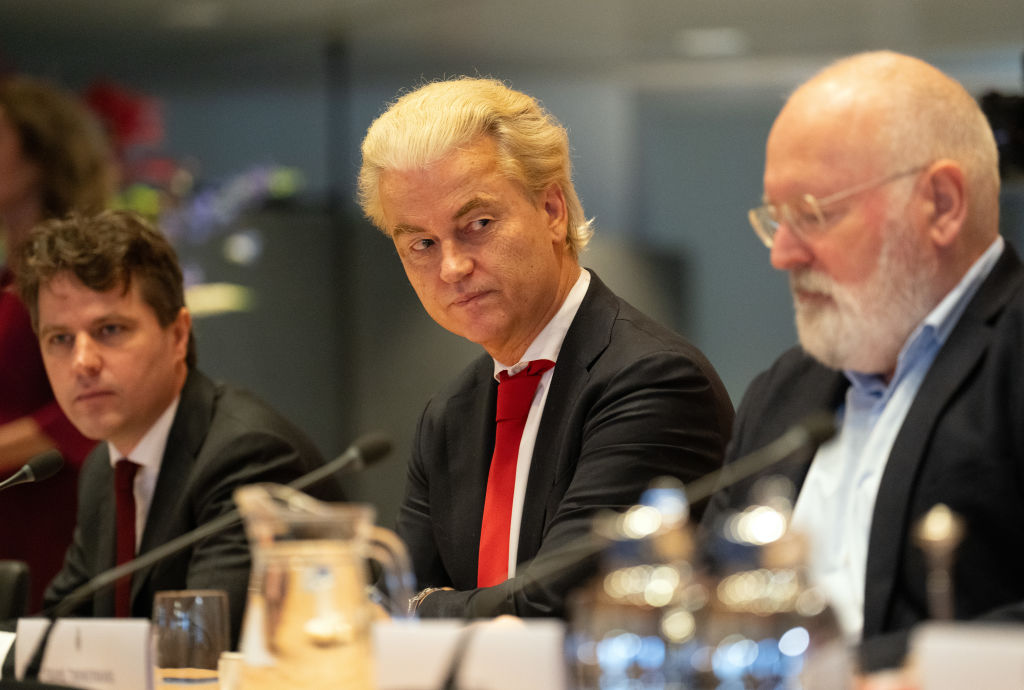
The Dutch House of Representatives narrowly approved a motion calling for a ban on the Muslim Brotherhood and its affiliated networks.
The proposal, introduced by members of the Party for Freedom (PVV), led by Geert Wilders and Maikel Boon, passed yesterday with 76 out of 150 votes, highlighting divisions within parliament while signalling increased political attention to the issue.
The move follows a recent report by the French Ministry of the Interior titled “Frères musulmans et islamisme politique en France” (The Muslim Brotherhood and Political Islam in France).

The report warns that the movement operates through a long‑term strategy of influence in western societies, especially via schools, charities and local associations.
Its conclusions are direct. The report describes a method based on “a strategy mixing dissimulation, the search for legitimacy and victimisation”, often supported by accusations of Islamophobia. It also points to a “double discourse” and a gradual effort to shape society from within.
The ideological goal, according to the report, goes beyond religion. It highlights the vision of Muslim Brotherhood’s founder Hassan al‑Banna, for whom Islam was meant to govern all aspects of life. This is reflected in slogans such. as “the Quran is our constitution”, underlining the importance given to religious law.
The Dutch vote comes amid rising tensions following a recent wave of terrorist attacks targeted Jewish sites in the Netherlands. That included a synagogue in Rotterdam and a Jewish school in Amsterdam.
While no direct link has been established with the Muslim Brotherhood, the attacks have increased political pressure to act.
Supporters of the motion, including Wilders, say the French report confirms the need for vigilance. For them, the issue is not only security but also the long‑term influence of political Islam in Europe.
Critics, though, question how such a ban could work in practice. The General Intelligence and Security Service (AIVD) does not currently consider the Muslim Brotherhood a structured organisation in the Netherlands, making any legal ban difficult to enforce.
It is also worth noting that the French National Assembly formally voted on January 22 to label the Muslim Brotherhood movement a terrorist organisation. It called on the European Union to include it on the bloc’s terrorist list, underscoring France’s stance on the issue and reinforcing the context for similar moves elsewhere in Europe.
The Dutch motion does not immediately change the law but it sends a clear signal: Across Europe, governments are taking a closer look at the Muslim Brotherhood and are increasingly ready to act.