In France’s municipal elections, candidates have until tonight to decide whether to merge lists, run independently, or withdraw before the second round on March 22.
In several major cities, the race is extremely tight, including in Marseille and Toulouse.
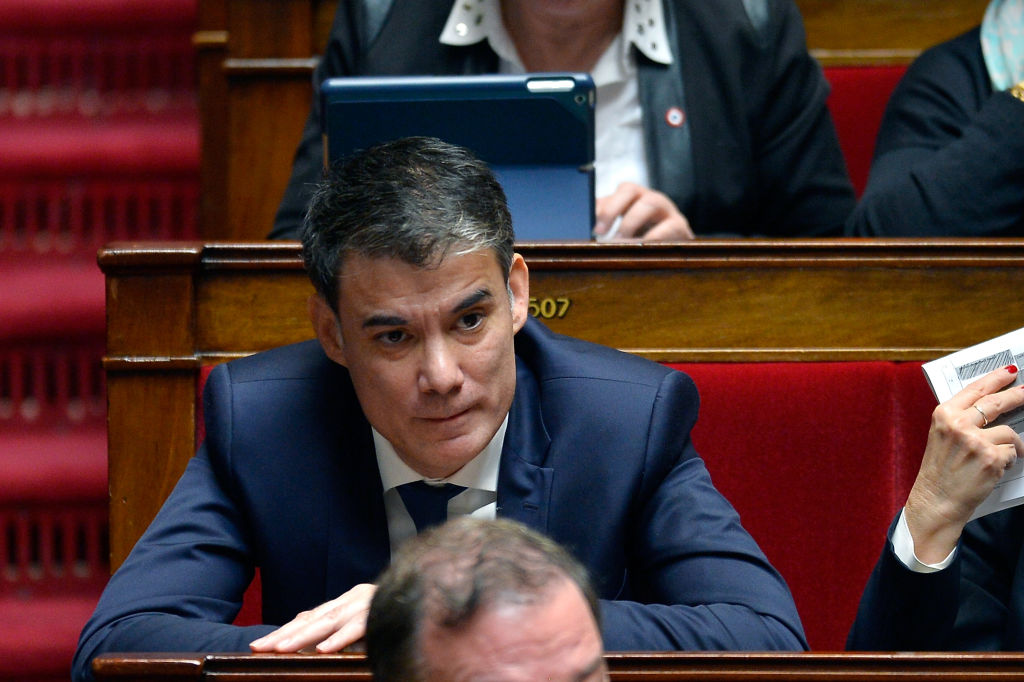
It is in this context that, on the evening of March 15, the leader of the Socialist Party (PS), Olivier Faure, reiterated his refusal to form a national alliance with the left-wing party La France Insoumise (LFI).

The LFI has recently been embroiled in several controversies, including criticism over anti-Semitic remarks and positions taken by its leader, Jean‑Luc Mélenchon.
Former French president François Hollande also called on socialists not to unite with the party.
Yet yesterday evening, during an interview on France 2’s main news broadcast, Faure said he “fully understands” the choice made by some PS candidates to form alliances with LFI lists in cities such as Nantes, Toulouse and Limoges.
He maintained that “Jean-Luc Mélenchon’s words damage, divide and weaken the Left” but argued that local LFI candidates should not automatically be held responsible for those remarks.
“If I lived in Toulouse, I would vote for François Piquemal,” Faure added, referring to the LFI candidate who came second in the first round with 27.5 per cent of the vote. A merger between Piquemal’s list and that of PS candidate François Briançon, who finished third with 25 per cent, has since been confirmed.
Faure reiterated that no national agreement had been reached between the PS and LFI “because of Jean-Luc Mélenchon’s statements”. He acknowledged, though, the reality of local deals.
“I fully understand the choices being made in some cities,” he said, referring to agreements between local PS and LFI candidates.
The PS leader added that he would intervene if any candidate involved in such alliances had personally made anti-Semitic or unacceptable remarks. “In that case, I would take responsibility and ask for that list to be suspended,” he said.
This apparent shift has triggered criticism across the political spectrum.
Politicians from the centre, the Right and the far-right quickly condemned the situation.
Bruno Retailleau of The Republicans denounced what he called “shameful agreements”.
Meanwhile, Marine Le Pen of the National Rally (RN), on X accused the Left of “hypocrisy,” saying it was only trying to “save its mandates”.
Brest, Nantes, Limoges, Clermont-Ferrand, Toulouse, Lyon, Strasbourg, Besançon, Grenoble et probablement dans beaucoup d’autres villes moins « voyantes », la gauche s’allie avec LFI.
Ni les saillies antisémites, ni les appels à la violence politique et leurs justifications…
— Marine Le Pen (@MLP_officiel) March 16, 2026
For Gabriel Attal of the Renaissance party, these were “not local agreements but a national one in disguise”.
Despite these controversies, the PS has remained firm in some key cities. In both Paris and Marseille, where tensions with LFI were particularly strong during the campaign, PS candidates refused to form alliances with the party ahead of the second round.
In Paris, PS candidate Emmanuel Grégoire declined any deal with LFI, potentially opening the door to a comeback from Rachida Dati (Les Republicains, a liberal-conservative party).
In Marseille, outgoing mayor Benoît Payan also rejected an alliance with LFI.
Meanwhile, in Lille, LFI finds itself isolated after the announcement of a PS–Green agreement aimed at countering the party’s local momentum.
All eyes are now on voter turnout for the second round.
Local elections in France are particularly important, especially with the presidential election approaching next year. Potential presidential candidates will need the sponsorship of at least 500 mayors to run, making control of municipalities a key political asset.