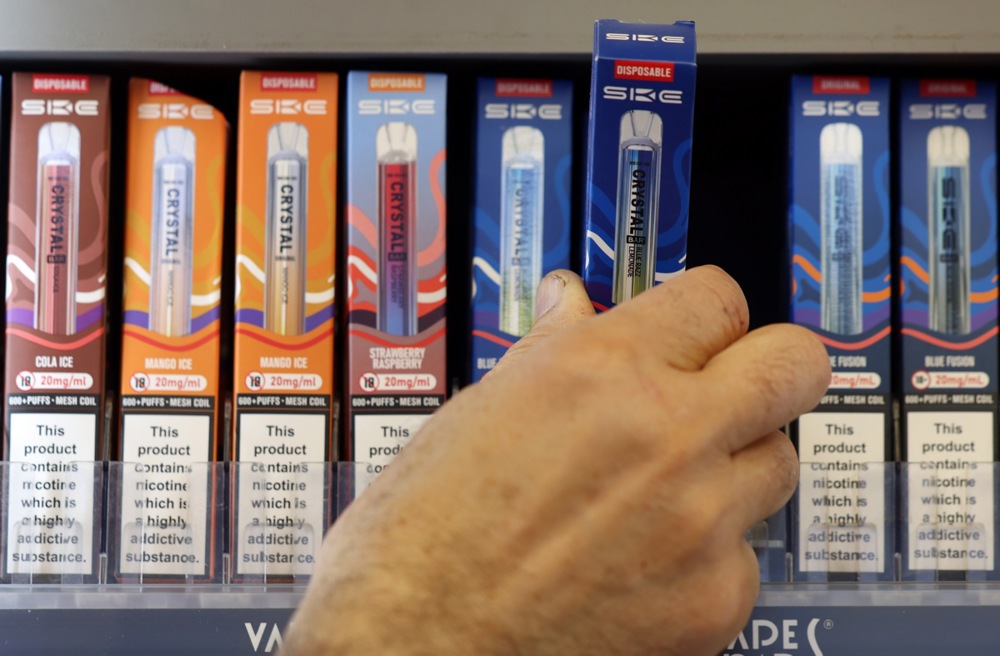
A coalition of 23 leading European experts in medicine, toxicology, epidemiology and addiction science has accused European Commissioner for Health and Animal Welfare Olivér Várhelyi of disseminating “false and misleading” information about the risks posed by smoke-free nicotine products, such as e-cigarettes, nicotine pouches and heated tobacco.
In an open letter dated February 25, 2026 and addressed to EC President Ursula von der Leyen, the signatories claim Várhelyi’s repeated assertions such products carry health risks “comparable to or even bigger than smoking itself” are “scientifically untenable” and could distort upcoming European Union legislation on tobacco taxation and product regulation.
“We write to you to correct dangerous, false, and misleading statements about novel smoke-free tobacco and nicotine products made by Commissioner Olivér Várhelyi,” the letter states.

“These statements have been made repeatedly and in multiple fora. They are not supported by scientific evidence and are damaging to public health, policymaking and public trust.”
The experts, including figures such as Professor Peter Hajek from Queen Mary University of London, Emeritus Professor John Britton from Nottingham University and Professor David Nutt from Imperial College London, argue that Várhelyi’s claims ignore a fundamental distinction between combustible cigarettes – which produce thousands of harmful chemicals through burning – and smoke-free alternatives that deliver nicotine without combustion.
They stress that these products are not “safe” or “harmless” but beyond any reasonable doubt far less harmful than cigarettes.
The scientists cite comprehensive evidence reviews from authoritative bodies, including the UK’s Royal College of Physicians, which concluded in 2024 that “the hazard to health arising from long-term vapour inhalation from the e-cigarettes available today is unlikely to exceed five per cent of the harm from smoking tobacco”.
Similarly, the US National Academies of Sciences, Engineering and Medicine found in 2018 that “there is conclusive evidence that completely substituting e-cigarettes for combustible tobacco cigarettes reduces users’ exposure to numerous toxicants and carcinogens present in combustible tobacco cigarettes”.
The letter singles out several specific statements by the Hungarian Commissioner.
In a May 2025 exchange with the European Parliament’s ENVI committee, Várhelyi claimed that vaping had “created completely new health risks [that are] comparable to or even bigger than smoking itself”, adding that “popcorn lungs” – a reference to lung disease bronchiolitis obliterans – was “a completely new phenomenon … breathtakingly overtaking the young generation”.
The scientists counter that there are zero known cases of bronchiolitis obliterans attributable to e-cigarettes compliant with EU regulations, attributing rare US cases to illicit THC vaping products containing vitamin E acetate, a substance banned in the EU.
In a July 2025 post on X, Várhelyi wrote: “For the first time ever, we acknowledge that new tobacco and nicotine products pose health risks comparable to traditional ones.”
In a January 2026 written reply to a parliamentary question, he asserted: “Using smoke-free tobacco and nicotine products, as opposed to combustible smoking, is not reducing risk to health.”
Most starkly, in a December 2025 interview with Euractiv, when asked if he was convinced that alternative tobacco products are as harmful as traditional cigarettes, Várhelyi replied: “Yes, I am. Absolutely. One hundred per cent.”
The signatories warn that such positions risk a public health tragedy on a grand scale by protecting the cigarette market, discouraging smokers from switching to lower-risk options and fuelling illicit trade.
They point to Sweden’s experience with snus, a smoke-free oral tobacco product, where its widespread use has contributed to the EU’s lowest smoking prevalence and smoking-related mortality rates.
The EU’s 1992 ban on snus outside Sweden, they argue, has likely caused tens of thousands of avoidable deaths.
“One estimate suggests that snus avoids 3,000 smoking-related deaths per year in Sweden, which has an exemption from the ban,” they note.
“We urge you to correct these statements and ensure that policymaking on tobacco and nicotine is grounded in science rather than absolute belief,” the letter concludes, with copies sent to the full College of Commissioners and Members of the European Parliament.
They note that the false claims by the Commissioner could have negative ramifications regarding new legislation, public health and the internal market.
The scientists also point out that spreading such information goes against the EU’s own efforts to tackle disinformation.
The intervention comes amid ongoing debates over revisions to the EU’s Tobacco Products Directive and Tobacco Excise Directive, where the EC has proposed harmonised taxes on novel products.
Critics, including the experts, fear that equating these with cigarettes in taxation could undermine harm reduction strategies.
In a reaction to Brussels Signal yesterday, an EC official said: “In general, we would highlight that nicotine is a toxic and highly addictive substance.
“Nicotine containing products can develop into a gateway to nicotine addiction and tobacco consumption which accounts for 25 per cent of all cancer deaths globally and is the primary cause of lung cancer, according to WHO data from 2025 (Effects of tobacco on health).
“As emphasised by WHO, nicotine containing products such as e-cigarettes and nicotine pouches, expose users to carcinogens and generate substances known to cause cancer. For this reason, these products are associated with an increased cancer risk.”
In February the European Economic and Social Committee (EESC) warned that “abrupt or excessive increases in excise duties on tobacco and nicotine products could drive consumers towards illicit markets, erode fiscal revenues and weaken the EU’s public health objectives”.
The EESC opinion, adopted on February 18-19, supports updating the 2011 Tobacco Taxation Directive but advocates a “risk-proportionate approach”, with lower duties on non-combustible products to encourage switching from cigarettes.
It echoes the scientists’ fears, noting that steep tax hikes could “exacerbate smuggling and black-market activity”, particularly in border regions, and calls for gradual implementation paired with anti-smuggling measures.
Swedish consumer organisations also sent an open letter to their government, urging resistance to EU harmonised taxes that “fail to differentiate adequately between cigarettes and lower-risk alternatives like snus and pouches”, warning of potential increases in illicit or unregulated sources.
In a joint statement seen by Brussels Signal, Italy and Romania have expressed serious concern about a European Council recommendation advocating smoke-free and e-cigarette aerosol-free environments. https://t.co/3BbLagTgLD
— Brussels Signal (@brusselssignal) November 21, 2024