





The European Union has acknowledged it lacks reliable data on the fuel reserves held across the bloc, a blind spot that risks complicating the response to supply disruptions caused by the war in Iran.
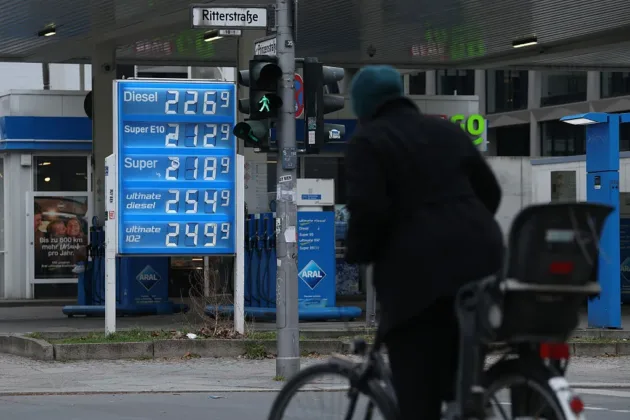
European Commission President Ursula von der Leyen has said the conflict was costing the EU nearly €500 million a day in higher energy costs. The figure has emerged as US President Donald Trump has reportedly ordered his aides to prepare for a prolonged blockade of Iran that could further disrupt global energy markets.
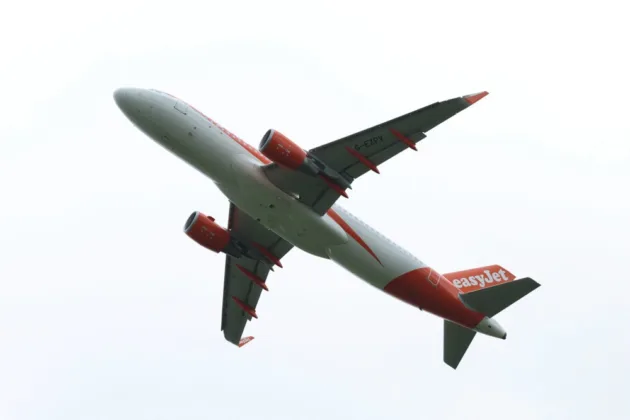
Across the continent, airlines have grounded planes and officials have urged citizens to cut their commutes. The Strait of Hormuz, a critical artery for oil and natural gas, has come under threat.
Yet for all the warnings, Brussels has admitted that nobody knows precisely how much fuel Europe actually has in stock.
DATA BLIND SPOT
While information on government-held oil and gas reserves has been generally transparent, officials wanting to know when the taps might run dry have had very little to go on. That risked leaving them unable to identify shortages or forced them to make emergency decisions on partial information.
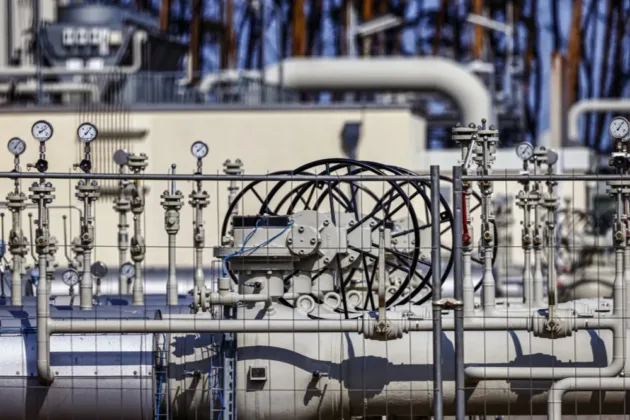
Several European energy ministers have called on the Commission to bolster the bloc’s ability to gauge supplies held across the continent in underground facilities, port tank farms, supertankers off European coasts and depots at airports and along key pipelines.
When it comes to refined fuels such as diesel and jet fuel, the picture has been especially murky. The EU has relied primarily on its official statistics service Eurostat and coordination meetings with member states to gauge supply levels.
Most stocks sit out of sight in scattered commercial inventories spanning diverse sectors. Firms have remained reluctant to disclose sensitive business data they were not legally obliged to report. EU competition rules have also discouraged industry associations from gathering and sharing such information among their members.
FUEL OBSERVATORY PLAN
The European Commission has acknowledged the informational desert and unveiled plans for a “Fuel Observatory” that would track EU production, imports, exports and stock levels of transport fuels. The proposed system would resemble the United States’ more comprehensive Energy Information Administration.
Gas has been the easiest to track, if imperfectly. Rules imposed after the shortages caused by Russia’s 2022 full-scale invasion of Ukraine have required EU countries to fill storage levels to 90 per cent of national capacity by winter each year. That has meant the EU is far more aware of how much natural gas it has at any given moment, even if it continues to have little visibility into outflows, inflows and cross-border trade.
Eurostat has also monitored Europe-wide petroleum products, though it has updated them infrequently and sporadically. Its last reasonably comprehensive data set was from January, according to the Institute for Energy Economics and Financial Analysis (IEEFA).
At that point, most EU countries — excluding Latvia, Ireland and Cyprus — met the bloc’s requirements to hold at least 90-day stocks of petroleum and petroleum derivatives, the IEEFA said. The reserves have consisted largely of crude oil, diesel and feedstocks, with limited gasoline and jet fuel held in storage.
SATELLITE TRACKING
Crude oil stocks could be monitored in near-real time via commercial satellite analysis. Specialist firms have assessed the fullness of floating-roof storage tanks by gauging the height of each tank’s roof, inferred from the interplay of shadows in satellite imagery. Such methods can capture around 90 per cent of the world’s roughly 6 billion barrels of global storage capacity.
Jet fuel stocks, held primarily in fixed-roof tanks, have been much harder to monitor. Data has been drawn largely from voluntary disclosures by companies.
The International Energy Agency (IEA) has estimated that European inventories were already low in February compared to the same period a year earlier, though its more recent figures have been limited. Some EU countries have begun releasing oil reserves as part of a historic, multinational barrel release coordinated by the agency, which has involved a total of 400 million barrels.
STRUCTURAL WEAKNESS
Europe’s gas stocks were already low before the attack on Iran, averaging under 30 per cent of national capacity following sharp drawdowns over the winter. Refilling those reserves has depended on incentivising traders, who generally prefer to pump gas into storage in the summer when prices fall, and sell in the winter when prices rise. The Iran war risked inverting that dynamic.
The rerouting of global energy markets that has followed the disruption around the Strait of Hormuz could deepen the imbalance. Tankers are no longer being diverted to Asia from Europe but have steamed there directly from West Africa and the United States.
Without compulsory reporting at EU level, Brussels has continued to operate in fog when assessing how long the bloc could weather a sustained energy shock. Whether the planned Fuel Observatory will close that gap, or whether member states will accept the reporting obligations such an instrument would require, remains an open question for an executive that has spent the past three years trying to wean the bloc off Russian energy and now finds its visibility tested again by a fresh conflict in the Middle East.