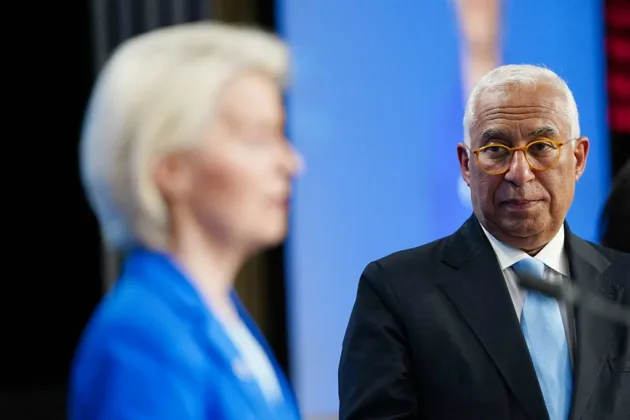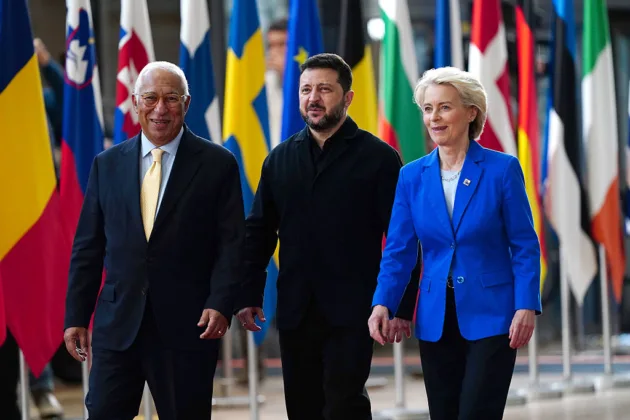






European Union leaders have gathered in Nicosia for an informal summit that marks a historic shift in EU politics: for the first time in 16 years, Hungary’s Viktor Orbán is absent from the table — and Ukraine’s President Volodymyr Zelensky has taken his place at the opening session.
The summit, hosted by Cyprus as holder of the EU Council presidency, brings together heads of state and government to tackle the bloc’s most pressing crises: soaring energy costs triggered by the closure of the Strait of Hormuz, continued support for Kyiv in the Ukraine war and the EU’s response to the conflict in the Middle East.
ORBÁN GONE, ZELENSKY IN
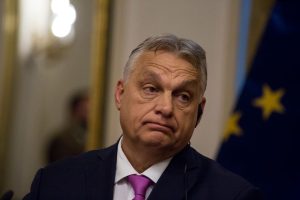
Orbán chose not to attend what would have been his final European Council. After 16 years at the helm of Hungarian politics, he is set to hand over to opposition leader Péter Magyar following the country’s recent elections.
His absence comes amid ongoing tensions over reports that confidential EU documents were passed to Russia by officials linked to his government — an allegation Budapest has not formally addressed.
The summit has though proceeded with one notable change. Hungary’s longstanding reservations over a €90 billion loan to Kyiv and a new package of sanctions against Russia were set aside in the hours before the gathering, clearing two measures that had been held up for months while Budapest sought guarantees on their terms.
Zelensky opened the summit’s first session and is expected to push leaders for firm commitments on Ukraine’s path toward EU membership. That issue remains contested among the 27 member states, with no consensus on timelines or deadlines.
THE COST OF HORMUZ
The European Commission has placed its first emergency energy package before leaders for discussion. According to the Commission’s own figures, the Hormuz crisis has added €24 billion to the EU’s energy import bill in 52 days of conflict. The risk of shortages of fossil fuels — in particular aviation kerosene and diesel — is highlighted as a serious concern if the crisis continues.
The war that erupted following a unilateral US and Israeli offensive against Iran has shut the Strait of Hormuz and pushed energy prices upward across Europe. The security implications for the bloc have been sharpened by an early episode of the conflict: a British military base in Cyprus came under a drone attack attributed to Iran. Spain and France deployed naval assets in support of the island, underlining questions about how the EU’s mutual defence clause — Article 42.7 of the EU treaties — would function in practice.
The clause has been invoked only once before, by France after the 2015 Paris attacks. Leaders are to discuss its operability at this summit, though no binding conclusions are expected.
ISRAEL WAR LOOMS OVER THE AGENDA
Although the question does not appear explicitly on the agenda, the summit comes one day after a fractious meeting of EU foreign ministers in which Germany and Italy blocked moves to explore suspending the EU’s Association Agreement with Israel over its conduct in Gaza, the West Bank and Lebanon.
Spain, Ireland and Slovenia had written jointly calling for debate on whether the agreement should be revoked. France and Sweden signalled openness to at least partial suspension. The Spanish Government has been pressing on this issue since February 2024, according to Spanish Government sources, and Prime Minister Pedro Sánchez may raise it directly with fellow leaders in Nicosia.
On the second day of the summit, EU leaders are to be joined by the heads of government of Jordan, Syria, Lebanon, Egypt and the Gulf Cooperation Council for talks on the regional situation.
THE BUDGET DEBATE BEGINS
Leaders have also been asked to begin a substantive discussion on the EU’s next multiannual financial framework, covering 2028 to 2034. No figures will be agreed at this stage. The European Commission proposed a spending ceiling of 1.26 per cent of gross national income last summer, but capitals want to set out their priorities before negotiations begin in earnest.
Spain has called for greater ambition, pushing for the ceiling to rise to at least 2 per cent. Madrid has also raised objections to the shape of the proposed competitiveness fund, which it sees as weighted too heavily toward defence and security spending. The Spanish Government has said it would prefer to direct more resources to digital transition, artificial intelligence, energy and infrastructure.
A discussion on the framework had been scheduled for the March European Council but was postponed, making this the first serious leaders-level exchange on the issue since the Commission’s proposal was published last summer.