


The former Polish ruling party, currently the country’s largest opposition party, the Conservatives (PiS) is in turmoil following a decision by its former prime minister Mateusz Morawiecki.
He has registered an association outside the party which is viewed by many as a platform for creating an alternative political party to PiS.
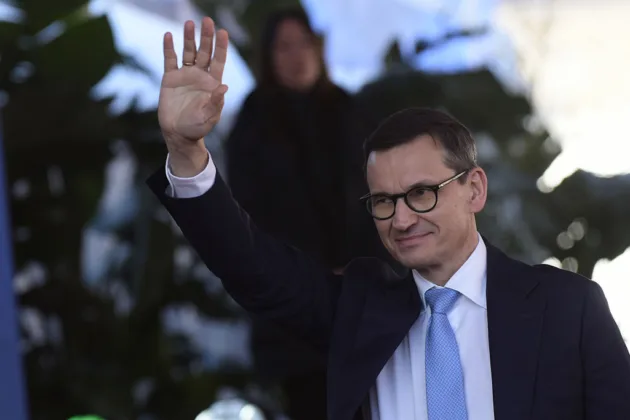
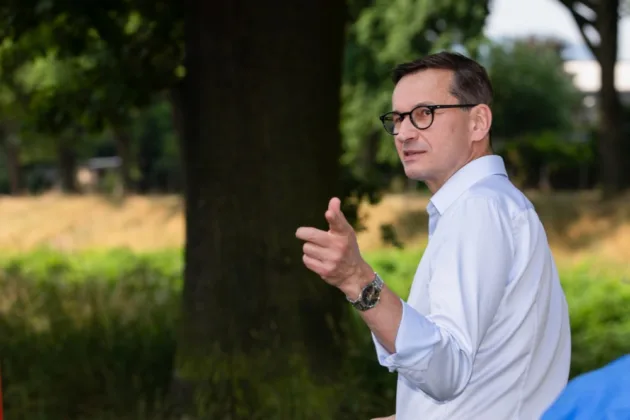
Morawiecki was prime minister between 2017 and 2023 has set up the Growth + Association as a “forum for policy dialogue for civic-minded conservatives who do not feel that any of the current parties speak for them.”
According to data released by Morawiecki’s association on April 15, around 40 out of the 200-plus parliamentarians in the two chambers of the Polish parliament and the European Parliament have joined it. The number would easily be enough to create a separate parliamentary caucus in Poland’s legislature.
Morawiecki attended a meeting of the party’s executive on April 14 at which his proposal to create his association was roundly criticised by other PiS figures. Several made it clear they saw his actions as a potential act of betrayal.
Some feared that a “party within a party” was being created that would divide PiS internally and lead to the creation of a new force that would pursue alliances in the centre ground, even with some existing parts of Tusk’s coalition such as the small centrist Poland 2050 and the centre-right Polish People’s Party (PSL).
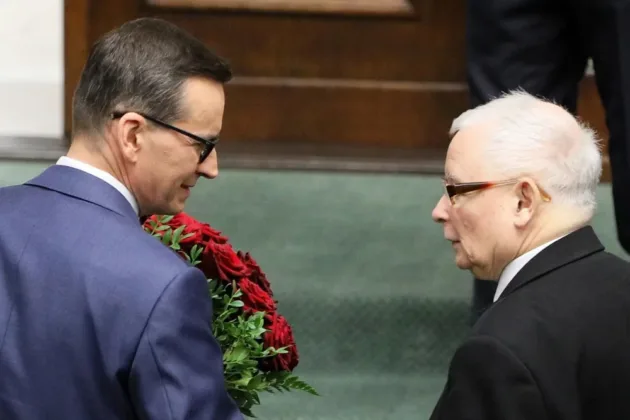
The PiS founder and leader since 2001, Jarosław Kaczyński, had privately made clear he did not want the association to exist, telling colleagues in smaller gatherings that it was “badly seen”, therefore Morawiecki’s decision to launch the association was a clear act of defiance of the leadership.
Przemysław Czarnek, the party’s nominee for prime minister, took to social media, writing on X on April 15: “Those who want to divide the right, who put their own interest above the good of Poland they will hear from me that it is betrayal.”
Morawiecki, though, argued that other PiS parliamentarians such as the ex-justice minister Zbigniew Ziobro had similar organisations. He told the leadership that the party should be defending its record in government in economic and social policy rather than radicalising.
Morawiecki, who last year succeeded Giorgia Meloni as leader of the European Conservative Reformers, has over the past few months made no secret of the fact he wanted to be the candidate for PM again. In a media appearance after Czarnek’s nomination, when asked about whether he would serve under Czarnek, he said “not necessarily”.
During PiS’ executive meeting there were voices that Morawiecki’s allies should be excluded from PiS parliamentary slates in next year’s general election. Either that or that there should be a blanket ban on all PiS parliamentarians from setting up their own organisations outside of the party. However, Kaczyński hasn’t decided to take such radical steps at this juncture but the party’s executive did decide that membership of a political association was incompatible with PiS membership and could open the culprits to disciplinary action.
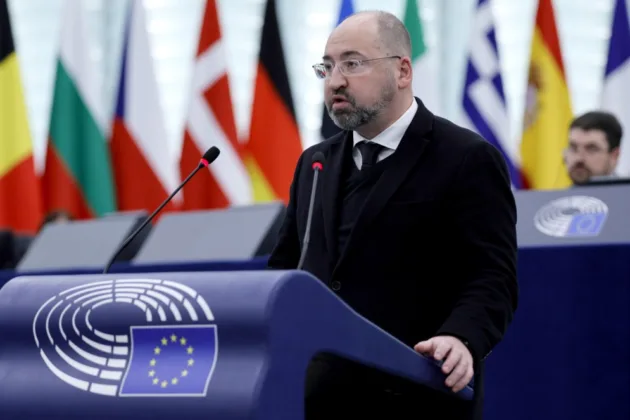
The nervousness of the PiS leadership has in part been caused by the fact that since the win in the presidential election last year, the party has lost support to two other right-wing parties: The Confederation party and the radical Right Confederation of the Polish Crown. That is led by firebrand MEP Grzegorz Braun and is currently polling at around 25 per cent, whereas just after the presidential election it was registering almost 35 per cent.
Morawiecki has argued that the party needs to reach out to the centre ground occupied by urban and better educated voters who support Poland’s membership of the European Union. Czarnek and the party’s leader Jarosław Kaczynski, though, have decided that the party should reach out to the more right-wing Confederation and Braun supporters with Euro-sceptic and socially conservative messaging to recover lost ground.
Czarnek getting the nod to be prime ministerial candidate suggests the party is set on a course to the Right because the former education minister is an opponent of LGBT rights and any further European integration.
Since Czarnek getting nominated in early March, PiS slide in the polls has slowed but it has not as yet recovered lost ground. Czarnek’s own personal ratings with voters, including PiS voters, still trail those of Morawiecki.
Morawiecki has now created his own entity without leaving PiS and has shown that he has the support of a large number of PiS parliamentarians, including a number of cabinet ministers who served in his government.
Some commentators believe that he wants to build enough support within PiS to force a change of policy direction, a change of decision over who is to be candidate for prime minister and succeed the aging Kaczyński (77) as leader. Others believe he is preparing to exit the party and create his own political force.
The Right’s most unifying figure, President Karol Nawrocki, has maintained good contacts with all the right-wing parties and factions and many expect that he will, in time, step in as peacemaker.
He is keen to see a right-wing majority in parliament to replace the government of Prime Minister Donald Tusk and pursue his own ambitions of gradually transforming Poland’s political system into a presidential one. He would, therefore, be concerned to see his potential allies fragmenting in the run-up to the general election.