





On the first day alone, 13,500 migrants submitted applications through the Spanish Government’s new “extraordinary regularisation” scheme.
“In the first 24 hours, 13,500 online applications were received through Mercurio, the immigration case management platform,” the Ministry of Inclusion, Social Security and Migration announced.
Most of these applications were submitted using digital certificates and were registered by lawyers, social workers and administrative managers.
Others came via registered unions and official intermediary bodies with applications received from entities and unions registered in the Register of Collaborators (RECEX) and from other representatives.
More than 19,600 in-person appointments have also been booked, with offices set to begin face-to-face processing from April 20.
The Spanish Government expects at least 750,000 applications, with around 30 per cent of them likely to be rejected.
The scheme is not designed to attract new arrivals, since applicants must prove they were already in Spain before January 1, 2026, have lived there continuously for at least five months and hold a clean criminal record. Successful applicants will receive a one-year residence and work permit, renewable under the terms of the decree. But there are growing concerns that the financial and administrative burden of this large-scale regularisation could ultimately fall on ordinary Spaniards.
The policy arrives at a time when Spain is already grappling with high taxation, overstretched healthcare systems and a housing market increasingly out of reach for many locals. Unions representing immigration staff have also warned that the system could be overwhelmed by the volume of applications, amid complaints of understaffing and limited resources.
This follows the government’s April 14 decision to break ranks with much of the European Union and grant undocumented migrants already in Spain a pathway to legal status with a one-year renewable residence and work permit.
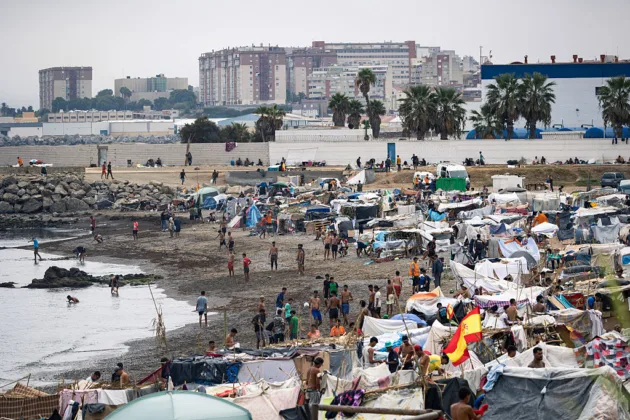
Since the announcement, large numbers of people have been seen gathering in front of public offices in the hope of getting their status in order.